
Pave revolutionises Compensation and Benefits Analysis for HR pros. Gain real-time market insights, attract top talent, and save hours. Optimise your pay strategy now!
Human vs Pave: Who Handles Compensation and Benefits Analysis Better?
You’re in HR, right?
You know the grind.
The endless spreadsheets.
The frantic searches for market data.
Trying to figure out if your compensation packages are competitive enough to land that superstar candidate, or if they’re just pushing your best people out the door.
It’s a headache, every single time.
Especially when it comes to Compensation and Benefits Analysis.
It’s not just about paying people; it’s about strategy, retention, and attracting top-tier talent.
It’s about having the right numbers, at the right time.
But let’s be honest, getting those numbers traditionally? It’s a full-time job in itself.
It’s manual, prone to errors, and frankly, it’s slow.
And slow in today’s fast-moving talent market means you’re already losing.
The good news? AI isn’t just for chatbots and fancy image generators anymore.
It’s seeping into every corner of business, including HR and Recruitment.
And one tool that’s making some serious waves? Pave.
It promises to take the heavy lifting out of Compensation and Benefits Analysis.
But does it deliver? Can a machine really do it better than a seasoned HR pro?
Let’s find out.
What is Pave?
Alright, let’s get straight to it. What exactly is Pave?
Think of it as your smart co-pilot for all things compensation.
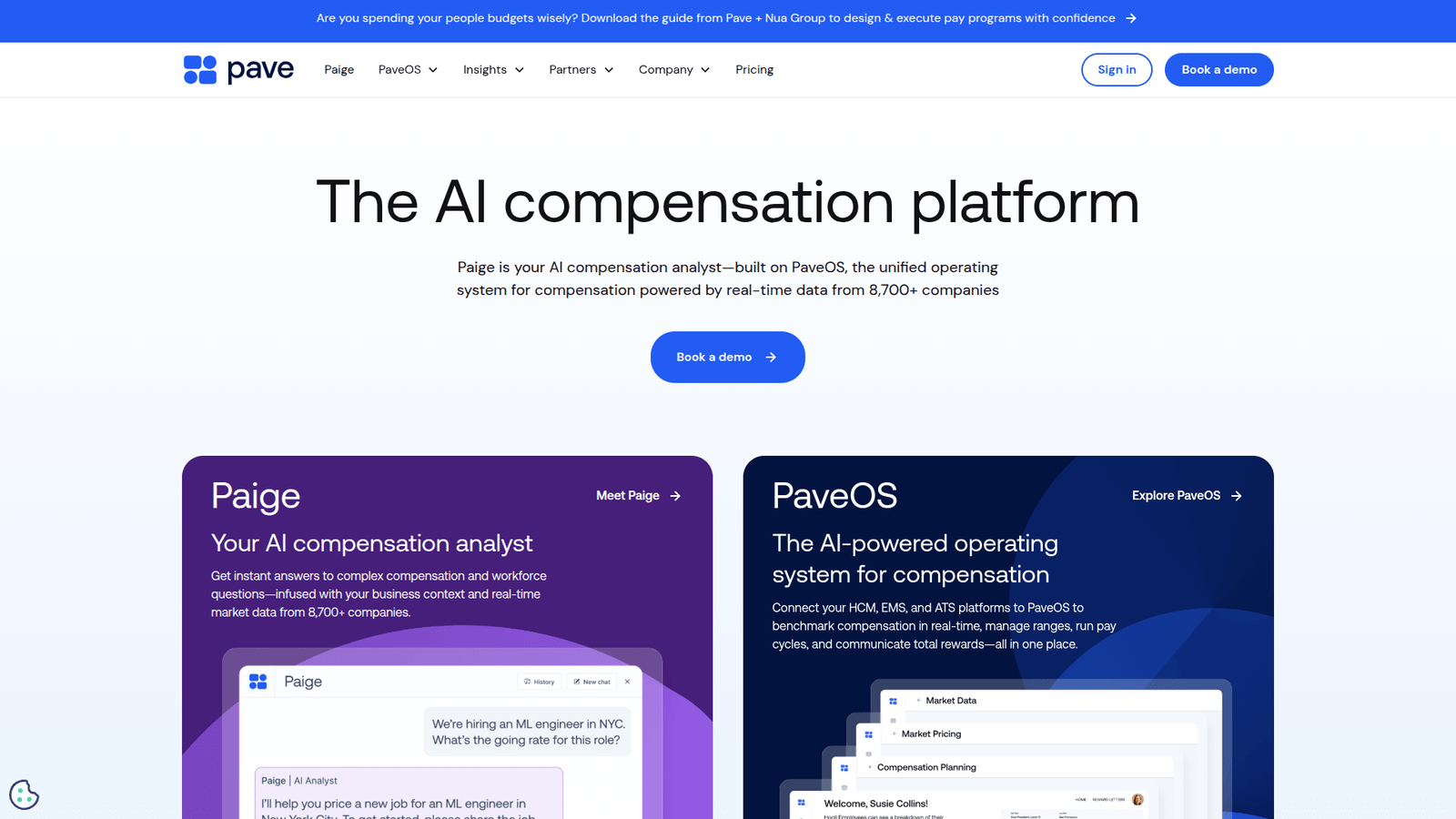
It’s an AI-powered platform specifically designed to revolutionise how companies handle compensation and benefits.
It takes the guesswork out of salaries, equity, and total rewards.
Instead of manual data collection and outdated surveys, Pave taps into a vast, real-time dataset.
It’s built for HR professionals, recruiters, and executive teams who need to make data-driven decisions about their people’s pay.
The core idea? Give you instant access to accurate, fresh market data.
No more waiting months for survey results.
No more relying on patchy information from competitor intel.
It helps you benchmark salaries, understand market trends, and design compensation structures that are both competitive and fair.
It’s about making sure you’re not overpaying or, worse, underpaying your talent.
It connects with your existing HRIS and payroll systems.
This means it pulls your company’s compensation data, analyses it against the market, and gives you actionable insights.
It’s built for scale, from startups to large enterprises.
Its goal is to ensure you have the best possible strategy for Compensation and Benefits Analysis, keeping your best talent happy and attracting new stars.
In essence, Pave turns complex compensation data into simple, digestible insights.
It allows HR and recruitment teams to focus on strategy and people, not spreadsheets.
This tool aims to give you the confidence to make pay decisions that stand up to scrutiny.
It’s about cutting through the noise and getting to the numbers that matter.
Key Features of Pave for Compensation and Benefits Analysis
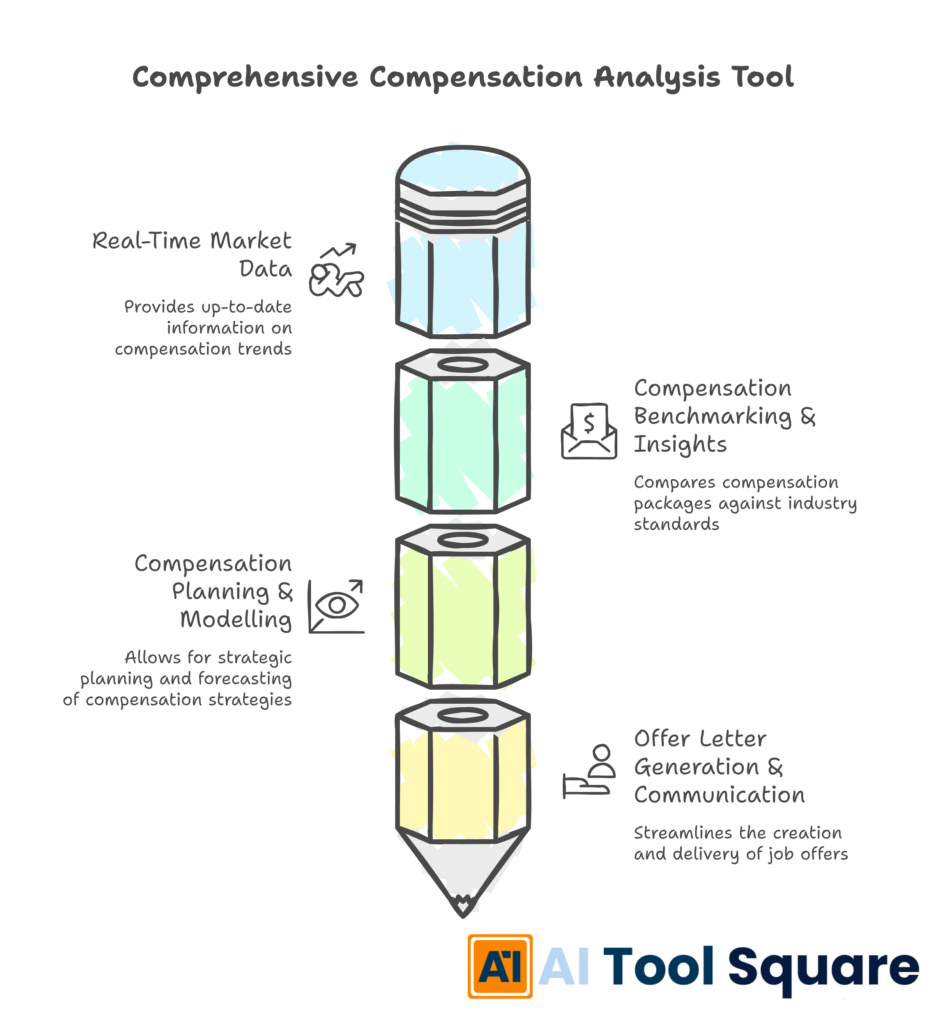
Let’s break down the mechanics. What does Pave actually do?
It’s not just a fancy calculator. It’s a suite of tools designed to tackle specific pain points in Compensation and Benefits Analysis.
Here are the heavy hitters:
- Real-Time Market Data: This is the big one. Pave gives you access to real-time compensation data. Traditional compensation surveys are often outdated the moment they’re published. Pave connects with thousands of companies globally, aggregating anonymised data. This means you’re seeing what companies are *actually* paying right now, not what they were paying six months ago. You can benchmark specific roles, industries, and even locations with incredible precision. This feature alone can save you weeks of research and give you an undeniable edge in recruitment. You’ll know if your offer is truly competitive.
- Compensation Benchmarking & Insights: Forget manual data entry and pivot tables. Pave automates the benchmarking process. You upload your compensation data, and it instantly compares it to its vast market dataset. It shows you exactly where your salaries stand relative to the market median, 75th percentile, or even specific peer groups. It highlights pay gaps, identifies underpaid or overpaid roles, and flags areas where your compensation strategy might be off. This provides clarity. It gives you the insights needed to adjust your pay bands, make fair offers, and retain talent effectively. You get a clear picture of your total rewards strategy.
- Compensation Planning & Modelling: This is where Pave really shines for strategic HR. Planning your annual compensation review or budgeting for new hires can be a nightmare. It allows you to model different compensation scenarios. Want to see the impact of increasing salaries by 5% across the board? Or what about adjusting equity grants? Pave lets you simulate these changes, showing the financial impact and how your pay will stack up against the market *after* the changes. It helps you design equitable and competitive compensation plans with confidence. This feature is crucial for proactive strategic planning, not just reactive adjustments. It removes the stress from budgeting.
- Offer Letter Generation & Communication: You’ve done the analysis, you’ve decided on the right offer. Now what? Pave streamlines the offer process. It can help generate professional, clear offer letters that detail total compensation, including salary, bonus, equity, and benefits. It ensures consistency and compliance. Beyond just generating letters, it also provides tools to communicate compensation clearly to candidates and employees. Transparency is key to trust. Pave helps you articulate the full value of your compensation package, making it easier for candidates to understand and accept your offers. It’s about more than just numbers; it’s about presenting value effectively.
Benefits of Using Pave for HR and Recruitment
Okay, so we know what Pave does. But what’s the actual payoff?
Why should anyone in HR and Recruitment care?
The benefits stack up quickly, especially when you’re knee-deep in Compensation and Benefits Analysis.
First off, **time savings are massive**. Imagine cutting down weeks of manual data compilation and analysis to mere minutes.
That’s what it offers. No more chasing outdated survey reports. No more wrestling with spreadsheets.
This frees up your HR team to focus on strategic initiatives, not administrative chores.
You can spend more time on talent development, employee engagement, or improving company culture.
Then there’s the **quality improvement**. Pave’s real-time data means your compensation decisions are based on the freshest market insights available.
This isn’t just “good enough” data; it’s highly accurate. This leads to better, more competitive compensation packages.
Better packages mean you attract better talent. It’s a direct line from data quality to talent acquisition.
Pave also helps **overcome creative blocks** in compensation strategy.
When you have instant access to market trends and the ability to model different scenarios, you can experiment.
You can design innovative compensation structures that truly differentiate your company.
It moves you from reactive adjustments to proactive, strategic planning.
It also means you’re not just guessing if your pay is fair. You *know*.
This certainty builds trust with employees.
It helps with **employee retention**. Employees are less likely to look elsewhere if they know they’re being compensated fairly and competitively.
Pave provides the data to back up your pay decisions, allowing for transparent conversations with your team.
For **recruitment**, it is a game-changer. Imagine walking into an offer negotiation knowing precisely where your proposed salary stands against the market.
You can make competitive offers quickly, reducing the risk of losing top candidates to competitors who move faster.
It enhances your employer brand by demonstrating a data-driven, fair approach to compensation.
Pave essentially gives you a superpower in the talent market.
It allows you to make decisions with confidence, not just gut feelings.
It helps you build a more equitable, transparent, and ultimately, more successful organisation.
It’s about making your HR team an undeniable strategic asset, armed with the best data.
Pricing & Plans

Alright, let’s talk brass tacks: what’s this going to cost you?
Pave operates on a subscription model, like most SaaS tools.
They typically don’t publish their exact pricing tiers openly on their website.
This is common for enterprise-level software because pricing often depends on factors like:
* The size of your company (number of employees).
* The specific features you need (e.g., just benchmarking, or full compensation planning).
* The level of integration required with your existing systems.
So, while there isn’t a “free plan” in the traditional sense for individuals, Pave sometimes offers a demo or a trial period.
This lets you see the tool in action with your own data before committing.
The premium version generally includes access to their full suite of features.
This means real-time market data, advanced benchmarking, sophisticated compensation planning, and integration capabilities.
It’s designed to be a comprehensive solution for companies serious about their compensation strategy.
How does it compare to alternatives?
Many companies still rely on traditional compensation survey providers. These are often expensive, and the data can be outdated by the time you get it.
Other tools might offer pieces of what it provides, but few integrate real-time market data with robust planning and communication features in one platform.
Pave’s value proposition is its real-time insights and automation.
This cuts down on manual work significantly.
While the upfront cost might seem higher than a one-off survey purchase, consider the ongoing value.
You’re getting continuous, up-to-date information and the tools to act on it.
For companies where talent attraction and retention are critical, the investment in Pave can easily pay for itself.
Think about the cost of losing a key employee due to uncompetitive pay.
Or the cost of overpaying for a role because you didn’t have accurate market data.
It aims to mitigate these risks.
It’s designed for businesses ready to invest in making smart, data-driven compensation decisions.
To get precise pricing, you’ll need to contact Pave directly for a custom quote.
They’ll assess your specific needs and tailor a plan accordingly.
Hands-On Experience / Use Cases
Let me paint a picture of what using Pave actually feels like.
Imagine you’re an HR Manager, Sarah, at a fast-growing tech startup.
You’ve just secured a new round of funding.
Now, you need to hire 20 new engineers, product managers, and sales reps in the next quarter.
This isn’t just “post a job” stuff. This is strategic.
The market for tech talent is red hot.
Sarah’s old process for Compensation and Benefits Analysis was a nightmare.
She’d buy a few industry reports, try to cross-reference data points, and then spend days in spreadsheets.
The numbers were always a bit fuzzy, and by the time she’d prepared an offer, the market might have shifted.
Then she found it.
The onboarding was surprisingly smooth. She connected Pave to the company’s HRIS (like Workday or BambooHR) and payroll system.
Within hours, it had ingested her company’s existing compensation data.
First task: **Benchmarking the new Senior Software Engineer role.**
Instead of guessing, Sarah navigates to Pave’s benchmarking tool.
She inputs the role, location (say, London), and seniority.
Instantly, it displays market data: median salary, 75th percentile, total compensation (including equity and bonus).
She sees that her current internal pay band for similar roles is slightly below the 50th percentile for the market.
This is a problem.
With Pave’s insights, she can adjust the proposed salary range for the new hires.
She also sees competitors are offering significant equity.
Pave provides the intel to make a compelling, data-backed offer.
Next, **planning annual salary reviews.**
It’s Q4, and Sarah needs to budget for raises.
She uses Pave’s compensation planning feature.
She models different scenarios: a 3% blanket raise, a performance-based raise, or targeted adjustments for critical roles.
Pave shows her the projected budget impact of each scenario.
It also highlights employees whose current compensation falls significantly below market rate, helping her address potential flight risks.
This allowed her to present a data-driven proposal to the executive team.
No more “I think we should do this.” It’s “The market data suggests X, and this plan achieves Y.”
The usability is straightforward. The dashboards are clean and intuitive.
You don’t need to be a data scientist to understand the insights.
The platform visualises complex data into easy-to-read charts and graphs.
The results for Sarah’s company were tangible.
They were able to make competitive offers faster, leading to a higher offer acceptance rate.
Employee attrition related to compensation started to decrease.
The executive team had more confidence in HR’s compensation recommendations.
Pave gave Sarah a clear, data-driven approach to an historically opaque and manual process.
It moved her from reactive compensation management to proactive, strategic talent investment.
Who Should Use Pave?

So, who’s Pave really built for?
Who gets the most bang for their buck with this tool?
If you’re in the world of HR and Recruitment, specifically dealing with Compensation and Benefits Analysis, Pave is probably on your radar.
Let’s break down the ideal user profiles:
**HR Leaders and Directors:** If you’re responsible for overall compensation strategy, budget, and ensuring your company attracts and retains top talent, Pave is a no-brainer. It gives you the high-level insights and granular data needed to make executive decisions with confidence. You’ll use it to set company-wide pay policies and plan for the future.
**Compensation Analysts/Managers:** This is your bread and butter. If your day involves benchmarking, salary surveys, and data analysis, Pave will streamline your entire workflow. It automates much of the grunt work, freeing you up for more strategic analysis and recommendations. It’s like having a super-powered assistant.
**Talent Acquisition/Recruitment Teams:** Ever lost a candidate because your offer wasn’t competitive, and you didn’t know until it was too late? Pave arms recruiters with real-time market data to craft compelling, competitive offers quickly. This means faster hiring cycles and a higher offer acceptance rate.
**Small to Medium-Sized Businesses (SMBs) with Growth Ambitions:** Many SMBs struggle with compensation because they lack the resources for dedicated compensation teams or expensive surveys. Pave offers an accessible way to get professional-grade compensation data and tools. If you’re growing fast and need to scale your talent fairly, Pave helps you compete with bigger players.
**Startups:** For startups, cash is king, and equity is a huge part of the package. Pave helps startups benchmark equity compensation and ensure their total rewards packages are attractive to top talent, even with limited cash salaries. It helps them punch above their weight in the talent market.
**Executive Teams/C-Suite:** While not daily users, executives benefit from the clear, concise reports Pave generates. They can quickly grasp the company’s compensation health, understand market positioning, and approve compensation budgets based on solid data, not guesswork.
Essentially, anyone who needs to make accurate, data-driven decisions about how much to pay people – and why – will find immense value in Pave.
If you’re tired of guessing games, outdated data, and manual spreadsheets, Pave offers a pathway to a more strategic, efficient, and equitable approach to compensation.
How to Make Money Using Pave
Okay, so you’ve got Pave. It’s making your Compensation and Benefits Analysis smoother. But how can this translate into direct revenue or significant cost savings that feel like money in your pocket?
It’s all about leverage and efficiency.
Here are a few ways Pave can directly or indirectly boost your bottom line:
- Offer Compensation Consulting Services: This is a direct play. If you’re an independent HR consultant or run a small HR agency, Pave can be your secret weapon. Instead of relying on expensive, generic survey data, you can use Pave to offer hyper-accurate, real-time compensation benchmarking and strategy services to your clients. You can help startups, SMBs, or even larger companies without a dedicated comp team. You charge a premium for this expertise, backed by Pave’s powerful data. This expands your service offerings and attracts higher-value clients.
- Optimise Talent Acquisition Spend: Every bad hire, every protracted recruitment cycle, costs money. Pave helps you make competitive offers quickly, reducing time-to-hire. It also prevents overpaying for roles by giving you precise market data. If you consistently make offers that are “just right” – competitive but not excessive – you save significant budget on salaries and recruitment fees. For example, if Pave helps you shave 5-10% off the salary of 10 new hires, that’s a direct saving that impacts your profit.
- Reduce Employee Attrition Costs: Employee turnover is expensive. The cost of replacing an employee can range from 50% to 200% of their annual salary. Pave helps identify pay gaps and ensures your employees are compensated fairly against the market. By proactively addressing compensation issues, you boost retention. Lower attrition means less money spent on recruiting, onboarding, and training replacements. That’s money staying in your company’s coffers.
Let’s look at a quick example:
**Case Study: How “CompSolve HR” (A Fictional Consulting Firm) Makes £10K/Month Using Pave**
“CompSolve HR” is a small, two-person consultancy. Before Pave, they struggled to compete with larger firms for compensation projects. Their data sources were limited, and their analysis took too long.
After integrating Pave, they now offer “Real-Time Compensation Audits” to local tech startups. They charge £2,000 – £3,000 per audit.
Using Pave, they can:
1. **Onboard a client’s data** in a day.
2. **Run a full compensation benchmark** against Pave’s real-time market data in hours.
3. **Identify specific pay gaps**, roles that are over/underpaid, and recommend precise adjustments.
4. **Model future compensation budgets** and offer structures.
This entire process, which used to take them weeks and cost them access to expensive, static surveys, now takes just a few days. They can deliver high-value reports faster and more accurately.
They typically handle 4-5 such projects a month. That’s a solid £8,000 – £15,000 in monthly revenue directly attributable to the efficiency and data power Pave provides.
They also help clients design competitive equity plans, further increasing their value proposition and service fees.
Pave becomes an enabler. It allows you to deliver a superior, faster, and more accurate service in a critical area of business. Whether it’s through direct client work or massive internal cost savings, Pave helps you put more money where it matters.
Limitations and Considerations
Alright, no tool is a magic bullet, and Pave is no exception.
While it’s a powerful ally for Compensation and Benefits Analysis, it does come with a few things to keep in mind.
It’s important to have a clear picture before you dive in.
First up, **data accuracy and relevance**.
Pave’s strength is its real-time data, pulled from thousands of connected companies.
But the quality of that data still relies on the companies contributing it.
If a significant portion of its data comes from specific industries or geographies, it might be less precise for highly niche roles or very specific local markets.
Always cross-reference with your own market intelligence where possible, especially for unique positions.
It’s AI, not oracle.
Then there’s the **learning curve**.
While Pave is generally user-friendly, like any sophisticated platform, there’s an initial period of learning.
Connecting it to your HRIS, understanding all the dashboard features, and customising reports will take some time and effort.
It’s not something you’ll master in an hour.
However, the investment in learning pays off quickly with the efficiencies gained.
**Integration complexity** can also be a factor.
Pave needs to integrate with your existing HR and payroll systems to pull accurate data.
While they aim for seamless integration, every company’s tech stack is unique.
You might run into some initial setup challenges or require support from your IT team.
It’s a one-time hurdle, but it’s there.
Another point: Pave provides data and tools for *analysis* and *planning*.
It doesn’t replace the human element entirely.
You still need experienced HR professionals to interpret the data, make strategic decisions, and communicate those decisions effectively.
Pave gives you the answers, but you still need to ask the right questions and apply context.
It’s a sophisticated calculator, not a replacement for judgment.
Finally, **cost**.
As discussed, Pave isn’t free, and its pricing is typically enterprise-level.
For very small businesses with extremely tight budgets, the investment might be significant.
You need to weigh the benefits of accuracy, time savings, and strategic advantage against the subscription cost.
It’s an investment in your compensation infrastructure.
Pave is a fantastic tool, but like all tools, it works best when understood and applied thoughtfully.
It’s about augmenting human expertise, not replacing it entirely.
Final Thoughts
So, is Pave a game-changer for Compensation and Benefits Analysis in HR and Recruitment?
Absolutely.
In a world where talent is the ultimate differentiator, and every penny counts, having real-time, accurate compensation data isn’t a luxury; it’s a necessity.
Pave addresses one of the biggest headaches for HR professionals: getting reliable compensation insights, quickly and efficiently.
It pulls back the curtain on market rates, allowing you to make offers that are competitive, fair, and fiscally responsible.
It streamlines your entire compensation workflow, from benchmarking and planning to communication.
This means less time wrestling with outdated spreadsheets and more time focusing on what truly matters: your people and your strategy.
For companies looking to attract top talent, boost retention, and build a transparent, equitable pay culture, Pave offers a powerful solution.
It empowers HR teams to move beyond administrative tasks and become true strategic partners to the business.
It’s not just about saving time; it’s about making smarter decisions that impact your entire organisation.
My recommendation? If you’re serious about your compensation strategy, and you’re tired of the old, manual ways of doing things, you owe it to yourself to explore Pave.
It’s an investment in efficiency, accuracy, and ultimately, in your company’s talent future.
Don’t guess; know. And Pave helps you know.
Visit the official Pave website
Frequently Asked Questions
1. What is Pave used for?
Pave is an AI-powered platform primarily used for Compensation and Benefits Analysis. It helps companies benchmark salaries, equity, and total rewards against real-time market data. This allows HR and recruitment teams to make competitive and fair compensation decisions, plan budgets, and attract top talent.
2. Is Pave free?
No, Pave is not a free tool. It operates on a subscription model, with pricing typically tailored to the size of your company and the specific features required. They often offer demos or trial periods to prospective clients.
3. How does Pave compare to other AI tools?
Pave stands out by focusing specifically on compensation data, offering real-time market insights. While other AI tools might assist with general HR tasks or analytics, Pave’s specialisation in dynamic compensation benchmarking and planning sets it apart. It directly integrates with HRIS and payroll systems for a comprehensive view.
4. Can beginners use Pave?
Yes, beginners can use Pave. While there’s an initial learning curve, Pave’s interface is designed to be intuitive and user-friendly. It visualises complex data clearly, making it accessible even for those without extensive compensation analysis experience. Support resources are typically available to help users get started.
5. Does the content created by Pave meet quality and optimization standards?
Pave doesn’t “create content” in the traditional sense like an AI writer. Instead, it generates highly accurate and optimised compensation data and reports. These insights are designed to meet stringent industry standards for fairness, market competitiveness, and strategic planning. The data itself is high quality, informing optimal compensation strategies.
6. Can I make money with Pave?
Yes, you can make money with Pave both directly and indirectly. Directly, you can offer compensation consulting services to clients, leveraging Pave’s real-time data for accurate benchmarking and strategy. Indirectly, Pave helps save significant money by optimising talent acquisition spend (preventing overpayment, reducing time-to-hire) and lowering employee attrition costs through competitive and equitable compensation, which ultimately boosts your company’s profitability.