

In this rapidly evolving digital world, understanding AI fraud detection tools is no longer a luxury, but a necessity. This article unpacks the top AI fraud detection tools that are building real trust and safeguarding businesses.
Unmasking Deception: The Power of AI Fraud Detection Tools
I’ve seen firsthand how crucial it is to have robust AI fraud detection tools in your arsenal. The digital economy, while brimming with opportunity, is also a magnet for increasingly sophisticated fraudsters. If you’re running a business, you simply cannot afford to ignore the rising tide of financial crime. Losing money to scams isn’t just about the immediate financial hit; it erodes customer confidence, tarnishes your brand reputation, and can send your entire operation spiralling. That’s why I’m here to cut through the noise and show you exactly which AI fraud detection tools are worth your time and investment.
Forget the old, reactive methods of fraud prevention. They’re slow, inefficient, and frankly, they’re losing the battle. We’re talking about a new era where artificial intelligence isn’t just assisting; it’s leading the charge. These AI fraud detection tools leverage machine learning, behavioral analytics, and predictive modeling to spot suspicious patterns before they become catastrophic losses. My goal here is to empower you with the knowledge to select and implement the best solutions for your unique challenges. This isn’t just about security; it’s about building a foundation of trust with your customers and stakeholders, ensuring long-term success in a treacherous digital landscape.
Table of Contents
- What Are the Best Fraud Detection Tools?
- Top AI Fraud Detection Tools (Detailed Reviews)
- Feature Comparison
- Pricing Breakdown
- Real-World Use Cases
- Who Should Use Each Tool?
- How to Choose the Right Tool
- Making Money with These Tools
- Common Limitations
- Final Verdict and Recommendations
- Frequently Asked Questions
What Are the Best Fraud Detection Tools?
When we talk about the best AI fraud detection tools, we’re not just discussing software; we’re talking about sophisticated systems designed to outsmart the most cunning fraudsters. The sheer volume of transactions and data points in modern business makes manual fraud detection an impossible task. That’s where AI steps in, offering unparalleled speed, accuracy, and scalability. These tools are built on algorithms that learn and adapt, constantly refining their ability to identify anomalies and predict potential threats. They don’t just react to fraud; they proactively work to prevent it, saving businesses millions in potential losses and reputation damage.
The market for Fraud Detection solutions is dynamic, with new innovations emerging regularly. The tools I’m going to highlight aren’t just popular; they’re proven performers, chosen for their comprehensive feature sets, their ability to integrate seamlessly with existing systems, and their demonstrable impact on reducing fraud rates. From real-time transaction monitoring to advanced identity verification, each of these AI fraud detection tools brings something unique to the table. My focus is on providing you with actionable insights, so you can clearly see which solution aligns best with your operational needs and security posture. We’re looking for tools that don’t just detect, but empower you to make smarter, faster decisions.
Before we dive into the specifics of each tool, understand this: the “best” tool isn’t a one-size-fits-all answer. It depends entirely on your business model, the types of fraud you’re most susceptible to, and your budget. However, there are common threads of excellence among the top AI fraud detection tools: superior machine learning capabilities, intuitive dashboards, robust reporting, and excellent customer support. These are the benchmarks I use to evaluate their effectiveness. Ultimately, the goal is to find an AI fraud detection solution that not only protects your assets but also streamlines your operations, allowing you to focus on growth without constant worry about security breaches. This is about being proactive, not reactive, in the fight against fraud.
Top AI Fraud Detection Tools (Detailed Reviews)
Sift – AI Fraud Detection Tools Review
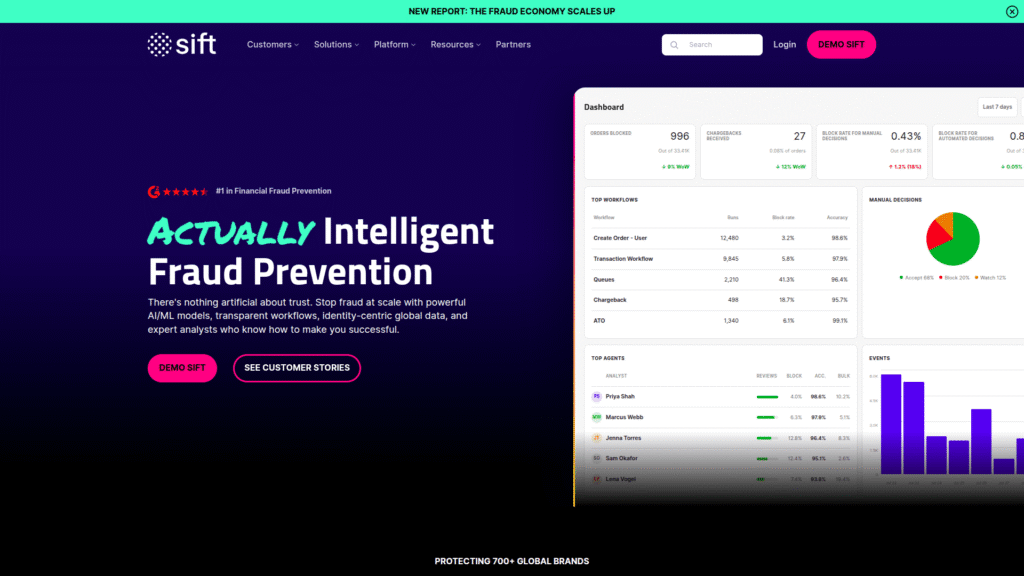
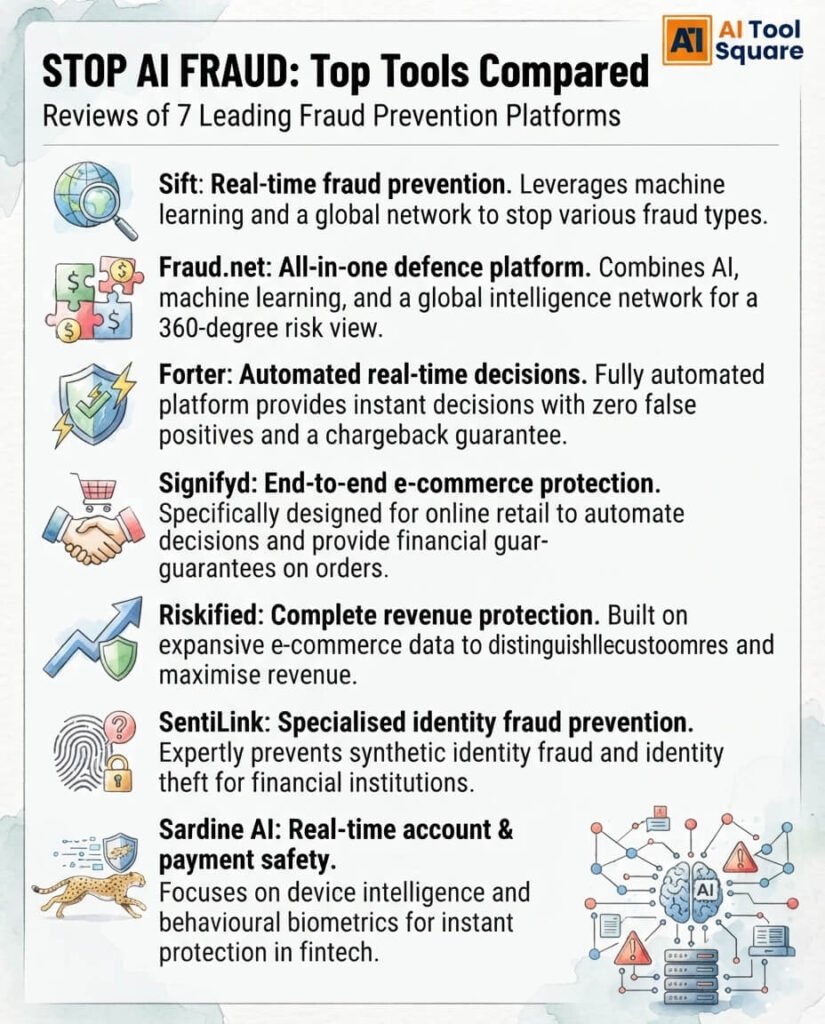
Sift is a leading platform, offering a comprehensive suite of AI fraud detection tools designed to stop fraud and abuse across the entire customer journey. Their focus is on a real-time, global fraud network that leverages machine learning to prevent various types of fraud, from payment fraud to account takeovers and content abuse. Sift’s technology analyses billions of events daily, constantly learning and adapting to new fraud patterns. It’s an incredibly powerful system that provides a holistic view of user behaviour, enabling businesses to make faster, more accurate decisions. Their emphasis on a “Digital Trust & Safety” approach means they’re looking beyond just transactions, considering the full user experience.
- Features: Real-time machine learning, global data network, payment fraud prevention, account takeover prevention, content abuse prevention, promotions abuse prevention, chargeback prevention, custom rules engine, whitebox explanations, API integrations, case management.
- Pricing: Custom pricing based on business needs and transaction volume. Generally enterprise-level.
- Pros: Extremely effective at preventing various types of fraud, leverages a vast global network for superior pattern recognition, excellent API for integration, provides granular insights.
- Cons: Can be a significant investment for smaller businesses, requires some technical expertise for full optimisation, may have a learning curve for new users.
Fraud.net – AI Fraud Detection Tools Review
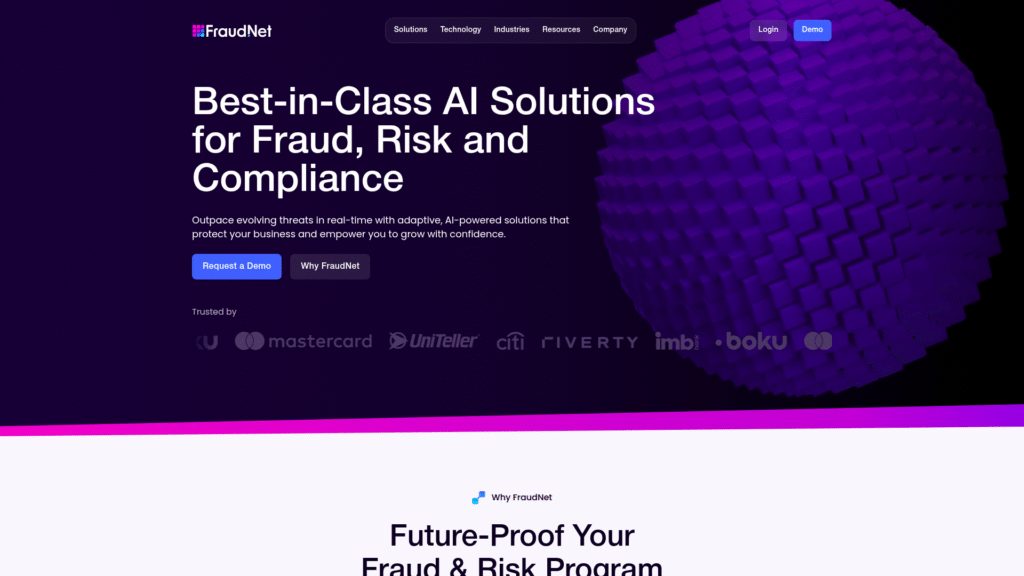
Fraud.net provides a powerful, all-in-one fraud prevention platform, bringing together AI fraud detection tools for a multi-layered defence. Their solution combines artificial intelligence, machine learning, and a global fraud intelligence network to combat various forms of financial crime. Fraud.net prides itself on its ability to offer a 360-degree view of risk, consolidating multiple data sources to provide actionable insights. They cater to a wide range of industries, offering tailored solutions for e-commerce, financial services, and telecommunications. What sets them apart is their dedication to making sophisticated fraud prevention accessible and manageable for businesses of all sizes.
- Features: AI and machine learning, predictive analytics, identity verification, transaction monitoring, global fraud intelligence network, chargeback management, behavioural biometrics, device fingerprinting, custom rules engine, real-time alerts.
- Pricing: Tiered pricing plans, including options for small businesses and enterprises. Specifics are usually available upon request.
- Pros: Comprehensive platform covering multiple fraud types, strong emphasis on identity verification, good for businesses seeking an all-in-one solution, scalable for growth.
- Cons: Some users report a steep learning curve for advanced features, integration can sometimes be complex depending on existing infrastructure, reporting customisation could be improved.
Visit official Fraud.net website
Forter – AI Fraud Detection Tools Review
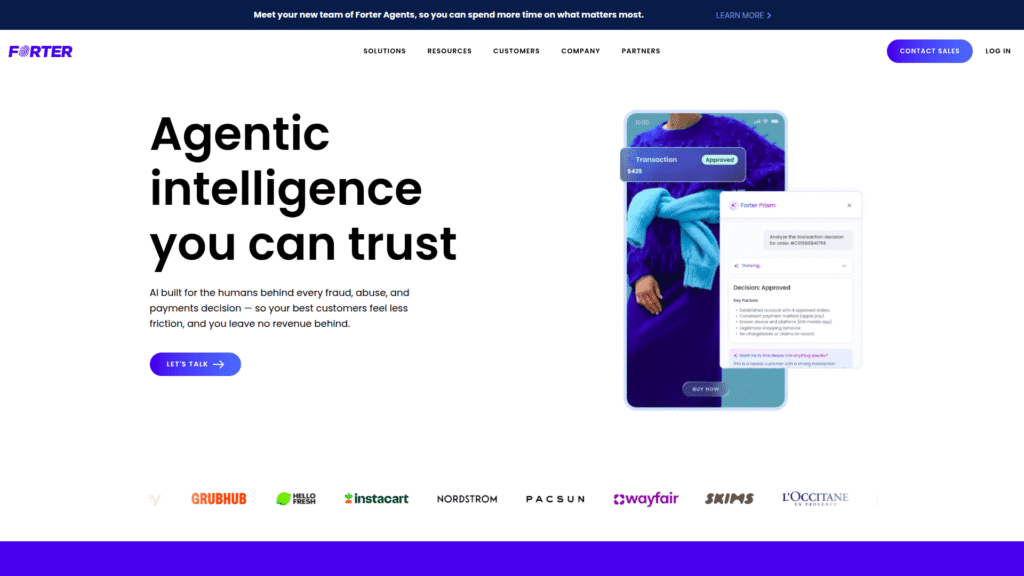
Forter is renowned for its fully automated, real-time fraud prevention platform, focusing on providing instant decisions with zero false positives. Their AI fraud detection tools leverage deep machine learning and extensive data analysis to approve legitimate transactions and block fraudulent ones, virtually eliminating manual reviews. Forter operates on a chargeback guarantee model, demonstrating their confidence in their system’s accuracy. This commitment to accuracy and automation makes them a compelling choice for businesses looking to maximise approval rates while minimising fraud losses. They serve a global client base, handling billions of transactions and continually refining their algorithms.
- Features: Real-time fraud prevention, machine learning algorithms, behavioural analysis, identity intelligence, chargeback guarantee, fraud insights and reporting, seamless integration, account protection, policy abuse prevention.
- Pricing: Custom pricing, typically based on transaction volume and specific service needs.
- Pros: Extremely high accuracy with a chargeback guarantee, fully automated for minimal manual intervention, excellent for increasing approval rates, scalable for high-volume businesses.
- Cons: Can be a premium solution, might be overkill for very small businesses with low transaction volumes, integration could require developer resources.
Signifyd – AI Fraud Detection Tools Review
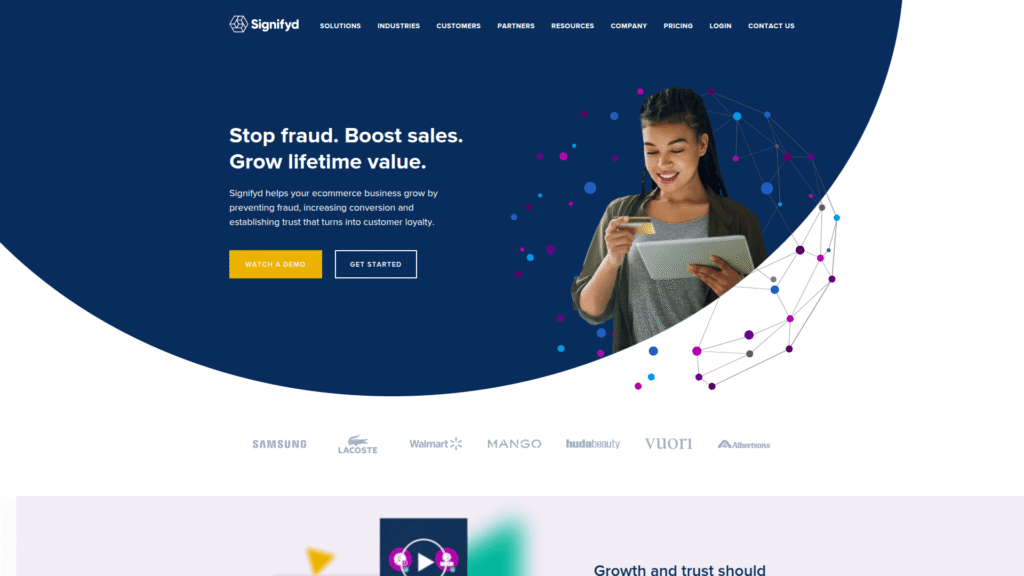
Signifyd offers end-to-end e-commerce fraud protection, utilising powerful AI fraud detection tools to automate fraud decisions and provide a financial guarantee on approved orders. Their platform is specifically designed to tackle the unique challenges of online retail, helping businesses grow by preventing fraud, increasing approval rates, and eliminating chargebacks. Signifyd’s machine learning models learn from a vast network of e-commerce transactions, giving them an edge in identifying sophisticated fraud attempts. They are a strong contender for any e-commerce business looking to scale securely and confidently, offering a robust safety net against financial losses. They understand the nuances of online shopping behaviour.
- Features: E-commerce fraud protection, chargeback guarantee, machine learning, real-time decisioning, abuse prevention, policy abuse prevention, identity verification, insights and analytics, seamless integration with major e-commerce platforms.
- Pricing: Based on transaction volume and the level of guarantee required. Custom quotes are provided.
- Pros: Excellent for e-commerce businesses, chargeback guarantee provides peace of mind, high approval rates, easy integration with popular e-commerce platforms.
- Cons: Primarily focused on e-commerce, so less suitable for other industries, pricing can be higher for smaller stores, some reliance on platform integrations.
Visit official Signifyd website
Riskified – AI Fraud Detection Tools Review
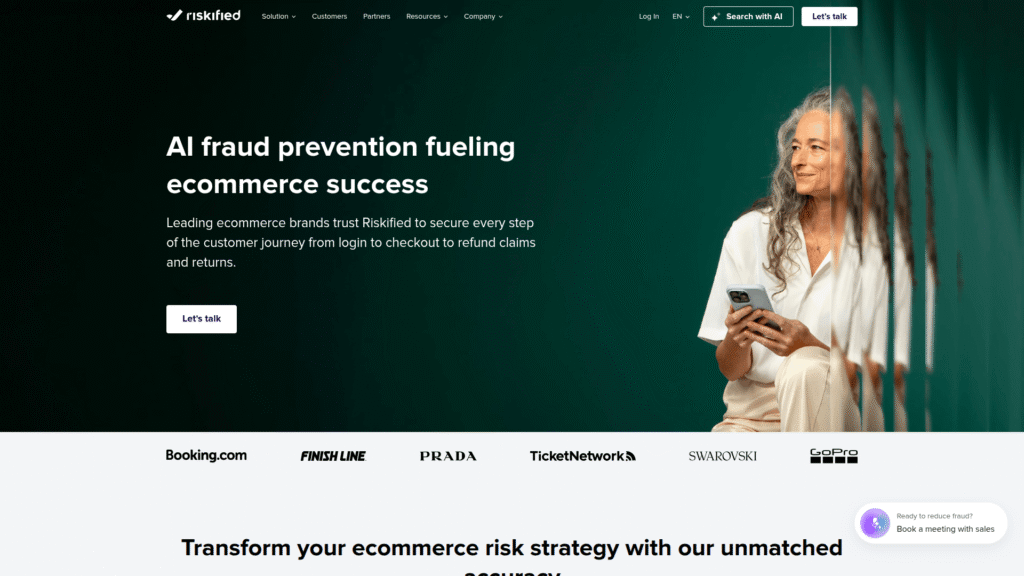
Riskified provides a complete fraud prevention solution, leveraging powerful AI fraud detection tools to help businesses increase revenue and reduce fraud-related costs. Their platform is built on an expansive network of e-commerce data, allowing their machine learning models to accurately distinguish between legitimate and fraudulent customers. Riskified offers chargeback guarantees and focuses on maximising approval rates for businesses across various industries, including retail, travel, and digital goods. They pride themselves on their ability to deliver instant decisions, ensuring a smooth customer experience while protecting against financial losses. Their approach is truly data-driven and results-oriented.
- Features: Fraud prevention, chargeback guarantee, machine learning, behavioural analytics, identity verification, policy abuse prevention, account protection, real-time decisioning, detailed analytics and reporting.
- Pricing: Custom pricing, typically volume-based with different service tiers.
- Pros: Strong focus on increasing approval rates and reducing chargebacks, comprehensive fraud protection, chargeback guarantee, suitable for a range of industries beyond just e-commerce.
- Cons: Can be a premium solution, integration may require some development work, customer support response times can vary based on plan.
Visit official Riskified website
SentiLink – AI Fraud Detection Tools Review
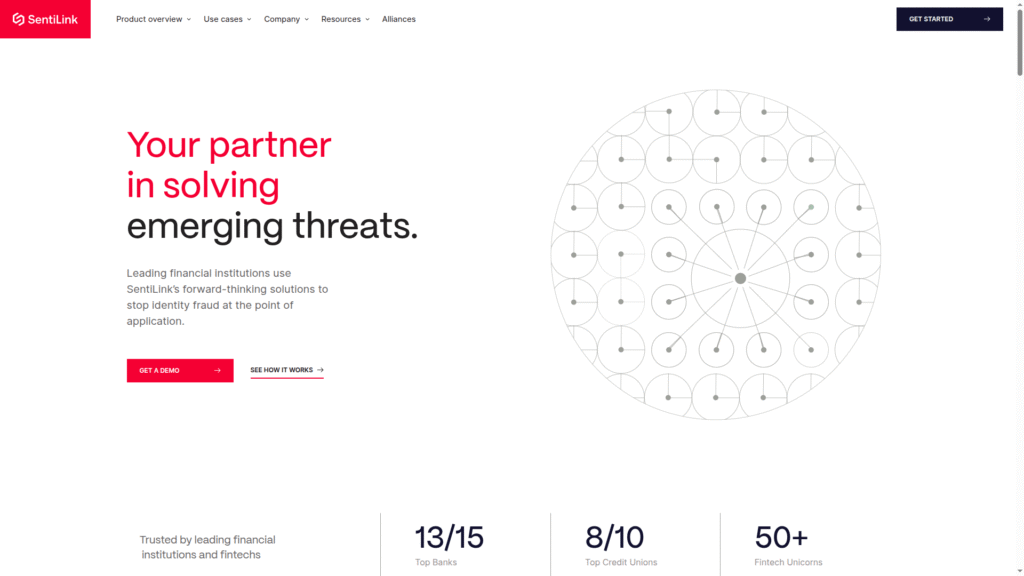
SentiLink specialises in preventing synthetic identity fraud and identity theft, offering powerful AI fraud detection tools tailored for financial institutions and fintech companies. Their advanced machine learning models are trained on billions of identity data points, enabling them to identify subtle patterns indicative of synthetic identities that often bypass traditional fraud checks. SentiLink’s unique expertise in this complex area of fraud makes them an essential partner for any organisation dealing with new account openings, loan applications, or other identity-centric transactions. They fill a critical gap in the fraud prevention market, providing specialised tools for a particularly difficult problem. This isn’t your average fraud solution.
- Features: Synthetic identity fraud detection, identity theft prevention, machine learning, behavioural analytics, real-time identity verification, risk scoring, data enrichment, API for seamless integration.
- Pricing: Custom pricing based on usage and specific needs.
- Pros: Highly specialised and effective against synthetic identity fraud, excellent for financial institutions and fintech, strong API for integration, proactive in identifying emerging identity fraud patterns.
- Cons: Niche focus means it’s not a general-purpose fraud solution, may need to be complemented by other tools for broader fraud coverage, less relevant for non-identity-focused businesses.
Visit official SentiLink website
Sardine AI – AI Fraud Detection Tools Review
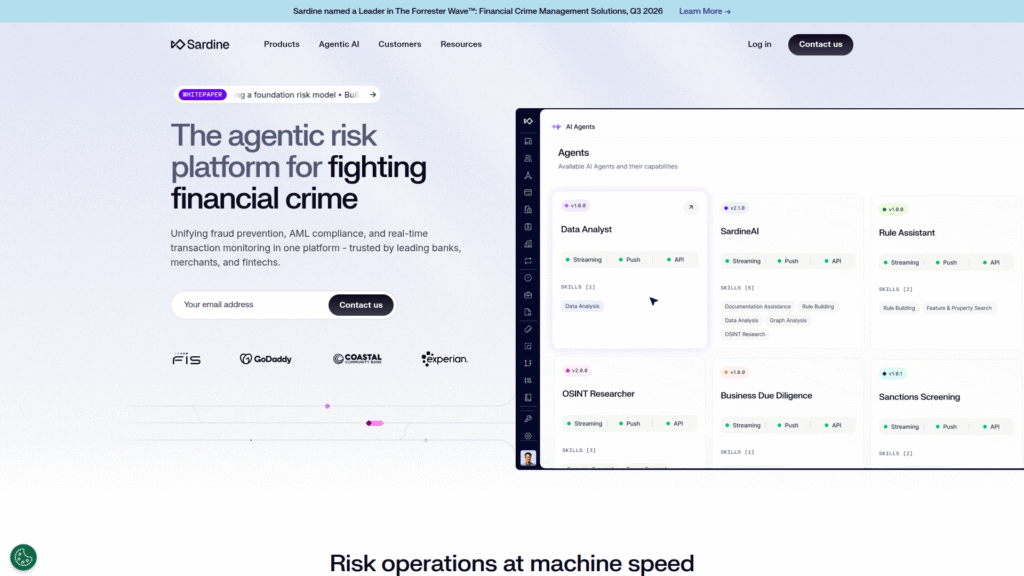
Sardine AI provides real-time fraud prevention and compliance solutions, focusing on instant account and payment protection. Their AI fraud detection tools leverage a combination of device intelligence, behavioural biometrics, and a vast global network to detect and prevent various types of fraud, including account takeovers, payment fraud, and money laundering. Sardine AI is particularly strong for businesses in the fintech and crypto space, where rapid transactions and unique fraud vectors require specialised protection. They aim to provide a comprehensive, modern solution that adapts quickly to the ever-changing threat landscape, ensuring secure and seamless digital experiences for users. Their technology is built for speed and accuracy.
- Features: Real-time fraud detection, behavioural biometrics, device intelligence, global data network, payment fraud prevention, account takeover prevention, AML compliance, identity verification, API for integration.
- Pricing: Custom pricing based on transaction volume and features required.
- Pros: Excellent for fintech and crypto businesses, strong focus on real-time protection, robust behavioural biometrics, good for compliance needs, scalable.
- Cons: Newer player in the market compared to some, might require specific integrations for certain legacy systems, some features are very industry-specific.
Visit official Sardine AI website
Feature Comparison
When you’re evaluating AI fraud detection tools, a direct feature comparison is critical. You’ll find that while many tools share core capabilities like machine learning and real-time analysis, their specialisations and strengths vary significantly. For instance, Sift and Forter excel in broad-spectrum fraud prevention across diverse transaction types, leveraging immense global data networks. They are designed to be comprehensive, all-encompassing shields against a wide array of fraudulent activities. This makes them ideal for large enterprises with complex operational structures and varied fraud vectors. They aim to catch everything, everywhere, with minimal false positives.
Conversely, tools like Signifyd and Riskified are champions in the e-commerce space, offering invaluable chargeback guarantees and optimised solutions specifically for online retailers. Their algorithms are finely tuned to the nuances of online shopping behaviour, providing protection against various e-commerce specific threats, from friendly fraud to promotion abuse. If your primary business is online retail, these AI fraud detection tools are likely to offer more tailored and financially protective solutions. They understand the customer journey from browsing to checkout, ensuring every transaction is secure.
Then you have the specialists. SentiLink, for example, shines brightest in the fight against synthetic identity fraud, a notoriously difficult type of fraud to detect with traditional methods. Their focus is laser-sharp, making them indispensable for financial institutions and lending platforms. Similarly, Sardine AI is carving out a niche in fintech and crypto, addressing the unique security challenges presented by high-speed, often irreversible transactions in these sectors. Understanding these distinctions is paramount. Your choice of AI fraud detection tools should directly reflect your industry, the types of fraud you’re most vulnerable to, and your desired level of automation and financial guarantee. This isn’t about finding the ‘best’ overall; it’s about finding the best fit for your business.
Pricing Breakdown
Let’s talk money, because that’s often where the rubber meets the road when considering AI fraud detection tools. Generally speaking, you’ll find that most of the top-tier solutions operate on a custom pricing model. This isn’t them being cagey; it’s a reflection of the fact that fraud prevention needs are highly variable. Factors like your monthly transaction volume, your industry, the specific types of fraud you need to combat, and the level of service and features you require all play a significant role in determining the final cost. Expect to engage in a direct conversation with their sales teams to get an accurate quote tailored to your business.
For large enterprises or businesses with very high transaction volumes, solutions like Sift, Forter, and Riskified will typically fall into the higher investment bracket. Their extensive feature sets, global data networks, and often, chargeback guarantees, justify a premium. These AI fraud detection tools are designed to provide comprehensive, enterprise-grade protection, and their pricing reflects that. While the upfront cost might seem substantial, the potential savings from reduced fraud losses and increased approval rates can quickly dwarf the expenditure. It’s an investment in robust Security and Moderation that pays dividends.
Other providers, such as Fraud.net, might offer more structured tiered pricing, making them potentially more accessible for small to medium-sized businesses or those with more moderate transaction volumes. Even within these tiers, customisation is often possible. Specialists like SentiLink and Sardine AI, while also offering custom pricing, will have their costs influenced by the specific niche services they provide.
When evaluating the pricing of AI fraud detection tools, don’t just look at the raw number. Consider the ROI: how much fraud will it prevent? How many chargebacks will it eliminate? How much will it increase your legitimate approval rates? A higher-priced solution that delivers superior protection and fewer false positives could be significantly more cost-effective in the long run than a cheaper option that lets fraud slip through the cracks. Always look at the total value proposition.
Real-World Use Cases
The applications of AI fraud detection tools are incredibly diverse, spanning across nearly every industry where financial transactions or digital interactions occur. Take e-commerce, for example. Online retailers constantly battle against payment fraud, friendly fraud, and account takeovers. Tools like Signifyd and Riskified shine here, providing automated decisions and chargeback guarantees that allow businesses to approve more legitimate orders without fear, significantly boosting revenue and customer satisfaction. Imagine a Black Friday sale: these AI fraud detection tools are working tirelessly in the background, ensuring genuine customers get their purchases while fraudsters are silently blocked, protecting profit margins.
Financial institutions and fintech companies face an even more complex landscape, dealing with new account fraud, loan application fraud, and, critically, synthetic identity fraud. This is where SentiLink becomes indispensable. By precisely identifying fabricated identities, they protect banks and lenders from massive losses that traditional credit checks often miss. Similarly, Sardine AI is tailored for the high-speed, high-risk environment of cryptocurrency exchanges and digital payments, preventing money laundering and instant payment fraud. These AI fraud detection tools are not just a luxury; they are a fundamental requirement for maintaining the integrity and security of the financial system, preventing illicit activities from flourishing.
Beyond direct financial transactions, AI fraud detection tools also play a vital role in preventing abuse across various platforms. Sift, for instance, with its broad-spectrum capabilities, helps companies combat content abuse, promotional fraud, and even review manipulation. Any platform where user interaction can be monetised or exploited for nefarious purposes benefits immensely from these advanced systems. From ride-sharing apps preventing driver account abuse to gaming platforms combatting in-game currency fraud, the scope is enormous. The common thread is the proactive identification of anomalous behaviour, leveraging machine learning to discern genuine users from malicious actors, thereby building real trust and fostering a secure digital environment for everyone involved. The power of these AI fraud detection tools is in their adaptability.
Who Should Use Each Tool?
Determining the right AI fraud detection tools for your business boils down to specific needs and industry focus. If you’re running a large e-commerce operation with significant transaction volumes and a strong desire to eliminate chargebacks, then Forter, Signifyd, or Riskified are likely your strongest contenders. Their chargeback guarantees and deep understanding of online retail fraud make them incredibly valuable for protecting your bottom line and enhancing customer experience. These platforms are built for scale and designed to integrate seamlessly into existing e-commerce ecosystems, making the transition smooth.
For broader fraud prevention needs across various business models, encompassing account takeovers, payment fraud, and even content abuse, Sift and Fraud.net offer comprehensive solutions. Sift, with its global data network and focus on the entire customer journey, is excellent for large enterprises and diverse digital businesses. Fraud.net, offering a more modular approach, can be a good fit for businesses that need a robust, all-in-one platform but might have slightly more varied budgets. These AI fraud detection tools provide a versatile defence, adapting to different types of fraud patterns as they emerge, which is crucial in a constantly evolving threat landscape. They are designed to be adaptable and powerful.
If your primary concern revolves around the incredibly sophisticated threat of synthetic identity fraud or identity theft, especially within financial services or lending, SentiLink is the specialist you need. Their expertise in this niche is unparalleled. And for companies operating in the fast-paced and high-risk fintech or cryptocurrency sectors, Sardine AI provides the real-time, behaviourally intelligent protection necessary to secure instant payments and digital assets. It’s about matching the tool’s specific strengths with your most pressing vulnerabilities. Don’t try to fit a square peg in a round hole; select AI fraud detection tools that are purpose-built for your challenges, ensuring maximum effectiveness and return on investment.
How to Choose the Right Tool
Choosing the right AI fraud detection tools is not a decision to take lightly. It requires a systematic approach, starting with a thorough understanding of your own business. First, meticulously analyse the types of fraud you’ve experienced or are most vulnerable to. Are you an e-commerce platform struggling with chargebacks? A financial institution battling synthetic identities? Or a digital service provider dealing with account takeovers? Your specific fraud vectors will heavily influence which tool’s specialisations are most relevant. Don’t guess; look at your data and understand your risk profile. This foundational step is often overlooked, but it’s absolutely critical to making an informed decision about AI fraud detection tools.
Next, consider your existing technology stack and infrastructure. How easily will the new AI fraud detection tools integrate with your current systems? Look for robust APIs and pre-built connectors for your e-commerce platforms, payment gateways, or CRM systems. A seamless integration minimises implementation headaches and ensures that data flows smoothly, allowing the AI to function optimally. A tool, no matter how powerful, is only as good as its integration. You want a solution that becomes an extension of your existing setup, not an additional burden. The less friction during integration, the better the long-term adoption and performance of your chosen AI fraud detection tools.
Finally, evaluate the total cost of ownership, not just the quoted price. This includes implementation costs, ongoing maintenance, and the potential for false positives. While a chargeback guarantee sounds appealing, consider if it truly covers all your fraud-related losses. Look into the vendor’s reputation, customer support, and their commitment to continuous innovation. The fraud landscape evolves constantly, so you need AI fraud detection tools that are also evolving. Ask for case studies, speak to references, and ideally, test a demo or run a pilot. This due diligence ensures you select a partner, not just a product, that will genuinely protect your business and help you build real trust with your customers through effective AI fraud detection tools.
Making Money with These Tools
It might sound counterintuitive, but robust AI fraud detection tools don’t just save you money; they actively help you make more. How? It’s all about maximising approval rates and fostering customer trust. When you implement a highly accurate fraud prevention system, you significantly reduce false declines. A false decline occurs when a legitimate customer’s transaction is mistakenly flagged as fraudulent and rejected. This isn’t just an inconvenience; it’s a lost sale, a frustrated customer, and potentially, a permanently damaged relationship. By virtually eliminating false positives, tools like Forter and Riskified ensure that genuine customers complete their purchases, directly boosting your revenue. These AI fraud detection tools are revenue enablers.
Furthermore, by mitigating the risk of chargebacks, these AI fraud detection tools directly protect your profits. Chargebacks are not just about the lost revenue from the disputed transaction; they often come with additional fees and can negatively impact your merchant account standing. Preventing chargebacks means retaining more of your earned revenue and avoiding unnecessary penalties. Tools with chargeback guarantees, such as Signifyd, essentially transfer that financial risk away from your business, allowing you to operate with greater financial certainty. This financial protection translates directly into a healthier bottom line, allowing you to allocate resources towards growth initiatives rather than fraud mitigation.
Finally, by creating a more secure and trustworthy environment, these AI fraud detection tools enhance your brand reputation and foster customer loyalty. Customers are increasingly aware of digital security risks. A business known for its robust security measures and seamless, fraud-free transactions will naturally attract and retain more customers. This improved trust leads to repeat business, positive word-of-mouth, and a stronger competitive advantage. Think of it as investing in your brand equity. The best AI fraud detection tools are not just a cost center; they are strategic assets that drive revenue, reduce risk, and build invaluable customer trust, ultimately contributing to sustainable business growth and profitability.
Common Limitations
While AI fraud detection tools are incredibly powerful, it’s crucial to understand their limitations. No system is 100% foolproof, and expecting perfection will only lead to disappointment. One common limitation is the potential for false positives. Even the most sophisticated machine learning models can occasionally misinterpret a legitimate transaction as fraudulent. While leading tools strive to minimise these, they can still occur, leading to frustrated customers and lost sales. Balancing the sensitivity of the detection algorithms to catch fraud versus allowing legitimate transactions through is a constant challenge for developers of AI fraud detection tools.
Another challenge is the “cold start” problem, especially for newer businesses or new product launches. AI models learn from data. If there isn’t sufficient historical data on legitimate and fraudulent transactions, the initial accuracy of the AI fraud detection tools can be lower. It takes time for the algorithms to learn the specific patterns relevant to your unique business context. This means that for a period, you might experience a higher incidence of false positives or even some undetected fraud as the system “learns the ropes.” It’s an unavoidable aspect of machine learning, but it’s something to be aware of when implementing new AI fraud detection tools.
Furthermore, fraudsters are constantly evolving their tactics. This means AI fraud detection tools need continuous updates and retraining to remain effective against emerging threats. A static system will quickly become obsolete. While leading providers invest heavily in this ongoing development, there can still be a lag between a new fraud technique emerging and the AI models being fully adapted to detect it. This highlights the importance of choosing a vendor committed to continuous innovation and research. Relying solely on automated AI fraud detection tools without any human oversight or a strategy for continuous improvement can leave you vulnerable to novel attacks. It’s a continuous arms race, and your tools need to be at the forefront.
Final Verdict and Recommendations
My final verdict on AI fraud detection tools is unequivocally positive: they are essential for any business operating in the digital economy. The sheer volume and sophistication of modern fraud make manual or outdated methods simply ineffective. The tools we’ve discussed represent the vanguard of fraud prevention, leveraging artificial intelligence and machine learning to offer unparalleled protection. While each has its unique strengths and ideal use cases, the common thread is their ability to provide proactive, intelligent defence against financial crime, building real trust with your customer base and securing your bottom line.
For large enterprises or businesses requiring broad-spectrum fraud protection across diverse transaction types and customer journeys, I strongly recommend Sift or Forter. Their global networks, advanced AI, and comprehensive feature sets make them incredibly powerful, albeit premium, solutions. If you’re an e-commerce business primarily focused on maximising approval rates and eliminating chargebacks, Signifyd and Riskified are tailor-made for your needs, offering financial guarantees that provide immense peace of mind. These AI fraud detection tools are designed to drive revenue while mitigating risk effectively, truly a win-win scenario for online retailers looking to scale.
For financial institutions and fintech companies grappling with identity-specific fraud like synthetic identities, SentiLink is an absolute must-have. Their specialised expertise in this complex area is unmatched. Similarly, for businesses in the high-velocity, high-risk fintech and crypto sectors, Sardine AI offers cutting-edge real-time protection against fast-moving threats.
Ultimately, the best AI fraud detection tools for your business will be the one that most precisely addresses your specific fraud vulnerabilities, integrates seamlessly with your existing infrastructure, and offers a clear return on investment. Don’t view these as mere expenses; they are strategic investments in your business’s security, reputation, and long-term profitability. Implementing the right AI fraud detection tools is not just about avoiding losses; it’s about confidently expanding your business and fostering unwavering customer loyalty.
Frequently Asked Questions
What are AI fraud detection tools?
AI fraud detection tools are software solutions that leverage artificial intelligence, machine learning, and advanced analytics to identify, prevent, and mitigate fraudulent activities by analysing patterns, anomalies, and behaviours in data. These AI fraud detection tools are proactive rather than reactive.
How do AI fraud detection tools work?
AI fraud detection tools work by training machine learning models on vast datasets of historical transactions and behaviours to recognise patterns indicative of fraud. They then use these learned patterns to score new transactions or activities in real-time, flagging suspicious ones for review or automatic blocking. The more data they process, the smarter these AI fraud detection tools become.
What types of fraud can AI detect?
AI fraud detection tools can detect a wide range of fraud types, including payment fraud, credit card fraud, account takeover, synthetic identity fraud, new account fraud, loan application fraud, friendly fraud, promotional abuse, and various forms of content and policy abuse. The versatility of these AI fraud detection tools is truly remarkable.
Are AI fraud detection tools accurate?
Yes, AI fraud detection tools are generally highly accurate, often surpassing human capabilities due to their ability to process and analyse massive amounts of data at speed. While no system is 100% perfect and false positives can occur, leading AI solutions continuously refine their algorithms to maximise accuracy and minimise legitimate declines. This accuracy is a hallmark of good AI fraud detection tools.
How long does it take to implement AI fraud detection tools?
The implementation time for AI fraud detection tools varies depending on the complexity of your existing systems, the specific tool chosen, and the level of integration required. Simple integrations might take a few weeks, while comprehensive enterprise-level deployments could take several months. It’s a strategic process, and selecting the right AI fraud detection tools impacts the timeline.
What is the cost of AI fraud detection tools?
The cost of AI fraud detection tools typically varies widely, often based on factors like transaction volume, specific features, industry, and the level of service required. Most top-tier providers offer custom pricing rather than fixed plans, so direct consultation is usually necessary to get an accurate quote. Don’t just look at the price tag; consider the overall value these AI fraud detection tools provide.
Can small businesses use AI fraud detection tools?
Absolutely. While some enterprise-grade AI fraud detection tools might be a significant investment, many providers offer tiered pricing or solutions specifically designed to be accessible and scalable for small to medium-sized businesses. Fraud affects businesses of all sizes, so finding appropriate AI fraud detection tools is crucial for everyone. This ensures that even smaller players can benefit from robust fraud prevention.