
Discover the essential customer segmentation tools that will revolutionise your marketing and sales efforts. This guide provides detailed reviews and comparisons of the top platforms, helping you pinpoint the ideal customer segmentation tools to drive growth and boost your bottom line.
Mastering Your Market: Powerful Customer Segmentation Tools You’ll Truly Love
Right, let’s cut to the chase. If you’re not segmenting your customers, you’re leaving money on the table. Plain and simple. It’s like trying to hit a bullseye with a blindfold on. You need precision. You need to know exactly who you’re talking to, what they want, and how they behave. That’s where these powerful customer segmentation tools come in. I’m not talking about some fluffy theoretical exercise; I’m talking about tangible platforms that will give you the insights to unlock serious growth for your business. We’re going to break down the nine best options out there, so you can stop guessing and start dominating.
Understanding your customer base isn’t just a nice-to-have; it’s a non-negotiable for anyone serious about Marketing and Sales. Without proper segmentation, your campaigns are watered down, your messaging is generic, and your efforts often fall flat. The goal here is to empower you with the knowledge to pick the right customer segmentation tools that fit your specific needs, allowing you to create hyper-targeted strategies that actually convert. It’s about working smarter, not just harder, and these tools are your secret weapon for achieving that.
Table of Contents
- What Are the Best Customer Segmentation and Prediction Tools?
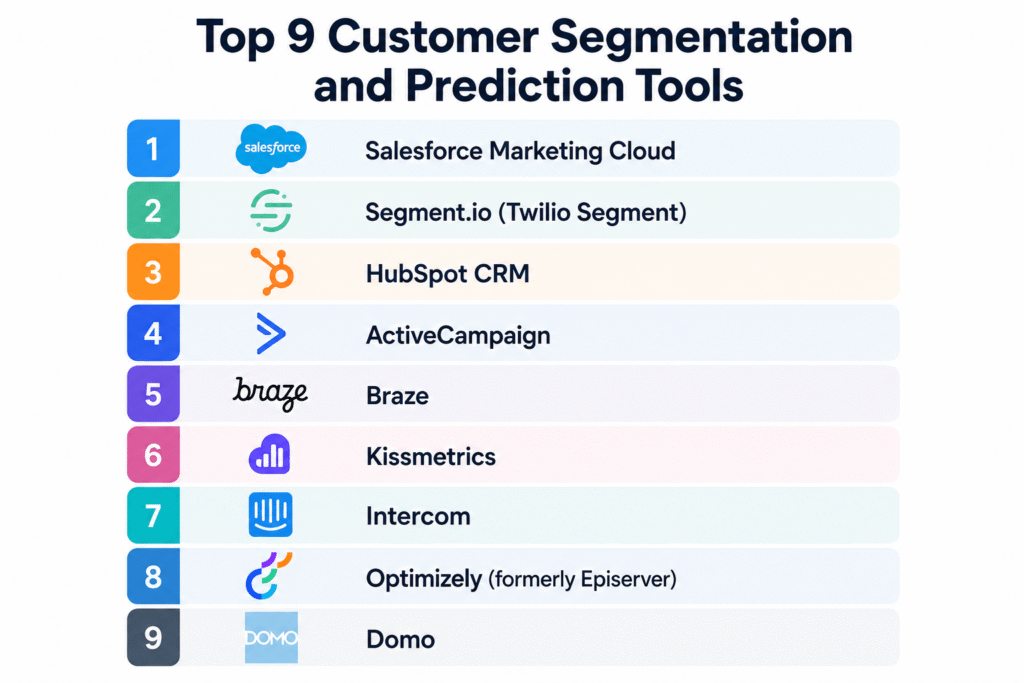
- Top 9 Customer Segmentation and Prediction Tools (Detailed Reviews)
- Feature Comparison
- Pricing Breakdown
- Real-World Use Cases
- Who Should Use Each Tool?
- How to Choose the Right Tool
- Making Money with These Tools
- Common Limitations
- Final Verdict and Recommendations
- Frequently Asked Questions
What Are the Best Customer Segmentation and Prediction Tools?
The best customer segmentation tools are the ones that give you actionable intelligence, not just pretty charts. We’re looking for platforms that can ingest vast amounts of data, make sense of it, and then spit out clear, defined customer segments. These aren’t just for understanding who bought what; they’re for predicting future behaviour, identifying high-value customers, and even spotting potential churn before it happens. It’s about turning raw data into strategic advantage.
When we talk about effective Customer Segmentation and Prediction, we’re talking about more than just grouping customers by age or location. Modern customer segmentation tools leverage AI and machine learning to uncover complex patterns that human analysis alone would miss. This means you can segment based on purchasing frequency, average order value, browsing behaviour, engagement with marketing materials, and even predicted lifetime value. It’s a granular level of insight that empowers truly personalised communication and offers.
The market is flooded with options, but only a handful truly deliver the goods. My criteria for “best” includes ease of use, depth of analytics, integration capabilities, and, most importantly, the ability to drive real revenue. We need tools that not only identify segments but also help us activate those segments with targeted campaigns. Forget the bells and whistles that don’t serve a purpose; we’re focused on core functionality that produces results. These customer segmentation tools are built for serious business growth.
Top 9 Customer Segmentation and Prediction Tools (Detailed Reviews)
Salesforce Marketing Cloud – Customer Segmentation Tools Review
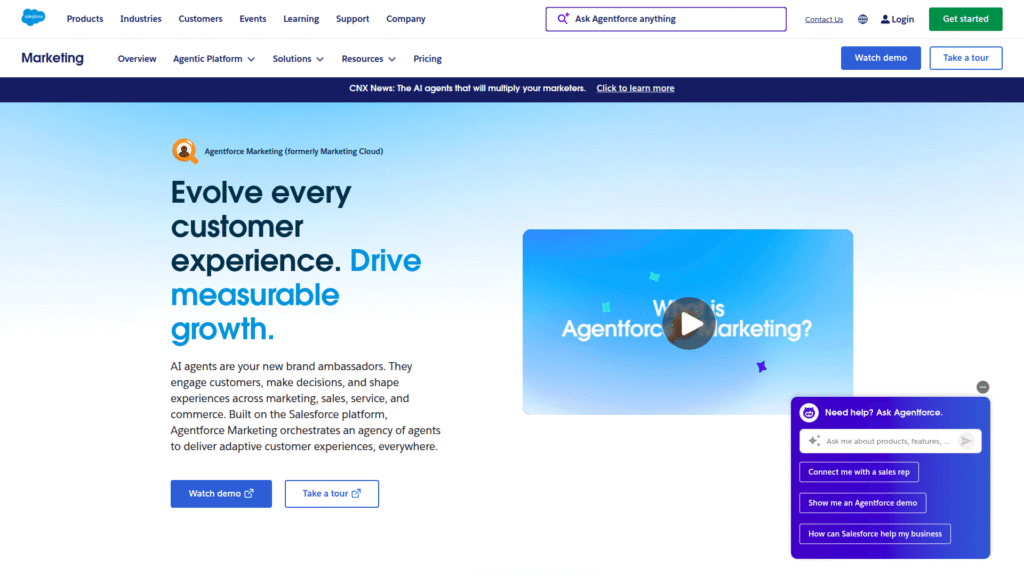
Salesforce Marketing Cloud isn’t just a segmentation tool; it’s a comprehensive marketing automation platform with robust segmentation capabilities at its core. It allows you to create highly specific segments based on almost any data point you can collect about your customers, from purchase history to web behaviour and email engagement. Its power lies in its ability to then activate those segments directly within its own ecosystem, orchestrating multi-channel campaigns with precision. You can define audiences using filters, attributes, and even predictive scores, ensuring your messages hit the mark every time. This platform is truly a powerhouse for those serious about their marketing stack.
- Features: Journey Builder for automated campaigns, Audience Builder for segmentation, Email Studio, Mobile Studio, Advertising Studio, Datorama for analytics, predictive scoring, AI-powered personalisation.
- Pricing: Salesforce Marketing Cloud pricing is typically enterprise-level and depends heavily on the specific modules and features required. It’s generally quoted on a custom basis, often starting in the thousands per month.
- Pros: Extremely comprehensive platform, powerful segmentation, robust automation, extensive integration capabilities within the Salesforce ecosystem, scalable for large enterprises.
- Cons: Can be very complex to set up and manage, high cost, steep learning curve, potentially overkill for smaller businesses.
Visit official Salesforce Marketing Cloud website
Segment.io (Twilio Segment) – Customer Segmentation Tools Review
Segment.io, now part of Twilio, is a customer data platform (CDP) that acts as a central hub for all your customer data. It collects, cleans, and controls customer data from every touchpoint, then routes it to your various marketing, analytics, and data warehousing tools. Its segmentation features are incredibly powerful because they are built on a unified, consistent customer profile. This means you can create segments based on a truly holistic view of your customer, without worrying about data inconsistencies across different systems. The beauty of Segment is its ability to ensure all your downstream customer segmentation tools and platforms are working with the same, accurate information, leading to much more effective targeting.
- Features: Data collection from multiple sources, unified customer profiles, real-time data streaming, audience segmentation, integrations with hundreds of other tools, data governance, privacy controls.
- Pricing: Segment offers various plans, including a free tier for developers, a Team plan, and a Business plan. Enterprise pricing is custom. Costs scale with monthly tracked users (MTUs) and features.
- Pros: Centralised customer data, excellent data quality and consistency, hundreds of integrations, real-time segmentation, empowers data-driven marketing decisions.
- Cons: Can become expensive as MTUs grow, requires technical setup for optimal use, primarily a data infrastructure tool rather than a campaign execution tool.
Visit official Segment.io (Twilio Segment) website
HubSpot CRM – Customer Segmentation Tools Review
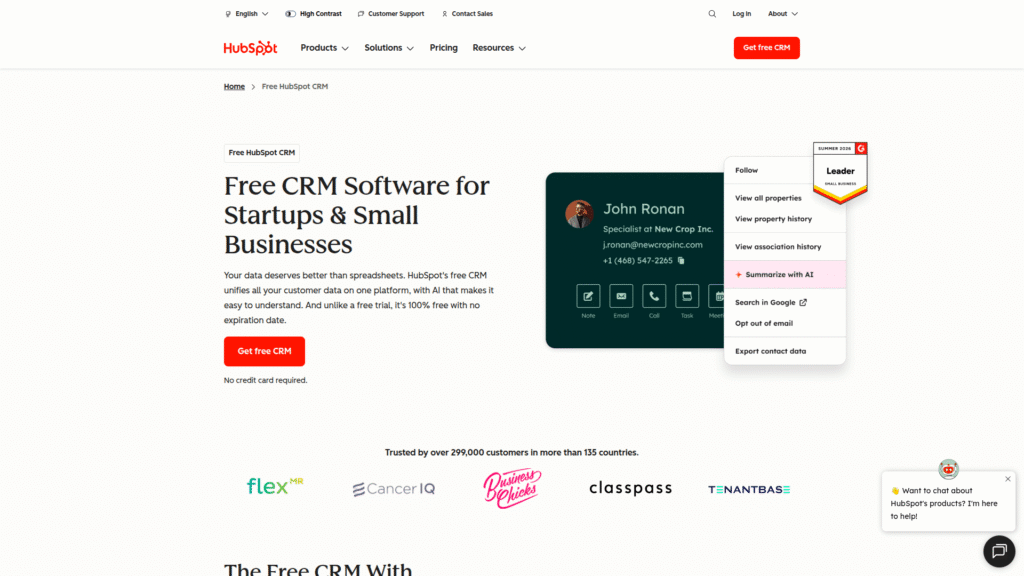
HubSpot CRM is a massively popular all-in-one platform for inbound marketing, sales, and customer service. Its segmentation capabilities are tightly integrated throughout the CRM, allowing users to segment contacts and companies based on a vast array of criteria, including demographic data, company information, behaviour on your website, email engagement, and sales activities. This means you can easily create targeted lists for email campaigns, workflows, or sales outreach, all from a single system. For businesses looking for a straightforward, integrated solution for managing customer relationships and segmenting their audience, HubSpot CRM offers a robust set of customer segmentation tools that are accessible and powerful.
- Features: CRM, marketing automation, email marketing, landing pages, forms, website analytics, ad management, sales tools, service desk, contact segmentation, list building.
- Pricing: HubSpot offers free tools, with paid plans (Starter, Professional, Enterprise) for Marketing Hub, Sales Hub, Service Hub, and CMS Hub. Pricing varies significantly based on features and contact limits.
- Pros: All-in-one platform, user-friendly interface, strong integration between marketing and sales, extensive knowledge base and support, good for small to medium businesses.
- Cons: Can get expensive quickly with more contacts and advanced features, some advanced customisation requires coding, less powerful for very complex, enterprise-level segmentation needs compared to dedicated CDPs.
Visit official HubSpot CRM website
ActiveCampaign – Customer Segmentation Tools Review
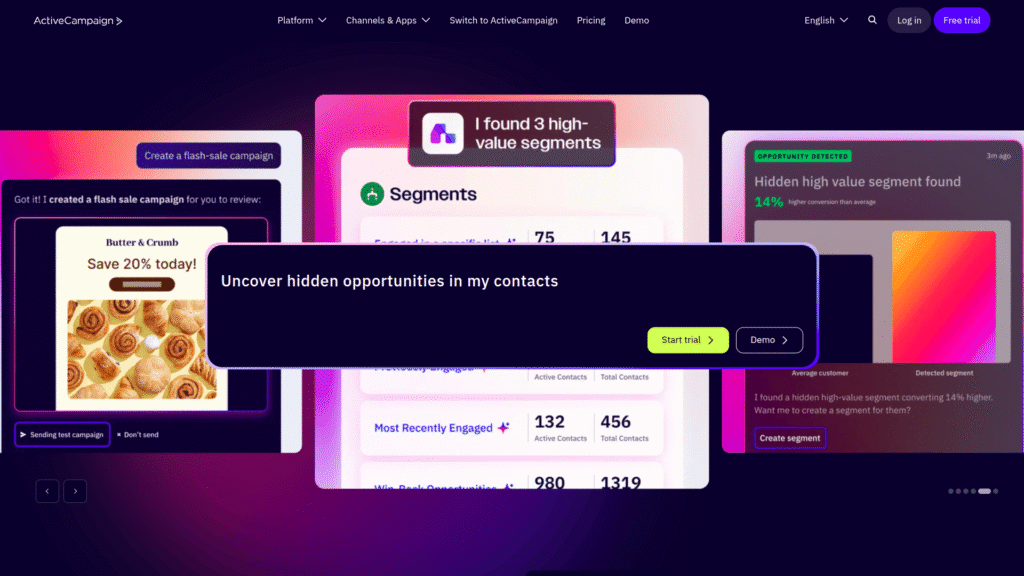
ActiveCampaign is a powerful email marketing and marketing automation platform that excels at customer segmentation. It allows you to segment your audience based on detailed behavioural data, including email opens, clicks, website visits, purchases, and custom events. The platform’s automation builder is incredibly flexible, enabling you to create complex customer journeys triggered by specific segments. This means you can send highly personalised emails, nurture sequences, and even SMS messages to customers based on their precise stage in the buying cycle or their expressed interests. For businesses prioritising email and automation, ActiveCampaign offers some of the most effective customer segmentation tools available, allowing for granular control over audience targeting.
- Features: Email marketing, marketing automation, CRM, sales automation, SMS marketing, site tracking, advanced segmentation, lead scoring, custom objects.
- Pricing: ActiveCampaign offers Lite, Plus, Professional, and Enterprise plans. Pricing is based on the number of contacts and features, starting from around $29/month for 1,000 contacts.
- Pros: Excellent automation capabilities, strong email deliverability, powerful behavioural segmentation, user-friendly interface for automation building, good value for money.
- Cons: CRM features are less robust than dedicated CRMs, can become overwhelming with very complex automations, customer support quality can vary.
Visit official ActiveCampaign website
Braze – Customer Segmentation Tools Review
Braze is a customer engagement platform built for mobile-first experiences, but its segmentation capabilities extend across all channels. It’s designed for real-time personalisation and allows marketers to create dynamic customer segments based on live user behaviour, app usage, purchase history, and demographic data. Braze excels at delivering contextual messages through push notifications, in-app messages, email, and more, all triggered by specific user actions or segment membership. For brands with a strong mobile presence or a need for highly agile, real-time engagement, Braze provides incredibly sophisticated customer segmentation tools that enable truly personalised cross-channel experiences. It’s about meeting customers where they are, with the right message, at the right time.
- Features: Multi-channel messaging (push, in-app, email, SMS), real-time segmentation, customer journey orchestration, A/B testing, content personalisation, analytics and reporting, Canvas for journey building.
- Pricing: Braze pricing is enterprise-level and custom, based on usage metrics like monthly active users (MAUs) and features. It’s generally considered a premium solution.
- Pros: Real-time data processing, powerful multi-channel engagement, excellent for mobile-first strategies, highly scalable, robust personalisation engine.
- Cons: High cost, complex to implement and manage, primarily suited for larger businesses with significant mobile user bases, can have a steep learning curve.
Kissmetrics – Customer Segmentation Tools Review
Kissmetrics is an analytics platform that focuses on understanding user behaviour and customer journeys. Unlike tools that just give you traffic numbers, Kissmetrics tracks individual user actions over time, allowing you to see how people move through your product or website. Its segmentation features are built around this behavioural tracking, enabling you to segment users based on their actions, events, and properties. This means you can identify segments like “users who viewed product X but didn’t purchase,” or “customers who completed onboarding but haven’t used feature Y.” For businesses driven by understanding customer behaviour and optimising conversion funnels, Kissmetrics offers powerful customer segmentation tools that pinpoint exactly where users are succeeding or getting stuck.
- Features: User journey analysis, funnel reports, cohort analysis, A/B test reporting, individual user profiles, behavioural segmentation, email campaign integration.
- Pricing: Kissmetrics pricing is custom, generally designed for businesses with significant traffic and revenue, with plans based on monthly tracked users and events.
- Pros: Deep behavioural insights, focus on conversion funnels, easy to understand customer journeys, good for product analytics and optimisation, helps identify friction points.
- Cons: Can be expensive for high-volume sites, not a marketing automation or execution tool, requires careful event tracking setup, less comprehensive CRM features.
Visit official Kissmetrics website
Intercom – Customer Segmentation Tools Review
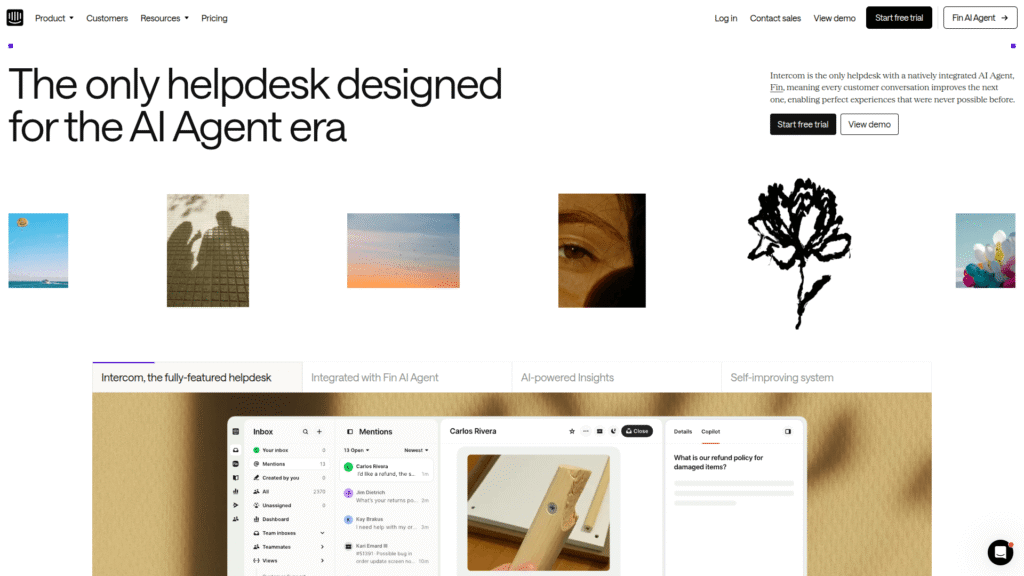
Intercom is a popular customer messaging platform that offers robust customer segmentation tools for targeted communication. It allows businesses to segment users and leads based on a variety of attributes, including demographics, in-app behaviour, subscription status, and customer support interactions. The power of Intercom’s segmentation lies in its ability to then act on those segments directly within the platform, sending targeted messages via live chat, email, or in-app messages. Whether you’re onboarding new users, providing proactive support, or running re-engagement campaigns, Intercom helps you deliver the right message to the right people at the right time, fostering better customer relationships and driving engagement.
- Features: Live chat, chatbots, targeted email campaigns, in-app messages, product tours, help centre, audience segmentation, customer data platform.
- Pricing: Intercom offers various plans (Essential, Pro, Premium) based on features and monthly active people (MAPs). Pricing can vary significantly, starting from around $74/month.
- Pros: Excellent for customer engagement and support, strong segmentation capabilities, intuitive user interface, multi-channel messaging, good for onboarding and retention.
- Cons: Can become expensive as MAPs increase, less robust for pure marketing automation compared to dedicated platforms, reporting can be less detailed for advanced analysis.
Visit official Intercom website
Optimizely (formerly Episerver) – Customer Segmentation Tools Review
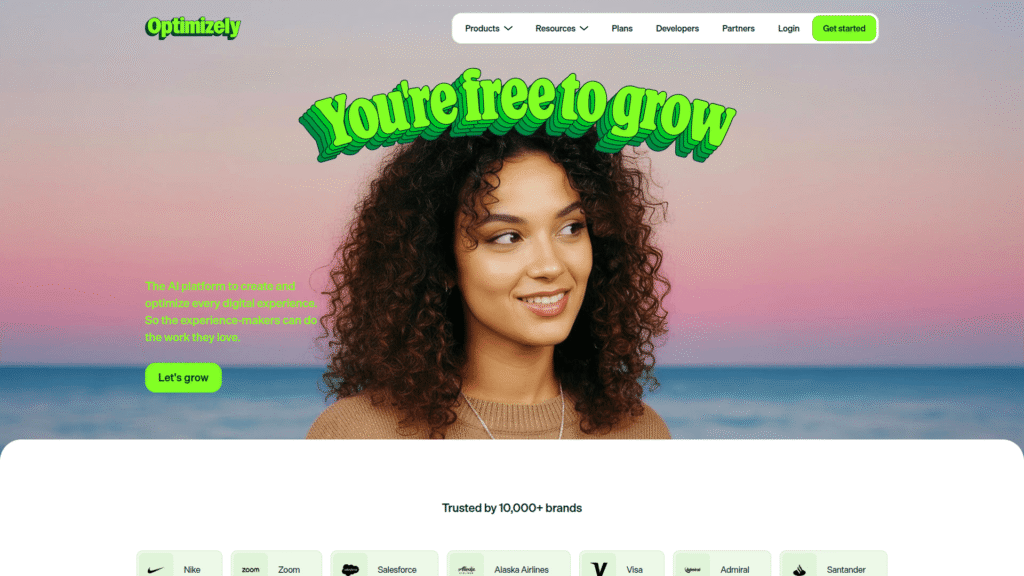
Optimizely, formerly known as Episerver, is a digital experience platform that integrates content management, e-commerce, and advanced experimentation. Its customer segmentation tools are baked into its core offering, allowing businesses to personalise experiences based on user segments. You can segment visitors based on their browsing behaviour, past purchases, location, or even real-time actions, and then deliver tailored content, product recommendations, or A/B tests. For companies focused on optimising their digital customer journey and providing highly personalised web experiences, Optimizely offers a comprehensive suite of customer segmentation tools that connect directly to content delivery and experimentation, ensuring every touchpoint is relevant and engaging.
- Features: Content management system (CMS), e-commerce platform, experimentation (A/B testing, multivariate testing), personalisation, customer data platform (CDP), product recommendations.
- Pricing: Optimizely pricing is enterprise-level and custom, based on the specific modules, traffic volume, and features required. It’s a premium solution for large organisations.
- Pros: Unified platform for content, commerce, and experimentation; powerful personalisation engine; robust A/B testing capabilities; scalable for large enterprises; strong customer segmentation tools.
- Cons: Very high cost, complex implementation, steep learning curve, potentially overkill for smaller businesses or those not needing a full DXP.
Visit official Optimizely website
Domo – Customer Segmentation Tools Review
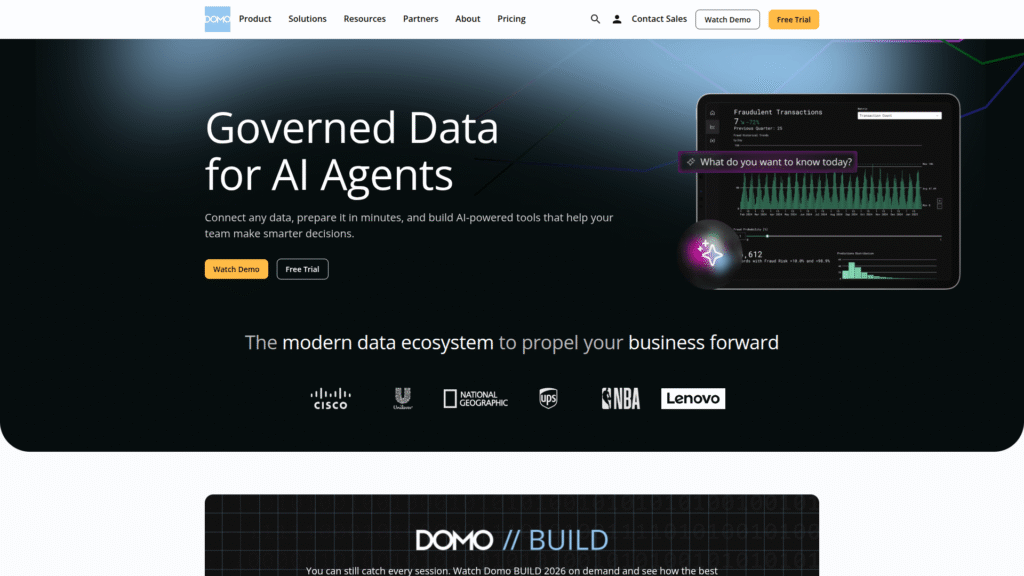
Domo is a powerful business intelligence (BI) and data visualisation platform that, while not exclusively a segmentation tool, offers immense capabilities for creating and analysing customer segments. It connects to virtually any data source, allowing you to consolidate all your customer data into a single platform. Once integrated, you can build custom dashboards, run complex queries, and visualise customer segments based on any combination of attributes.
The real value of Domo’s approach to customer segmentation tools is its ability to provide a complete, real-time view of your customer segments, enabling you to monitor their performance, identify trends, and make data-driven decisions across your entire organisation. It’s about bringing all your data together to get a clearer picture of who your customers really are.
- Features: Data integration from hundreds of sources, interactive dashboards, customisable reports, data warehousing, predictive analytics, mobile access, data alerts.
- Pricing: Domo pricing is custom and typically designed for enterprise-level clients, based on data volume, number of users, and specific features.
- Pros: Centralised data platform, powerful analytics and visualisation, real-time data capabilities, excellent for cross-departmental data sharing, highly customisable for various data needs.
- Cons: High cost, can be complex to set up and manage initially, not a marketing execution tool (requires integration with others for campaign activation), steep learning curve for non-technical users.
Feature Comparison
When you’re evaluating customer segmentation tools, it’s easy to get lost in the sea of features. But listen, not all features are created equal, and what one tool boasts as its killer app, another might handle as a standard function. We need to look at the core capabilities that truly differentiate these platforms and how they align with your business objectives. Think about data integration: how easily can the tool pull data from your existing CRM, e-commerce platform, or website analytics? A tool that struggles to connect to your data sources is going to be a nightmare, regardless of its fancy segmentation options.
Then consider the depth of segmentation. Are you just getting basic demographic filters, or can you build segments based on behavioural triggers, predictive scores, or custom events? The more granular your segmentation, the more precise your targeting can be. Some customer segmentation tools, like Salesforce Marketing Cloud and Braze, excel at real-time, multi-channel segmentation, allowing for immediate responses to customer actions. Others, such as Kissmetrics, focus heavily on historical behavioural analysis to optimise funnels. It’s about matching the tool’s segmentation depth to your strategic needs.
Automation and activation are also critical. What good is identifying a segment if you can’t easily act on it? Platforms like ActiveCampaign and HubSpot CRM integrate segmentation directly with email marketing and workflow automation, making it simple to launch targeted campaigns. CDPs like Segment.io, while not execution tools themselves, ensure that the consistent segments you define are then available to *all* your other marketing and sales platforms. Finally, don’t forget reporting and analytics. Can you easily track the performance of your segments and campaigns? A tool that provides clear insights into ROI is gold, helping you continuously refine your strategy and prove the value of your customer segmentation tools investment.
Pricing Breakdown
Alright, let’s talk brass tacks: money. Pricing for customer segmentation tools is as varied as the tools themselves, ranging from relatively affordable monthly subscriptions to hefty enterprise contracts. There’s no one-size-fits-all, and often, the more sophisticated the tool, the higher the price tag. Many platforms, especially the comprehensive ones like Salesforce Marketing Cloud, Braze, and Optimizely, operate on custom, enterprise-level pricing. This means you’ll need to engage directly with their sales teams to get a quote, which typically factors in your usage volume (e.g., number of contacts, monthly active users), the specific modules you need, and the level of support desired.
For mid-market businesses and growing startups, options like HubSpot CRM and ActiveCampaign offer more transparent, tiered pricing structures. These plans usually scale based on the number of contacts you manage or the features you access. While they might seem affordable at lower tiers, costs can quickly escalate as your contact list grows or as you unlock more advanced features. It’s crucial to anticipate your growth and calculate potential future costs, not just the initial entry price. Some platforms, like Segment.io, base their pricing on “Monthly Tracked Users” (MTUs), which can be a different metric to monitor but equally important for cost management.
The key here is to understand not just the sticker price, but the total cost of ownership. This includes potential setup fees, integration costs, and the internal resources required to manage the platform effectively. A cheaper tool that requires extensive manual work or multiple additional subscriptions to achieve your goals might end up being more expensive than a pricier, all-in-one solution. Always weigh the upfront cost against the long-term value and the efficiency gains these customer segmentation tools promise to deliver. Don’t be penny-wise and pound-foolish when it comes to investing in tools that directly impact your revenue.
Real-World Use Cases
Knowing the features and pricing is one thing, but seeing these customer segmentation tools in action – that’s where the magic happens. Let’s look at some tangible examples of how businesses leverage these platforms to drive real results. Imagine an e-commerce brand using Salesforce Marketing Cloud to identify customers who have abandoned their shopping carts. They can then segment these users by the value of the items in their cart and send targeted, personalised email reminders, perhaps even with a small discount for high-value carts. This isn’t just a generic “come back” email; it’s a strategic nudge based on specific behaviour and potential revenue.
Consider a SaaS company utilising Intercom to onboard new users. They can segment users who haven’t completed a key setup step within the first 24 hours. Intercom then triggers an in-app message or a brief email with a video tutorial, proactively addressing potential friction points. This tailored approach reduces churn and increases feature adoption because the communication is relevant and timely, directly addressing the user’s current situation, all powered by clever customer segmentation tools.
Or think about a media company using Braze to engage its mobile app users. They segment users based on their content consumption habits – for example, those who frequently read sports news versus those who prefer entertainment. Braze then delivers personalised push notifications with breaking news alerts relevant to their interests, increasing app engagement and retention. This level of personalisation, driven by sophisticated customer segmentation tools, transforms generic broadcasts into highly valuable, one-to-one interactions, leading to measurable improvements in key performance indicators across various industries.
Who Should Use Each Tool?
It’s crucial to match the tool to the business, not the other way around. Trying to force a square peg into a round hole is just going to cost you time and money. Each of these customer segmentation tools has its sweet spot, its ideal user profile. For large enterprises with complex marketing stacks and deep pockets, Salesforce Marketing Cloud, Braze, Domo, and Optimizely are often the go-to choices. These platforms are built for scale, sophisticated integrations, and highly customisable workflows, demanding dedicated teams to maximise their potential. They’re for businesses that need robust, multi-channel orchestration and significant data processing capabilities.
Mid-sized businesses and growing startups looking for an all-in-one solution that covers CRM, marketing, and sales will find HubSpot CRM to be an excellent fit. Its user-friendly interface and integrated approach make it ideal for teams who want to streamline operations without jumping between multiple platforms. Similarly, ActiveCampaign is perfect for businesses that prioritise email marketing and robust marketing automation, especially those with intricate customer journeys and a need for powerful behavioural segmentation. These customer segmentation tools balance features with accessibility.
For companies focused heavily on customer data quality and integration across their entire tech stack, Segment.io is a must-have. It’s less about direct marketing execution and more about ensuring all your other tools are working with clean, unified data. Businesses primarily concerned with understanding user behaviour, optimising funnels, and improving product adoption will benefit greatly from Kissmetrics. And finally, for those whose core strategy revolves around proactive customer engagement and support through messaging, Intercom stands out. Ultimately, the right choice among these customer segmentation tools depends entirely on your specific business size, technical capabilities, budget, and strategic objectives. Don’t just pick the flashiest; pick the one that solves *your* problems.
How to Choose the Right Tool
Choosing the right customer segmentation tools can feel like a high-stakes decision, and it is. Get it wrong, and you’ve wasted time, money, and resources. Get it right, and you unlock exponential growth. The first step is to be brutally honest about your current needs and your future aspirations. Don’t just look at what you *think* you need; conduct a thorough audit of your existing data sources, your current marketing and sales processes, and your team’s technical capabilities. What data do you have? Where does it live? What are your biggest pain points in understanding and engaging customers? Answering these questions creates a clear foundation.
Next, define your key segmentation objectives. Are you looking to improve email open rates, reduce churn, increase average order value, or personalise website experiences? Different customer segmentation tools excel at different things. If you’re a heavy e-commerce operator, tools with strong product recommendation and abandonment recovery features will be paramount. If you’re a SaaS business, tools that track in-app behaviour and automate onboarding sequences will be more valuable. Prioritise your goals, and then evaluate how each tool directly addresses those priorities. Don’t get distracted by features you won’t use.
Finally, consider the long-term implications. How well does the tool integrate with your existing tech stack? Will it scale with your business as you grow? What’s the learning curve for your team, and what kind of support does the vendor offer? Get demos, ask for case studies relevant to your industry, and if possible, talk to existing users. A pilot project can also be invaluable for testing the waters. The goal is to find customer segmentation tools that not only meet your immediate needs but also serve as a strategic asset for years to come, enabling continuous improvement in how you understand and serve your customers. This isn’t just a purchase; it’s a strategic investment in your business’s future.
Making Money with These Tools
Let’s be real: we’re not just buying these customer segmentation tools for fun. We’re buying them to make more money. And they absolutely will, if you use them correctly. The core principle is simple: better understanding leads to better targeting, which leads to higher conversions and greater customer lifetime value. For example, by segmenting your highest-value customers, you can create exclusive loyalty programmes or offer premium products, increasing their spend. Identifying customers at risk of churn allows you to deploy targeted re-engagement campaigns, saving valuable revenue that would otherwise walk out the door. These are direct, measurable impacts on your bottom line.
Consider the impact on marketing ROI. When you stop blasting generic messages to your entire audience and instead send hyper-relevant communications to specific segments, your campaign performance skyrockets. Email open rates improve, click-through rates increase, and conversion rates go up. This means you’re getting more bang for your buck from every marketing dollar spent. Customer segmentation tools allow you to optimise your ad spend by creating lookalike audiences based on your best segments, or by excluding existing customers from acquisition campaigns, ensuring you’re reaching the right people with the right message at the right time.
Beyond direct campaign performance, these customer segmentation tools also drive revenue through improved product development and customer experience. By understanding what different segments value, you can tailor your product roadmap, service offerings, and even website design to meet their specific needs. This leads to higher customer satisfaction, stronger brand loyalty, and ultimately, more repeat business and referrals. It’s a virtuous cycle: better segmentation leads to better experiences, which leads to more revenue. Investing in the right customer segmentation tools isn’t an expense; it’s an investment that pays dividends, significantly boosting profitability by making every interaction count.
Common Limitations
No tool is a magic bullet, and customer segmentation tools are no exception. While powerful, they come with their own set of limitations that you need to be aware of before you commit. One of the biggest challenges is data quality. These tools are only as good as the data you feed them. If your data is messy, incomplete, or inconsistent across different systems, your segments will be flawed, and your insights will be unreliable. It’s like trying to bake a cake with rotten ingredients; no matter how good your oven, the result will be terrible. You’ll need to invest time and effort into data governance and cleansing, which can be a significant undertaking.
Another common limitation is the learning curve and resource requirement. Enterprise-level customer segmentation tools like Salesforce Marketing Cloud or Optimizely are incredibly powerful, but they are also complex. They often require dedicated specialists or even entire teams to set up, manage, and extract maximum value. Expect a significant time investment in training and ongoing maintenance. For smaller businesses, the sheer complexity and cost can be prohibitive, leading to underutilised features and a poor return on investment. It’s crucial to assess if your team has the bandwidth and expertise to truly leverage the tool’s capabilities.
Finally, beware of analysis paralysis. Having access to endless data and countless ways to segment customers can sometimes lead to overthinking and inaction. The goal of using customer segmentation tools is to drive action, not just generate reports. You need a clear strategy and hypotheses to test, rather than just endlessly slicing and dicing your data. There’s also the risk of over-segmentation, creating so many tiny segments that they become unmanageable or not statistically significant enough to warrant individual campaigns. Finding the right balance between granularity and manageability is key to avoiding these pitfalls and ensuring your customer segmentation tools genuinely serve your business goals.
Final Verdict and Recommendations
Alright, so we’ve covered a lot of ground. You’ve got nine serious contenders for the title of “best customer segmentation tools,” each with its own strengths and weaknesses. My final verdict? There’s no single “best” tool, but there is absolutely the best tool for *your* business. It all boils down to matching the platform’s capabilities to your specific needs, budget, and existing infrastructure. Don’t fall for the hype; focus on functionality that directly addresses your strategic goals. If you’re a massive enterprise with complex, multi-channel marketing needs and a budget to match, then Salesforce Marketing Cloud or Braze will likely be your heavy hitters, offering unparalleled scale and sophistication in their customer segmentation tools.
For mid-sized businesses and growing companies seeking an integrated, user-friendly solution that covers CRM, marketing automation, and sales, HubSpot CRM is an incredibly strong contender. Its all-in-one approach simplifies operations and makes powerful segmentation accessible. If email marketing and advanced automation are your bread and butter, and you need granular control over customer journeys, ActiveCampaign stands out with its robust feature set and excellent value. For those whose priority is impeccable customer data quality and ensuring consistency across a sprawling tech stack, Segment.io is an essential foundation, even if it’s not a direct execution tool. Each of these customer segmentation tools provides distinct advantages.
If your focus is on deep behavioural analytics and conversion rate optimisation for web products or e-commerce, Kissmetrics offers critical insights into user journeys. For businesses that rely heavily on engaging customers through real-time messaging and support, Intercom provides powerful segmentation married with direct communication capabilities.
Finally, for enterprises looking for a unified digital experience platform that ties together content, commerce, and personalisation, Optimizely offers a comprehensive suite. And for those needing to consolidate and visualise vast amounts of data for strategic decision-making, Domo is a data powerhouse. Carefully consider your unique situation, get those demos, and pick the customer segmentation tools that will truly empower your growth. This isn’t just about software; it’s about setting up your business for sustained success.
Frequently Asked Questions
What is customer segmentation?
Customer segmentation is the process of dividing your customer base into groups of individuals who share similar characteristics. These characteristics can include demographics, behaviours, psychographics, or values. The goal is to understand and target each group more effectively than if you treated all customers the same. These segments allow for highly personalised marketing, sales, and service strategies, making your efforts more efficient and impactful.
Why is customer segmentation important for businesses?
Customer segmentation is crucial because it allows businesses to allocate resources more efficiently, tailor marketing messages, develop more relevant products, and improve customer satisfaction. By understanding distinct customer groups, companies can identify their most profitable customers, reduce churn by proactively addressing at-risk segments, and uncover new market opportunities. Ultimately, it leads to increased revenue and stronger customer relationships, making customer segmentation tools essential for growth.
How do customer segmentation tools differ from CRM systems?
While CRM systems (Customer Relationship Management) store customer data and manage interactions, customer segmentation tools specifically focus on analysing that data to identify distinct customer groups. A CRM is a database for managing relationships, whereas segmentation tools provide the analytical power to make sense of the data within the CRM (and other sources) to create actionable segments. Many modern CRMs, like HubSpot, now include robust segmentation features, blurring the lines, but dedicated customer segmentation tools or CDPs often offer deeper analytical capabilities.
What types of data are used for customer segmentation?
A wide variety of data types are used, including demographic data (age, gender, location), psychographic data (interests, values, lifestyle), behavioural data (purchase history, website visits, email engagement, app usage), firmographic data (for B2B – industry, company size, revenue), and transactional data (average order value, purchase frequency). The more data points you can integrate, the richer and more accurate your customer segments will be, making advanced customer segmentation tools invaluable.
Can small businesses benefit from customer segmentation tools?
Absolutely. While enterprise-level tools might be overkill, many customer segmentation tools, such as HubSpot CRM or ActiveCampaign, are accessible and highly beneficial for small businesses. Even with a smaller customer base, understanding who your most valuable customers are, what they buy, and how they interact with your business allows for smarter marketing and more efficient growth. It helps small businesses compete by enabling precision targeting rather than broad, expensive campaigns.
What are the common challenges when implementing customer segmentation?
Common challenges include poor data quality, lack of integration between different data sources, the absence of a clear segmentation strategy, over-segmentation (creating too many small, unmanageable groups), and a lack of resources or expertise to properly analyse the data and act on the segments. Overcoming these requires a strategic approach to data management, clear objectives, and the right customer segmentation tools.
How often should I review and update my customer segments?
Customer segments are not static; customer behaviour and market dynamics evolve. It’s best practice to review and potentially update your customer segments regularly, ideally quarterly or semi-annually. For businesses with rapidly changing product lines or customer bases, more frequent reviews might be necessary. Staying agile with your customer segmentation tools ensures your strategies remain relevant and effective, constantly optimising your approach to the market. So, remember, these powerful customer segmentation tools are about continuous improvement.