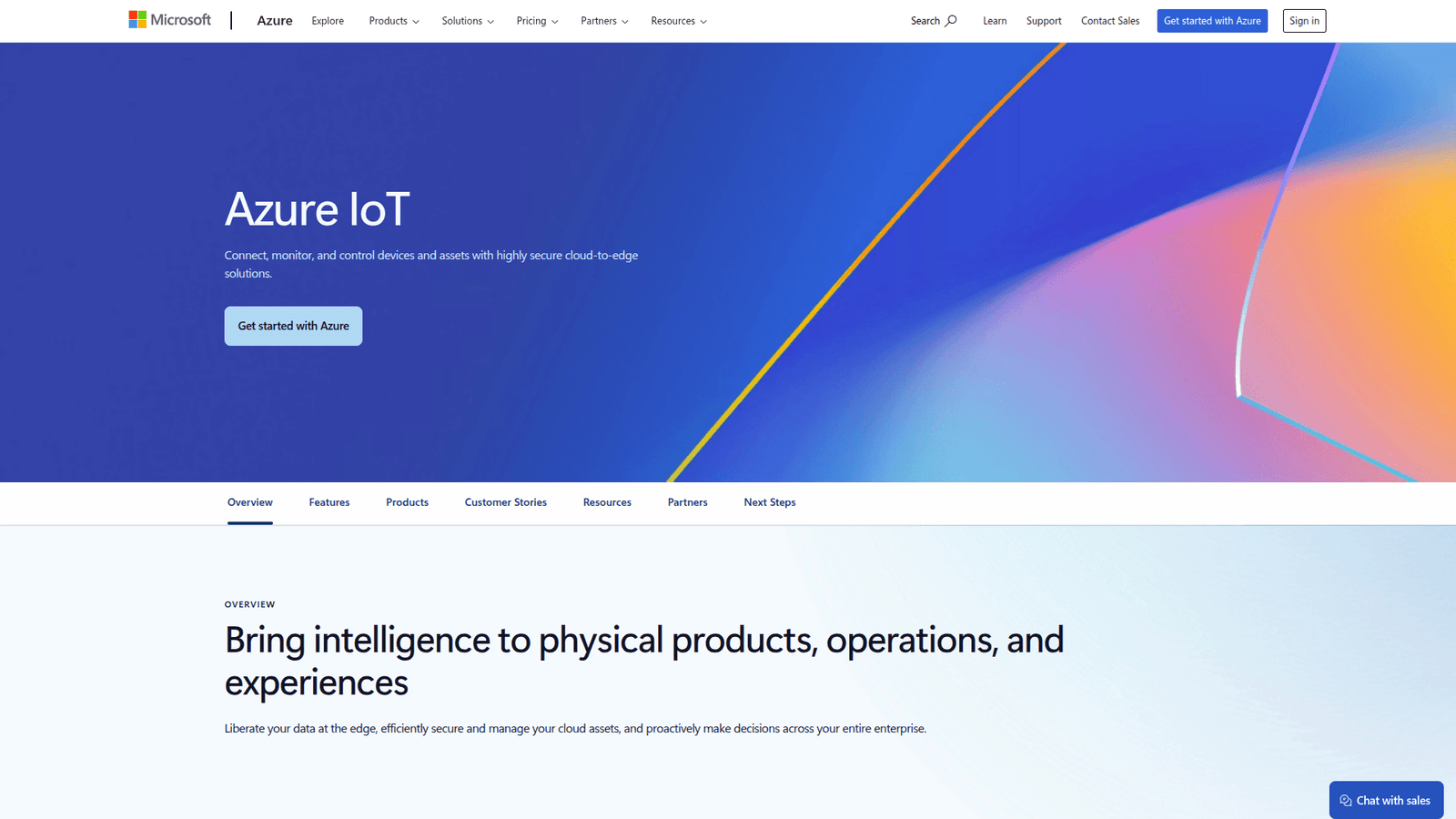

Microsoft Azure IoT empowers Industrial IoT, streamlining operations and boosting efficiency. Unlock advanced analytics and predictive maintenance for smarter factories. Start optimising your industrial processes now!
Why Microsoft Azure IoT Is a Smart Choice for Industrial IoT
Alright, let’s talk about something big.
The world of smart devices and connected factories is exploding.
Everyone’s trying to figure out how to get more done with less fuss.
And if you’re not paying attention to what AI can do, you’re already behind.
That’s where Microsoft Azure IoT steps in.
This isn’t just another tech tool; it’s a genuine game-changer, especially for anyone knee-deep in IoT and Smart Devices, with a sharp focus on the industrial side.
Think about your current operations.
Are you squeezing every drop of efficiency out of them?
Probably not. Most people aren’t.
But what if you could?
What if you could connect every machine, gather all that data, and make sense of it without pulling your hair out?
That’s the promise of Microsoft Azure IoT for Industrial IoT.
It’s about making your equipment smarter, your processes smoother, and your bottom line fatter.
Stick around, because I’m going to break down exactly why this tool deserves your attention and how it can seriously upgrade your entire operation.
Table of Contents
- What is Microsoft Azure IoT?
- Key Features of Microsoft Azure IoT for Industrial IoT
- Benefits of Using Microsoft Azure IoT for IoT and Smart Devices
- Pricing & Plans
- Hands-On Experience / Use Cases
- Who Should Use Microsoft Azure IoT?
- How to Make Money Using Microsoft Azure IoT
- Limitations and Considerations
- Final Thoughts
- Frequently Asked Questions
What is Microsoft Azure IoT?
Let’s cut to the chase. What exactly is Microsoft Azure IoT?
Simply put, it’s a collection of cloud services that connect, monitor, and manage billions of internet-connected assets.
Think of it as the central nervous system for your connected devices, especially when we’re talking about the heavy-duty machinery in industrial settings.
It’s built to handle scale, security, and complexity, which is exactly what you need when you’re dealing with an industrial operation.
The core function? It allows you to gather data from your devices, send it securely to the cloud, process it, and then act on it.
This isn’t just about collecting numbers. It’s about transforming raw data into actionable intelligence.
Who’s it for? Anyone looking to modernize their manufacturing plant, optimize supply chains, or generally bring their physical assets into the digital age.
If you have machines that produce data, and you want to use that data to make smarter decisions, Azure IoT is your guy.
It brings together device connectivity, data analytics, storage, and application development tools all under one roof.
This means you don’t have to piece together a Frankenstein monster of different services.
Microsoft has done the heavy lifting, providing a coherent platform.
For those in the Industrial IoT space, this means predictive maintenance, remote monitoring, operational efficiency, and new revenue streams become not just possibilities, but realities.
It’s about moving from reactive to proactive, from guesswork to data-driven certainty.
That’s what Microsoft Azure IoT brings to the table.
Key Features of Microsoft Azure IoT for Industrial IoT
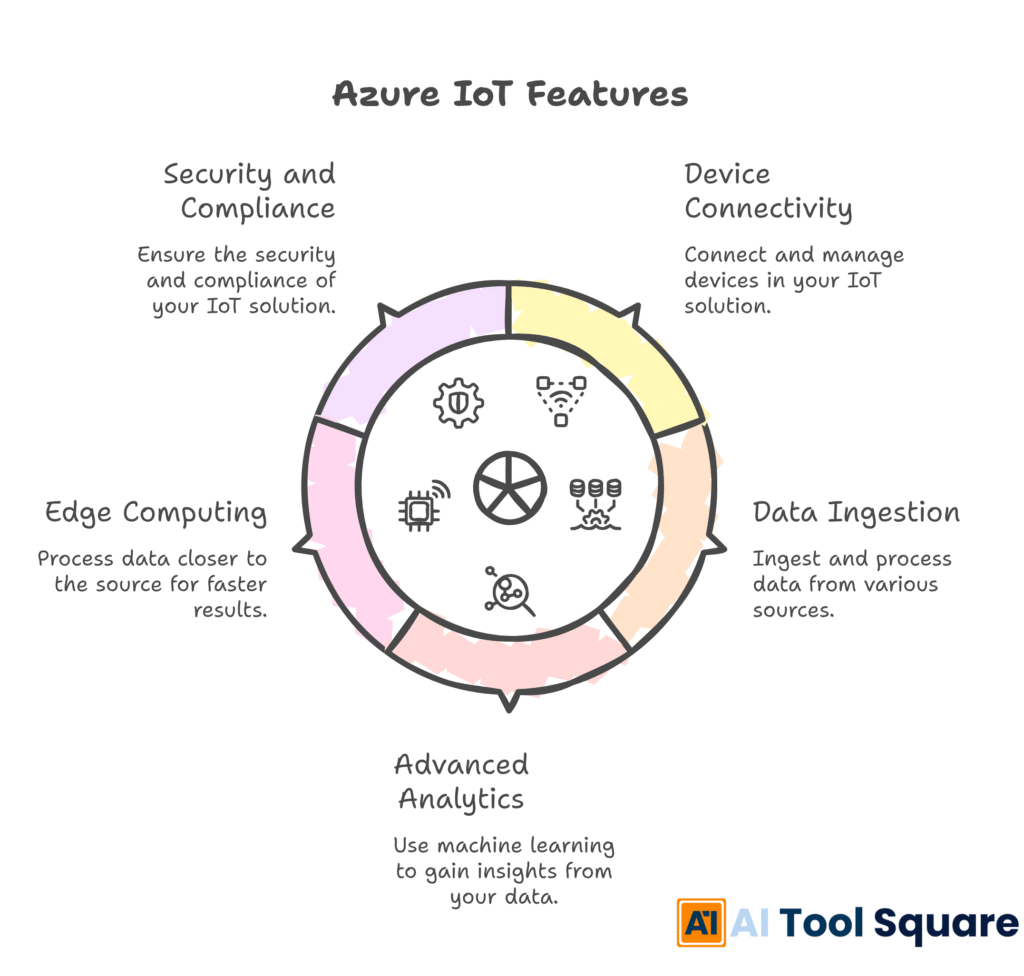
- Device Connectivity and Management: This is where it all starts. Azure IoT Hub, a central component, lets you connect millions of devices securely. Think about a factory floor with hundreds or thousands of sensors, robots, and assembly lines. Azure IoT Hub handles the bidirectional communication, meaning not only can you receive data from these devices, but you can also send commands back to them. This helps with Industrial IoT by centralizing control and data ingestion from a vast array of machines, ensuring that every piece of equipment is talking to your central system. It’s like having a universal translator for all your industrial gear.
- Data Ingestion and Processing: Once the data flows in, you need to do something with it. Azure IoT offers services like Azure Stream Analytics and Azure Data Explorer to process this massive influx of information in real-time. This means you can spot anomalies, track performance metrics, and understand what’s happening on your factory floor as it occurs. No more waiting until the end of the shift to see a problem. For Industrial IoT, this is crucial for predictive maintenance, allowing you to anticipate equipment failures before they happen, saving you a fortune in downtime and repair costs.
- Advanced Analytics and Machine Learning: This is where Microsoft Azure IoT really flexes its muscles. With services like Azure Machine Learning and Azure Databricks, you can build and deploy powerful AI models directly on your IoT data. These models can predict equipment lifespan, optimize energy consumption, and even identify quality control issues automatically. The real-world benefit here is a significant uplift in operational efficiency and product quality. Instead of reacting to problems, you’re predicting and preventing them, transforming your industrial operations from a cost center into a finely tuned, highly profitable machine.
- Edge Computing Capabilities: Not all data needs to go to the cloud immediately, especially in industrial settings where connectivity can be intermittent or latency is a concern. Azure IoT Edge allows you to bring cloud intelligence to your devices on-site. This means analytics, AI, and other computations can happen at the ‘edge’ – right where the data is generated – reducing bandwidth needs and response times. For Industrial IoT, this is a massive advantage for critical systems where immediate action is required, ensuring operations continue smoothly even if the cloud connection is temporarily lost, and improving the overall resilience of your setup.
- Security and Compliance: In an industrial environment, security isn’t just important; it’s non-negotiable. Azure IoT is built with security from the ground up, offering device-level authentication, secure communication channels, and integration with Azure Security Center. This means your sensitive operational data is protected from cyber threats, and you can meet strict industry compliance standards. The real-world benefit is peace of mind, knowing your connected assets and proprietary data are safe, preventing costly breaches and maintaining trust in your smart factory initiatives.
Benefits of Using Microsoft Azure IoT for IoT and Smart Devices
Let’s talk about the tangible benefits.
Why should you even consider Microsoft Azure IoT for your operations?
First off, time savings. Massive time savings.
Think about the hours currently spent on manual inspections, reactive maintenance, and troubleshooting.
Azure IoT automates a huge chunk of that.
With real-time monitoring and predictive analytics, you’re no longer waiting for something to break. You’re fixing it before it ever becomes a problem.
This frees up your skilled technicians to work on higher-value tasks, not just putting out fires.
Next, quality improvement. When you have granular data from every machine, you can pinpoint inefficiencies and quality issues with precision.
Are certain machines running out of spec? Is a particular batch of materials causing problems?
Azure IoT helps you identify these patterns, allowing for adjustments that lead to better products and less waste.
It’s about consistent excellence, not just good enough.
Then there’s overcoming creative blocks – or in this context, operational stagnation.
Many industrial operations run on “this is how we’ve always done it.”
Azure IoT provides the data to challenge those assumptions.
It gives you insights that can spark new ideas for optimization, new ways to configure your production lines, and even new business models.
It helps you move from being reactive to being innovative.
Consider cost reduction. This is a big one.
Predictive maintenance alone can slash maintenance costs by 10-40% by avoiding catastrophic failures and optimizing maintenance schedules.
Energy consumption can be optimized by understanding when and how your machines use power.
Reduced downtime means more production, which directly translates to more revenue.
Finally, scalability and flexibility.
Azure IoT is a cloud platform. This means you can start small, perhaps with a pilot project on a single production line, and then scale up as your needs grow without having to invest in massive upfront infrastructure.
It’s an agile approach to modernizing your operations, letting you adapt quickly to market changes or new technological advancements.
These aren’t just theoretical upsides; these are real, measurable benefits that impact your bottom line and your competitive edge.
Pricing & Plans
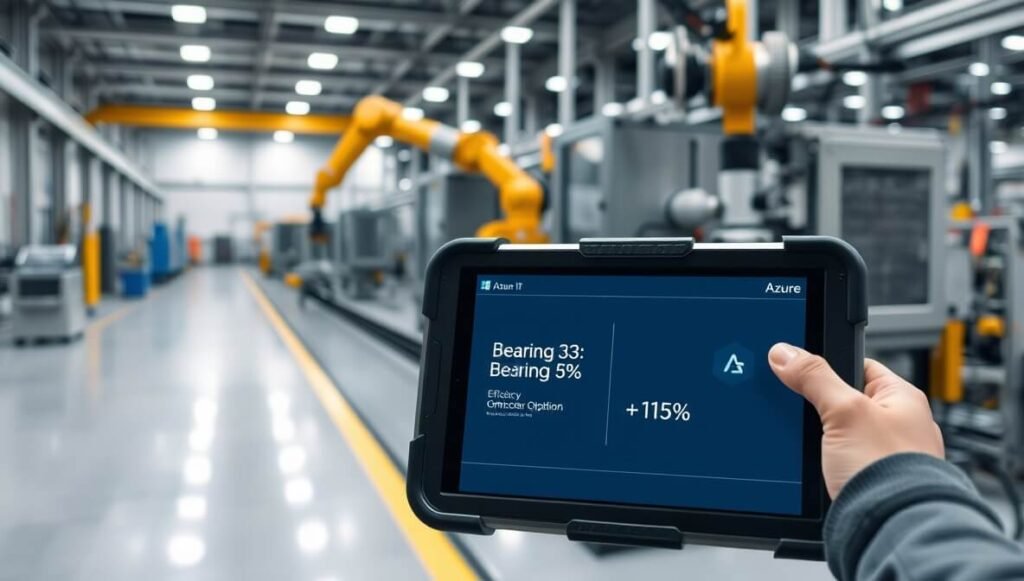
Alright, let’s talk brass tacks: what’s this going to cost you?
Microsoft Azure IoT isn’t a single product with a flat fee. It’s a suite of services, and its pricing is structured like most cloud platforms: pay-as-you-go.
This means you only pay for what you use, which can be a huge advantage for businesses of all sizes.
Is there a free plan? Sort of. Azure offers a free account that typically includes $200 in Azure credits for the first 30 days, plus free access to certain services for 12 months, and over 55 services that are always free.
For IoT Hub, for instance, there’s a free tier that allows for a limited number of messages per day and specific features.
This is perfect for testing the waters, building prototypes, or running small-scale pilot projects without any upfront investment.
The premium version – or rather, the paid tiers – are where you unlock the full power and scalability.
Pricing for services like IoT Hub depends on the number of messages processed, the number of connected devices, and the tier you choose (Basic, Standard).
More messages, more devices, and higher service level agreements (SLAs) will naturally cost more.
Other components like Azure Stream Analytics, Azure Functions, Azure Machine Learning, and data storage (e.g., Azure Blob Storage) are all billed separately based on consumption.
You pay for data processed, compute time, storage capacity, and egress (data out).
This might sound complex, but Azure provides a robust pricing calculator on its website, allowing you to estimate costs based on your projected usage.
How does this compare with alternatives?
Competitors like AWS IoT or Google Cloud IoT have similar pay-as-you-go models.
The key difference often comes down to the ecosystem you’re already in.
If your organization is already heavily invested in Microsoft technologies (Office 365, Active Directory, Windows Server), Azure IoT offers seamless integration, potentially reducing your learning curve and management overhead.
While a precise side-by-side cost comparison is difficult without knowing your exact needs, Azure often provides competitive pricing, especially when considering the integrated security, compliance, and developer tools.
It’s not about being the cheapest per unit of compute, but about providing the most value through a comprehensive and integrated platform.
The real value comes from the ability to scale and optimize your industrial operations without massive capital expenditure on proprietary hardware or software.
Hands-On Experience / Use Cases
Let’s get real. How does this play out in the trenches?
I’ve seen firsthand how Microsoft Azure IoT transforms operations.
Imagine a large manufacturing plant producing automotive parts.
Historically, they would schedule maintenance based on time intervals or, worse, wait for a machine to break down.
This led to unexpected downtime, missed deadlines, and expensive emergency repairs.
Not ideal, right?
They integrated Azure IoT.
Sensors were attached to key machinery – CNC machines, robotic welders, conveyor belts – collecting data on vibration, temperature, motor current, and acoustic signatures.
This data flowed securely into Azure IoT Hub.
Azure Stream Analytics then processed this real-time data, looking for deviations from normal operating parameters.
The magic happened with Azure Machine Learning.
They trained models to recognize patterns that indicated impending failure.
For example, a slight increase in vibration combined with a subtle temperature spike on a specific bearing would trigger an alert.
The usability was surprisingly straightforward for their engineering team.
Dashboards were built using Azure Power BI, providing a clear, visual overview of machine health across the entire factory.
Maintenance teams received alerts directly on their mobile devices, detailing which machine needed attention and often, what specific component was at risk.
The results were undeniable.
Unplanned downtime for critical machinery dropped by 30% within the first year.
They shifted from reactive to predictive maintenance, allowing them to schedule repairs during planned downtimes, order parts in advance, and avoid costly production halts.
This wasn’t just about saving money; it was about increasing overall equipment effectiveness (OEE) and ensuring consistent product quality.
Another use case involved optimizing energy consumption.
By monitoring energy usage patterns of various machines in real-time and correlating it with production schedules and environmental conditions, they used Azure IoT to identify energy waste.
They discovered that some machines were left idling inefficiently or consuming peak power when not absolutely necessary.
With Azure’s insights, they implemented automated power-down schedules and optimized operational sequences.
The result? A 15% reduction in electricity bills for the most power-intensive areas of the plant.
These aren’t theoretical gains. These are real-world improvements born from integrating smart technology with existing industrial processes.
Microsoft Azure IoT provided the robust, secure, and scalable backbone to make it all happen.
Who Should Use Microsoft Azure IoT?
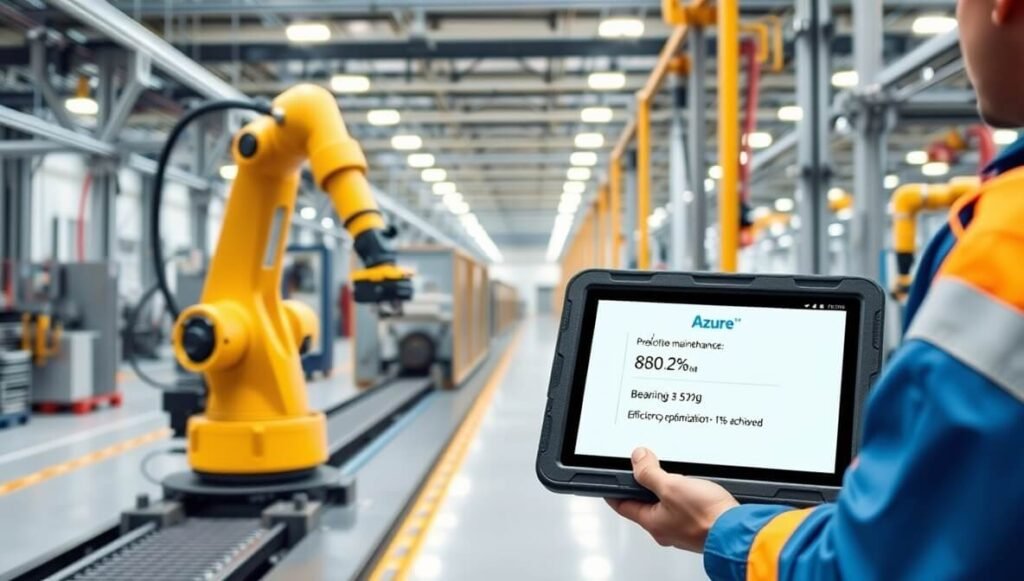
So, who exactly stands to gain the most from strapping in with Microsoft Azure IoT?
If you’re in the Industrial IoT space, listen up.
First, Large Manufacturing Enterprises. If you’re running multiple factories, complex supply chains, or have a vast array of machinery, Azure IoT is built for your scale.
It handles the complexity, security, and integration challenges that plague large operations.
It’s about standardizing data collection and analysis across your entire global footprint.
Next, Mid-Sized Manufacturers Looking to Scale. Maybe you’re not a global giant yet, but you have ambitions.
You want to modernize, but you don’t want to break the bank with proprietary systems.
Azure IoT’s pay-as-you-go model and comprehensive services mean you can start small, prove value, and then scale your digital transformation initiatives without massive upfront capital expenditure.
It’s your accelerator for growth.
Then there are Original Equipment Manufacturers (OEMs).
If you build industrial machinery, integrating Azure IoT into your products lets you offer ‘smart’ capabilities to your customers.
Think predictive maintenance as a service, remote diagnostics, and performance optimization that you can offer post-sale.
This creates new revenue streams and strengthens customer relationships, turning your products into connected assets.
Also, Smart City Developers and Operators.
While our focus is industrial, smart city infrastructure often uses similar principles.
Managing smart lighting, waste management systems, or public safety sensors benefits from Azure IoT’s device management and data processing capabilities.
It’s about creating more efficient and responsive urban environments.
Finally, System Integrators and IoT Solution Providers.
If you’re in the business of building IoT solutions for clients, Azure IoT provides a robust, pre-built platform that significantly reduces development time and costs.
You can leverage Microsoft’s infrastructure and services to deliver powerful, scalable, and secure solutions faster, giving you a competitive edge.
In short, if you’re serious about harnessing data from physical assets to drive operational excellence, reduce costs, and innovate, then Microsoft Azure IoT is absolutely for you.
It’s not for dabblers; it’s for those ready to make a significant impact.
How to Make Money Using Microsoft Azure IoT
Alright, let’s talk about the real reason most people jump into new tech: making more money.
Microsoft Azure IoT isn’t just about efficiency; it’s a direct pathway to increased revenue and profit.
Here’s how you can leverage it:
- Offer Predictive Maintenance as a Service (PMaaS): This is a massive opportunity. Many factories, especially smaller ones, lack the in-house expertise or budget to implement full-blown predictive maintenance systems. With Azure IoT, you can collect data from their machinery, use Azure Machine Learning to build predictive models, and then offer this as a subscription service. Your clients pay you a recurring fee to avoid costly downtime and optimize their maintenance schedules. You’re selling peace of mind and operational uptime. It’s a win-win.
- Develop and Sell Custom Industrial IoT Solutions: Think beyond just maintenance. Industries have specific needs. You could develop specialized solutions for waste heat recovery, energy usage optimization for specific industrial processes, or real-time quality control for particular production lines. Using Azure IoT’s modular services, you can build these tailored solutions faster and more cost-effectively. Once developed, you can productize them and sell them to multiple clients in the same industry. You become the expert with the specialized solution.
- Provide Data Monetization and Business Intelligence Consulting: Many companies collect vast amounts of operational data but have no idea how to turn it into insight, let alone profit. You can come in as a consultant, using Azure IoT to ingest and process their data, then leverage Azure Analytics and Power BI to create actionable dashboards and reports. This helps them identify new revenue streams, optimize pricing, improve product design, or even predict market demand. You’re helping them unlock hidden value in their own data.
Let’s look at a real-world example, anonymized for privacy.
A small consulting firm, let’s call them “Innovate Industrial,” started using Microsoft Azure IoT.
Their founder, Sarah, noticed that many food processing plants struggled with equipment reliability and hygiene compliance.
She developed a specific Azure IoT solution that monitored critical processing equipment for vibration, temperature, and even air quality.
The system would alert plant managers to potential mechanical failures and even flag environmental conditions that could compromise hygiene standards.
Sarah started with one client, charging a monthly subscription for the monitoring service and a tiered fee for deeper analytics and custom reports.
Within 18 months, Innovate Industrial was generating over $50,000 a month in recurring revenue.
Her clients saw reduced downtime, fewer product recalls due to contamination, and better regulatory compliance.
This wasn’t just about selling software; it was about selling solutions that directly impacted their clients’ bottom line.
The efficiency gains from Azure IoT meant Sarah’s team could manage more clients with fewer resources, scaling her business rapidly.
That’s the power. It’s not just about what the tool does; it’s about what you build with it to solve real problems for real customers.
Limitations and Considerations
Okay, no tool is a silver bullet, and Microsoft Azure IoT is no exception.
While powerful, there are some limitations and considerations you absolutely need to factor in before diving headfirst.
First, the learning curve.
Azure IoT is a comprehensive platform, meaning it has a lot of moving parts.
If you or your team aren’t familiar with cloud computing concepts, Azure services, or even general IoT architecture, there will be a significant ramp-up period.
It’s not a plug-and-play solution for the completely uninitiated.
You’ll need skills in areas like data engineering, cloud security, and potentially machine learning.
Next, complexity and cost management.
While the pay-as-you-go model offers flexibility, it also means you need to be diligent about monitoring your usage.
Unoptimized configurations, excessive data ingestion, or forgetting to shut down test environments can lead to unexpected bills.
Managing the many services and ensuring they are cost-optimized requires expertise.
It’s easy to get lost in the labyrinth of options if you don’t have a clear strategy.
Then there’s integration with legacy systems.
Industrial environments are often packed with decades-old machinery running on proprietary protocols.
While Azure IoT has tools and partners to bridge this gap, it’s rarely a ‘one-click’ solution.
You might need specialized hardware (gateways, protocol converters) and custom development to get these older systems to communicate effectively with Azure IoT.
This can add significant time and expense to a project.
Data quality and accuracy are another point.
The insights you get are only as good as the data you feed in.
Faulty sensors, calibration issues, or unreliable network connections can lead to inaccurate data, which in turn leads to flawed analysis and poor decision-making.
Implementing a robust data governance strategy and ensuring sensor reliability are critical, but often overlooked, aspects of any IoT deployment.
Finally, vendor lock-in (to some extent).
While Azure IoT uses open standards where possible, heavily investing in a specific cloud provider’s ecosystem means migrating away in the future could be challenging and costly.
You’re betting on Microsoft’s continued innovation and support.
These aren’t deal-breakers, but they are realities.
Approach Azure IoT with a clear plan, adequate resources, and a good understanding of its potential pitfalls, and you’ll be in a much better position to succeed.
Final Thoughts
So, what’s the verdict on Microsoft Azure IoT for Industrial IoT?
It’s powerful. Seriously powerful.
This isn’t just another shiny new tool to add to your stack.
It’s a comprehensive platform built to tackle the complex, often messy, realities of industrial operations.
From connecting ancient machinery to leveraging cutting-edge AI for predictive insights, Azure IoT delivers.
Its value proposition boils down to this: greater efficiency, significant cost reductions, enhanced safety, and new avenues for revenue.
You’re not just digitizing; you’re fundamentally transforming how your industrial assets operate.
For businesses operating in the IoT and Smart Devices space, especially those focused on Industrial IoT, neglecting a tool of this caliber would be a missed opportunity.
It’s an investment, yes, both in terms of capital and learning, but the returns can be astronomical.
I recommend taking a serious look.
Start with a pilot project. Use the free tier to get your hands dirty.
Identify a specific problem in your operations that could benefit from real-time data and automation, then build a small-scale solution.
Prove its value internally, then scale from there.
Don’t just talk about digital transformation. Make it happen.
Microsoft Azure IoT gives you the toolkit to do exactly that.
Visit the official Microsoft Azure IoT website
Frequently Asked Questions
1. What is Microsoft Azure IoT used for?
Microsoft Azure IoT is used for connecting, monitoring, and managing internet-connected devices, particularly in industrial settings. It enables data collection, real-time analytics, predictive maintenance, and operational optimization across factories, smart cities, and various industrial assets.
2. Is Microsoft Azure IoT free?
Azure IoT services offer a free tier with limited usage for testing and small-scale projects. Microsoft also provides a free Azure account with credits and free access to certain services for a period, allowing users to explore the platform without upfront costs. Paid plans are based on a pay-as-you-go consumption model.
3. How does Microsoft Azure IoT compare to other AI tools?
Microsoft Azure IoT is a comprehensive platform, not just a single AI tool. It competes with other cloud-based IoT platforms like AWS IoT and Google Cloud IoT. Its strength lies in its deep integration with the broader Microsoft Azure ecosystem, offering robust security, scalability, and a wide range of AI and analytics services for end-to-end IoT solutions.
4. Can beginners use Microsoft Azure IoT?
While Azure IoT is powerful, it has a learning curve. Beginners with some technical aptitude can start with tutorials and the free tier to understand basic concepts. However, implementing complex Industrial IoT solutions typically requires expertise in cloud computing, data engineering, and potentially machine learning.
5. Does the content created by Microsoft Azure IoT meet quality and optimization standards?
Microsoft Azure IoT doesn’t “create content” in the traditional sense like text or images. Instead, it generates and processes data from physical devices, which can then be used to create dashboards, reports, and insights. The quality and optimization of these insights depend on the data quality, the accuracy of the analytical models, and the design of the reporting tools you build on top of Azure IoT.
6. Can I make money with Microsoft Azure IoT?
Absolutely. You can make money by offering services like Predictive Maintenance as a Service, developing and selling custom Industrial IoT solutions for specific industries, or providing data monetization and business intelligence consulting. Azure IoT provides the foundation to build and scale these revenue-generating services.