
Master predictive modeling and analytics with H2O AI. Drive smarter business intelligence and unlock powerful insights. Start making data-driven decisions today!
Why H2O AI Is a Game-Changer in Predictive Modeling and Analytics
The game has changed. You know it. We know it. AI is no longer a futuristic concept; it’s the engine driving businesses forward, especially in the critical domains of data analysis and business intelligence.
But with a flood of new tools, how do you pick the one that actually delivers?
You’re drowning in data, but starved for actionable insights. You need to predict what’s coming next, understand customer behaviour, and optimise operations. Manual analysis is too slow, too expensive, and frankly, too prone to errors.
That’s where H2O AI steps in. It’s not just another AI tool; it’s your unfair advantage.
Forget complex coding and endless spreadsheets. H2O AI is built to democratise advanced analytics, making powerful predictive modelling and AI accessible to everyone.
Table of Contents
- What is H2O AI?
- Key Features of H2O AI for Predictive Modeling and Analytics
- Benefits of Using H2O AI for Data Analysis and Business Intelligence
- Pricing & Plans
- Hands-On Experience / Use Cases
- Who Should Use H2O AI?
- How to Make Money Using H2O AI
- Limitations and Considerations
- Final Thoughts
- Frequently Asked Questions
What is H2O AI?
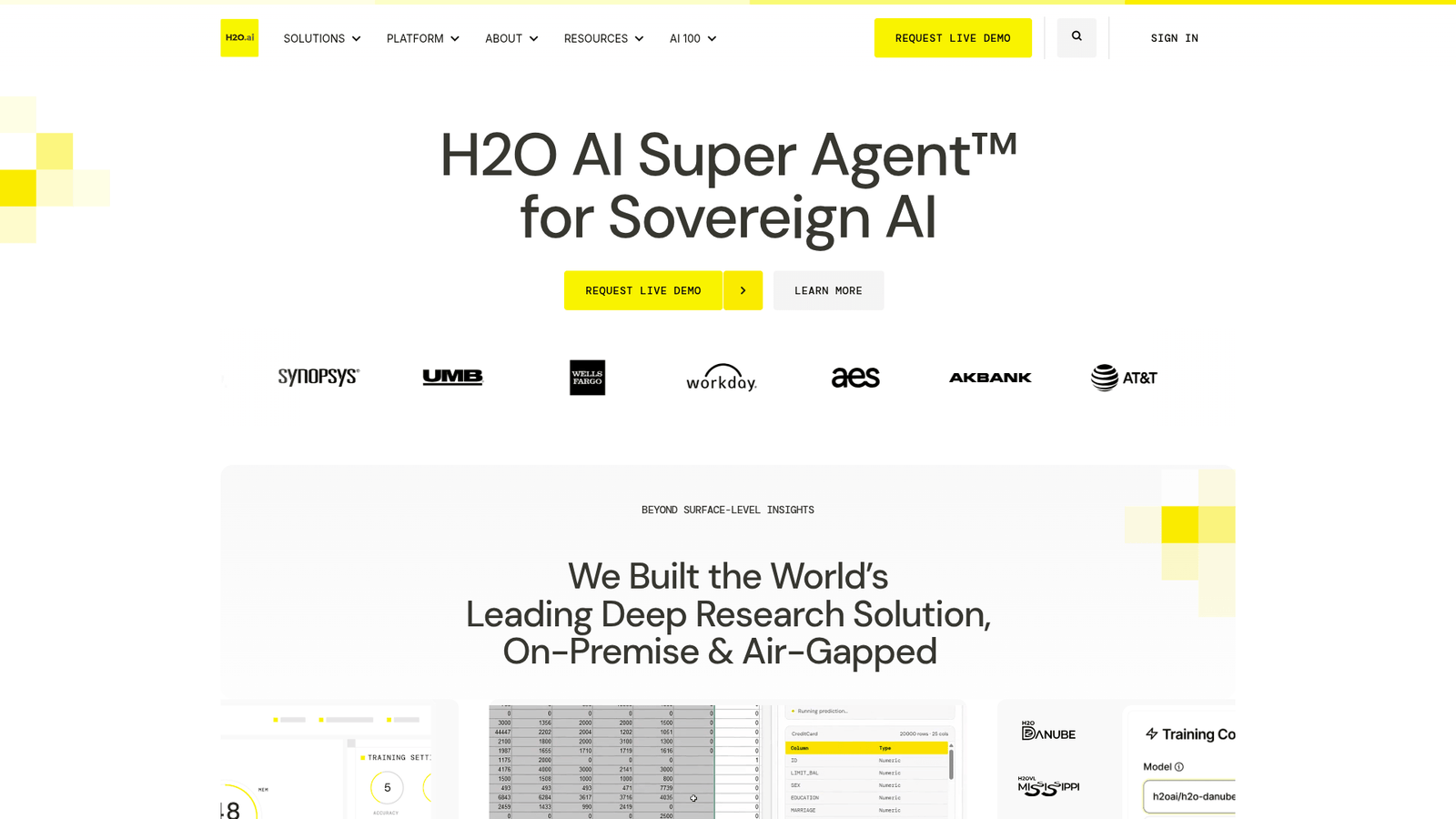
H2O AI is a leading artificial intelligence and machine learning platform designed to accelerate the adoption of AI in businesses.
At its core, H2O AI provides a suite of powerful tools that allow users to build, deploy, and manage machine learning models with remarkable speed and efficiency.
It’s built for professionals who need to extract maximum value from their data, from data scientists and analysts to business leaders seeking to gain a competitive edge.
The platform simplifies complex AI workflows, making advanced capabilities like predictive modelling accessible even to those without deep programming expertise.
H2O AI is a company and a set of open-source and commercial products. Their mission is to make AI accessible to every organisation.
This means tackling the common barriers to AI adoption: complexity, cost, and the need for specialised skills. They offer solutions that scale from individual projects to enterprise-wide deployments.
Think of it as a powerful engine for your data, designed to find patterns, make predictions, and drive smarter decisions.
Key Features of H2O AI for Predictive Modeling and Analytics
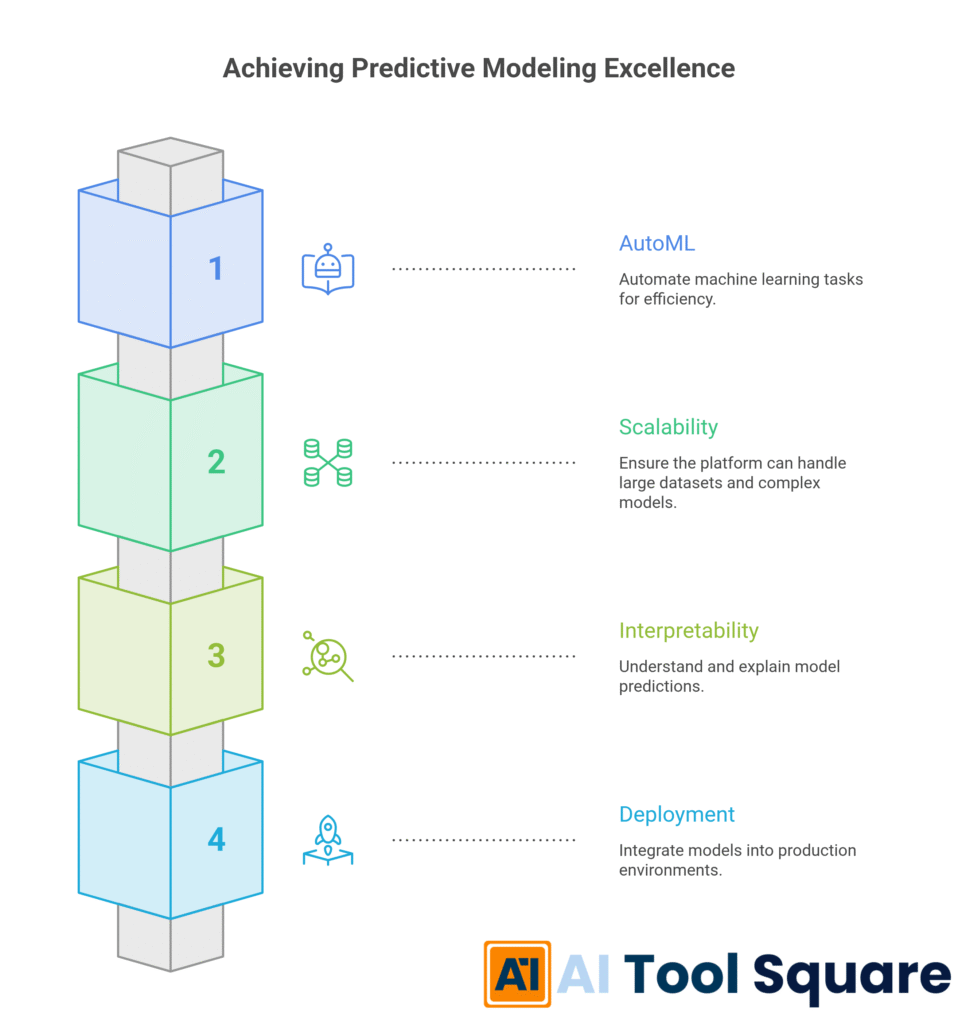
H2O AI isn’t just a one-trick pony. It’s packed with features specifically engineered to supercharge predictive modeling and analytics.
- Automated Machine Learning (AutoML):
This is a cornerstone of H2O AI’s offering. AutoML automates the most time-consuming aspects of model building. This includes tasks like feature engineering, algorithm selection, hyperparameter tuning, and model evaluation.
For predictive modeling, this means you can quickly generate multiple high-performing models without manual trial and error. It explores various algorithms and configurations to find the best fit for your specific data and problem.
This dramatically reduces the time it takes to go from raw data to a deployable predictive model, allowing teams to focus on interpreting results and taking action.
- Scalability and Performance:
H2O AI is built on a distributed computing framework. This allows it to handle massive datasets and complex models efficiently.
For businesses dealing with vast amounts of data, this scalability is crucial. It ensures that your predictive models can be trained and executed quickly, even with terabytes of information.
This performance is essential for real-time analytics and predictive applications where speed is paramount.
- Model Interpretability and Explainability:
Understanding *why* a model makes a certain prediction is often as important as the prediction itself. H2O AI offers tools for model interpretability, such as explanations for individual predictions (e.g., SHAP values) and global model insights.
This is vital for building trust in your AI models and for regulatory compliance. In predictive modeling, knowing which factors are driving a forecast helps you identify actionable insights and mitigate risks.
This feature makes complex AI less of a black box, empowering users to understand and trust the insights generated.
- Deployment and Management:
Building a model is only half the battle. H2O AI provides robust capabilities for deploying these models into production environments, whether on-premises, in the cloud, or at the edge.
It simplifies the process of integrating predictive models into existing business applications and workflows. This means your insights are not just generated; they are actively used to inform decisions.
Furthermore, the platform offers tools for model monitoring and management, ensuring that deployed models continue to perform accurately over time.
Benefits of Using H2O AI for Data Analysis and Business Intelligence
When you integrate H2O AI into your data analysis and business intelligence strategy, the results are tangible. It’s about working smarter, not harder.
The most immediate benefit is a dramatic increase in efficiency. What used to take weeks or months of manual data wrangling and model tuning can now be accomplished in days or even hours.
This speed allows businesses to react faster to market changes, identify emerging trends, and capitalise on opportunities before competitors.
Accuracy and performance of predictive models are also significantly enhanced. The AutoML features explore a wider range of possibilities than a human analyst could manage, leading to more robust and reliable predictions.
This improved accuracy translates directly into better decision-making, reducing guesswork and mitigating risks associated with flawed forecasts.
Cost savings are another major advantage. By automating many manual tasks, H2O AI reduces the need for extensive human resources dedicated to model building and tuning. This frees up valuable talent to focus on higher-level strategic thinking and problem-solving.
Moreover, the democratisation of AI means that more individuals within an organisation can leverage powerful analytical tools. This fosters a data-driven culture where insights are accessible across departments, leading to better collaboration and more aligned strategies.
The ability to rapidly prototype and test different predictive scenarios allows for greater agility and innovation. Businesses can explore “what-if” analyses with unprecedented speed, uncovering new revenue streams or cost-saving opportunities.
Ultimately, H2O AI empowers organisations to move beyond just understanding past performance to proactively shaping future outcomes. It transforms raw data into a strategic asset, driving growth and competitive advantage.
Pricing & Plans

H2O AI offers a tiered approach to its solutions, catering to a range of needs from individual data scientists to large enterprises.
The foundational elements of H2O AI, particularly the open-source libraries like H2O-3 and H2O Driverless AI (community edition), are often available for free. This provides an excellent entry point for individuals and small teams to explore the power of advanced machine learning and predictive modelling.
For commercial use and enterprise-grade features, H2O AI offers paid plans. These typically include enhanced support, advanced features, greater scalability, and dedicated resources. The exact pricing structure for these commercial offerings is usually custom and depends on the specific deployment needs, the number of users, and the required features.
It’s best to contact their sales team directly for a tailored quote that aligns with your organisation’s unique requirements for data analysis and business intelligence.
Compared to building a comparable in-house AI infrastructure and team from scratch, H2O AI’s commercial solutions often present a more cost-effective and faster path to realising AI-driven business value.
The free offerings are substantial for learning and experimentation, but for mission-critical applications and robust production environments, the commercial packages are designed to deliver maximum ROI.
Hands-On Experience / Use Cases
A marketing team looking to optimise ad spend could use H2O AI to build a predictive model for customer lifetime value. By feeding historical customer data, purchase history, and engagement metrics into H2O AI, the platform can identify key drivers of high-value customers.
The AutoML feature rapidly generates models that predict which leads are most likely to convert and which existing customers are at risk of churn. The interpretability tools then reveal why certain customers are predicted to be high-value or at risk, allowing the marketing team to tailor campaigns and retention efforts effectively.
For a financial institution, H2O AI can be instrumental in developing sophisticated fraud detection systems. The platform can ingest vast amounts of transactional data, identifying subtle patterns and anomalies that indicate fraudulent activity. This goes beyond simple rule-based systems, enabling the detection of novel and evolving fraud schemes.
The ability to rapidly retrain models with new data ensures the fraud detection system remains effective against sophisticated adversaries, thereby protecting the institution and its customers.
A retail company aiming to improve inventory management can leverage H2O AI for demand forecasting. By analysing historical sales data, seasonality, promotional activities, and even external factors like weather patterns or economic indicators, H2O AI can generate highly accurate demand predictions at a granular level.
This enables the business to optimise stock levels, reduce overstocking and stockouts, and minimise associated costs, leading to improved profitability and customer satisfaction.
Healthcare providers can utilise H2O AI for predictive analytics related to patient readmission rates. By analysing patient demographics, medical history, treatment plans, and social determinants of health, the platform can identify patients at high risk of readmission. This allows for proactive interventions and personalised post-discharge care, leading to better patient outcomes and reduced healthcare costs.
The platform’s ability to handle diverse data types and its powerful modelling capabilities make it suitable for a wide array of predictive tasks across different industries.
Who Should Use H2O AI?

H2O AI is designed for a broad spectrum of users, making advanced analytics accessible across various roles and business sizes.
Data Scientists and Machine Learning Engineers: These professionals will find H2O AI a powerful accelerator. They can leverage its AutoML capabilities to build and tune models faster, explore more complex algorithms, and deploy models efficiently. The platform allows them to focus on more challenging aspects of data science rather than repetitive tasks.
Business Analysts and Data Analysts: For those who need to derive insights from data but may not have deep programming expertise, H2O AI offers a user-friendly interface and automated processes. They can build predictive models, uncover trends, and generate reports that inform strategic decisions without extensive coding knowledge.
Business Leaders and Decision-Makers: H2O AI empowers leaders to understand the potential of AI and its impact on their business. The platform’s ability to generate clear, actionable insights and understandable model explanations helps them make more informed, data-driven decisions.
Small to Medium-Sized Businesses (SMBs): SMBs often lack the resources to build extensive in-house AI teams. H2O AI provides an affordable and efficient way to access enterprise-grade AI capabilities, helping them compete with larger organisations by leveraging their data effectively.
Large Enterprises: For established organisations, H2O AI can scale AI initiatives across departments. It aids in standardising AI workflows, ensuring model governance, and deploying AI at scale to drive significant business impact.
Marketers: To understand customer behaviour, predict campaign success, and personalise outreach.
Financial Services Professionals: For fraud detection, risk assessment, and algorithmic trading.
Retailers: For demand forecasting, inventory optimisation, and customer segmentation.
Healthcare Providers: For patient outcome prediction, disease diagnosis, and operational efficiency.
How to Make Money Using H2O AI
Leveraging H2O AI isn’t just about improving internal operations; it can also be a direct pathway to generating revenue. The power of predictive modeling and analytics can be packaged into services for clients.
- Offering Predictive Analytics as a Service (PaaS):
Businesses can establish themselves as consultants or service providers offering bespoke predictive modeling solutions built with H2O AI. This could involve developing custom churn prediction models for subscription services, demand forecasting for e-commerce businesses, or risk assessment models for financial firms.
By demonstrating the ROI through tangible results, such as increased customer retention or reduced operational costs for clients, a strong revenue stream can be built.
- Developing and Licensing Custom AI Models:
For specific industry problems, a user might develop a highly specialised predictive model using H2O AI. This model can then be licensed to multiple companies within that industry. Think of a model that predicts equipment failure in manufacturing plants or forecasts optimal crop yields for agricultural businesses.
The efficiency and scalability of H2O AI allow for the development of robust models that can be refined and deployed across numerous clients, creating a recurring revenue opportunity.
- Enhancing Existing Products with Predictive Features:
Software developers or product managers can integrate H2O AI’s capabilities into their existing applications. This could involve adding predictive lead scoring to a CRM, a recommendation engine to an e-commerce platform, or an anomaly detection feature to a security monitoring tool.
The enhanced functionality can justify premium pricing for the product, attract new customers, and increase overall market competitiveness. The ability to rapidly prototype and integrate these features with H2O AI makes this a feasible strategy.
For example, a marketing agency could utilise H2O AI to offer clients highly accurate customer segmentation and predictive campaign performance analysis. By delivering insights that directly translate into higher conversion rates and better ROI on marketing spend, they can charge a premium for their services.
Another scenario involves a freelance data scientist using H2O AI’s AutoML to quickly build and deliver predictive maintenance models for small manufacturing firms that couldn’t otherwise afford such sophisticated solutions. This allows them to secure more projects and deliver value faster.
Limitations and Considerations
While H2O AI is incredibly powerful, it’s important to acknowledge its limitations to use it effectively.
One key consideration is that while H2O AI automates much of the model-building process, it doesn’t eliminate the need for human expertise. Understanding the business problem, preparing the data correctly, and interpreting the model’s outputs are critical human tasks.
Garbage in, garbage out. If the data fed into H2O AI is flawed or irrelevant, the predictions will be inaccurate, regardless of the tool’s sophistication.
The interpretability features are excellent, but for highly complex models or niche domains, deep domain knowledge is still essential to fully validate and act upon the insights provided.
While H2O AI democratises AI, there is still a learning curve, especially for users transitioning from less advanced analytical tools. Understanding the nuances of machine learning and the specific functionalities of the platform will lead to better outcomes.
For the commercial versions, the cost can be a factor for very small businesses or individuals just starting out. However, the value proposition of faster development and superior model performance often outweighs the investment.
Finally, like any AI tool, the output requires careful validation. The “best” model suggested by AutoML might not always be the most practical or interpretable for a specific business context. Human oversight remains a crucial component.
Final Thoughts
In the fast-paced world of data analysis and business intelligence, staying ahead means embracing tools that offer speed, accuracy, and scalability. H2O AI stands out as a premier solution for anyone serious about predictive modeling and analytics.
It empowers teams to move beyond descriptive analytics and into the realm of proactive decision-making, forecasting future outcomes with remarkable precision.
Whether you’re a seasoned data scientist looking to accelerate your workflow or a business leader aiming to harness the power of AI without a deep technical background, H2O AI provides the tools and capabilities to achieve your goals.
The platform’s ability to automate complex processes, deliver highly accurate models, and ensure these models are explainable and deployable makes it an indispensable asset.
If your organisation is not yet leveraging advanced AI for predictive modeling, you are likely leaving money on the table and falling behind competitors who are.
Don’t let complexity be a barrier. Explore H2O AI and unlock the true potential of your data.
Visit the official H2O AI website
Frequently Asked Questions
1. What is H2O AI used for?
H2O AI is used for accelerating the adoption of artificial intelligence and machine learning in businesses. Its primary applications include building, deploying, and managing predictive models for tasks like forecasting, fraud detection, customer churn prediction, and more, all within the domains of data analysis and business intelligence.
2. Is H2O AI free?
H2O AI offers open-source libraries that are free to use. Their commercial enterprise-grade products and advanced platforms typically involve licensing fees, with pricing varying based on the features and scale of deployment required.
3. How does H2O AI compare to other AI tools?
H2O AI is known for its powerful AutoML capabilities, scalability, and focus on model interpretability. It often differentiates itself by offering a comprehensive platform that simplifies the end-to-end machine learning lifecycle, from data preparation to deployment and management, making advanced AI more accessible.
4. Can beginners use H2O AI?
Yes, beginners can use H2O AI, especially with its AutoML features. While a foundational understanding of data and business problems is beneficial, H2O AI’s automated processes significantly lower the barrier to entry for building predictive models.
5. Does the content created by H2O AI meet quality and optimization standards?
H2O AI does not create content in the same way a language model does. It creates predictive models and provides analytics. The quality and optimisation of insights derived from these models depend on the data provided and the user’s ability to interpret and act upon the model’s outputs.
6. Can I make money with H2O AI?
Absolutely. You can make money with H2O AI by offering predictive analytics as a service, developing and licensing custom AI models, or integrating predictive features into existing products and services to enhance their value.
7. How to make money with H2O AI?
To make money with H2O AI, focus on building solutions that solve specific business problems. Offer consulting services for predictive modeling, create industry-specific AI models for licensing, or enhance software products with AI-driven insights. The key is to leverage its capabilities to provide tangible value and ROI for clients.