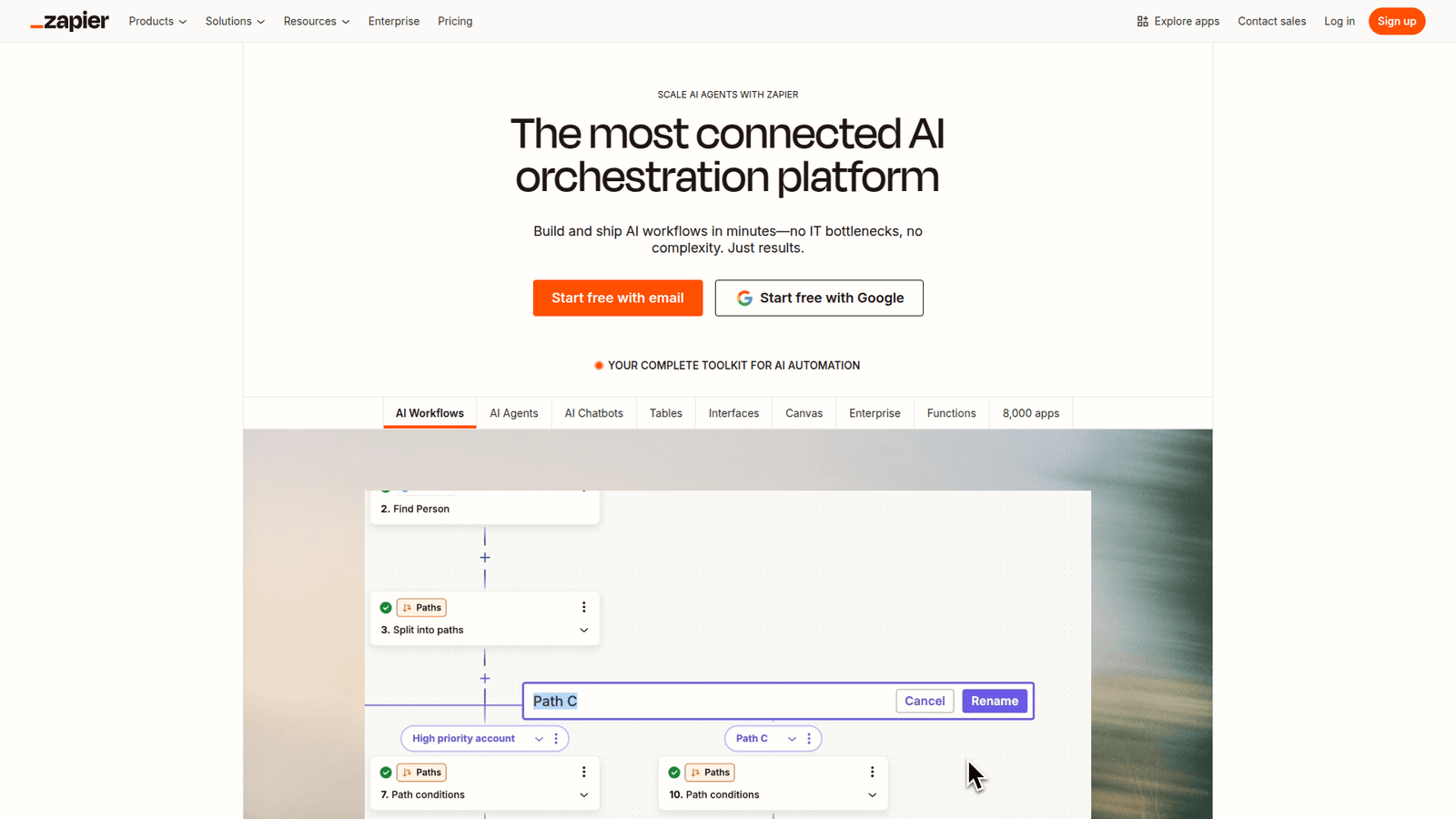

Zapier supercharges Trigger-based Automation. Stop manual tasks, save massive time, and boost efficiency. See how Zapier helps you win!
Zapier = More Results, Less Burnout
Alright, let’s talk shop.
Everyone’s talking about AI, right?
It’s popping up everywhere.
Especially in how we get stuff done.
Think Automation and Integration.
That whole game is changing fast.
Manual work?
It’s dying.
Slow processes?
They’re getting smoked.
Why?
Tools are getting smarter.
They can do the grunt work.
Better.
Faster.
Without complaining.
One name keeps coming up.
Zapier.
If you’re dealing with getting different apps to talk to each other.
If you need things to happen automatically when something else happens.
This is your guy.
Specifically, for Trigger-based Automation.
It’s a big deal.
It means less time on soul-crushing repetitive tasks.
More time on stuff that actually moves the needle.
Stuff that makes you money.
Or just lets you breathe a little.
Let’s break down why Zapier is the real deal.
And how it flips the script on how you work.
Table of Contents
- What is Zapier?
- Key Features of Zapier for Trigger-based Automation
- Benefits of Using Zapier for Automation and Integration
- Pricing & Plans
- Hands-On Experience / Use Cases
- Who Should Use Zapier?
- How to Make Money Using Zapier
- Limitations and Considerations
- Final Thoughts
- Frequently Asked Questions
What is Zapier?
Okay, so what IS Zapier?
Think of it as the ultimate translator for your apps.
It’s a web-based tool.
Its one job?
Connect apps that wouldn’t normally talk to each other.
It uses “Zaps”.
A Zap is basically an automated workflow.
It connects two or more apps.
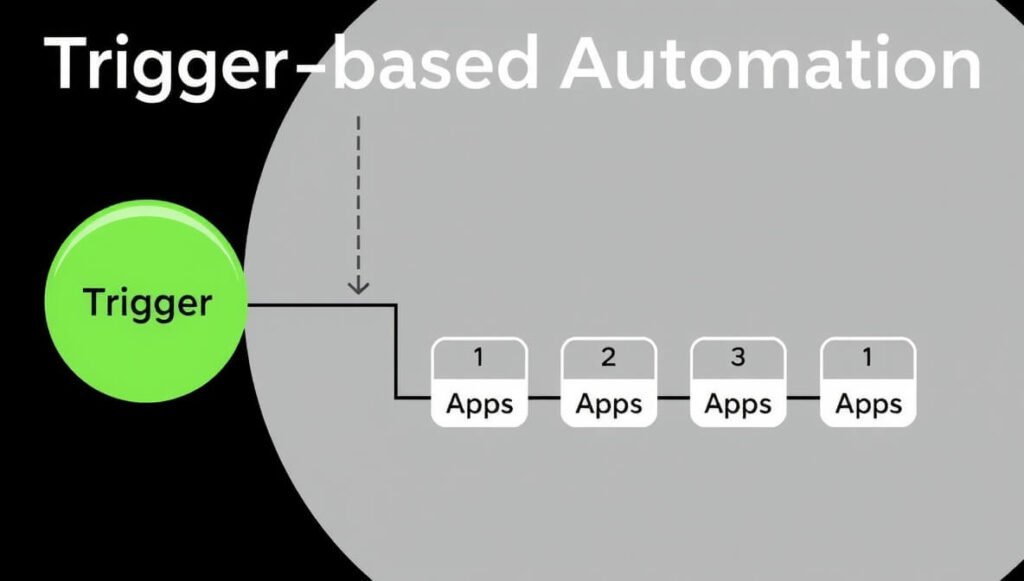
The magic happens with triggers and actions.
A trigger is an event in one app.
An action is the task Zapier performs in another app.
Automatically.
No coding needed.
Seriously.
You don’t need to be a tech wizard.
If you can click buttons and follow simple instructions, you can build a Zap.
Who’s it for?
Anyone who uses multiple online tools.
Businesses of all sizes.
Individuals.
Marketers.
Sales teams.
Support staff.
HR teams.
Writers.
Creators.
Freelancers.
If you find yourself copy-pasting data from one place to another.
Or manually creating tasks based on emails.
Or doing anything that feels like busywork between apps.
Zapier is built to kill that.
It’s about setting up rules once.
Then letting the software handle the rest.
It connects over 6,000 apps.
Think Google Sheets, Gmail, Slack, Trello, Salesforce, Facebook Lead Ads, etc.
The list is massive.
This huge range of connections is why it’s so powerful for Automation and Integration.
It bridges the gaps between your tools.
It creates pathways for information to flow freely.
Without you being the manual middleman.
Key Features of Zapier for Trigger-based Automation
- Massive App Library:
This isn’t just a few dozen apps.
We’re talking thousands.
Over 6,000 at last count.
This means the chances of your favourite tools being connectable are extremely high.
From CRM systems to project management tools, email platforms, social media, spreadsheets, forms, payment processors… you name it.
This vast network is the foundation for robust Automation and Integration.
More connections mean more possibilities for triggers and actions.
More ways to automate tasks that cross different software boundaries.
It eliminates the “can this connect to that?” headache most people face.
Zapier usually has the answer: Yes.
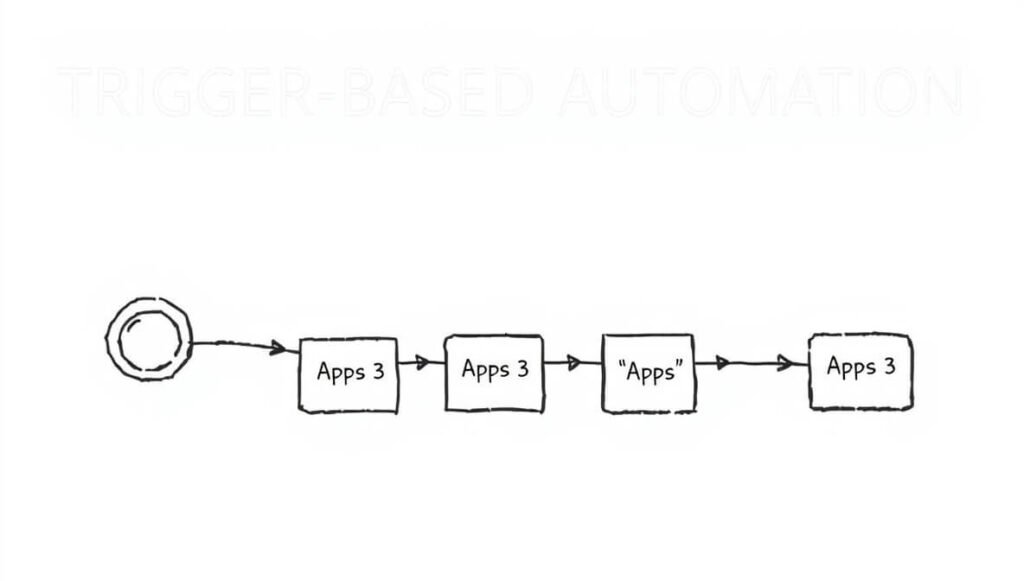
- Trigger-Action Workflows (Zaps):
This is the core concept.
Simple, yet incredibly powerful.
You define a trigger event in App A.
For example, “New email received in Gmail with label ‘Invoice'”.
Then you define one or more action events in App B, C, D, etc.
For instance, “Create new task in Trello”, “Add row to Google Sheet”, “Send message in Slack”.
Once set up, Zapier constantly monitors for that trigger.
When it happens, Zapier runs the defined actions automatically.
This is pure Trigger-based Automation.
It’s reactive automation.
Something happens here, Zapier makes something else happen over there.
It’s like setting up dominoes.
You knock one down, and the rest fall in line.
But without you having to manually push each one.
- Multi-Step Zaps and Paths:
Automation isn’t always a simple A to B jump.
Often, it’s A to B to C to D.
Maybe even with some decision points in between.
Zapier handles this with multi-step Zaps.
A single trigger can initiate a sequence of actions across several apps.
You can add filters (only continue if certain conditions are met).
You can add delays (wait 5 minutes before the next step).
You can use the Formatter tool to transform data between steps (e.g., change date format, extract email addresses).
Then there are Paths.
This allows for conditional logic.
If the data meets Condition X, follow Path 1.
If it meets Condition Y, follow Path 2.
This adds significant complexity and intelligence to your Trigger-based Automation workflows.
It means Zapier can handle more nuanced processes.
It moves beyond simple actions to actual automated decision-making based on data.
This is powerful stuff for building sophisticated, hands-off workflows.
Benefits of Using Zapier for Automation and Integration
Why bother with Zapier?
What’s the payoff?
Simple.
Time Savings.
This is the big one.
How much time do you spend on repetitive tasks?
Moving data.
Sending routine emails.
Creating standard documents.
Adding contacts to mailing lists.
These minutes add up.
They become hours.
Then days.
Zapier automates this.
You set it up once.
It runs forever (or until you turn it off).
That’s time you get back.
Time you can spend on strategy.
On growth.
On higher-value work.
Or just taking a damn break.
Reduced Errors.
Humans mess up.
Especially when doing boring, repetitive stuff.
Typos happen.
Data gets missed.
Fields get mixed up.
Zapier doesn’t make these mistakes.
Once you tell it what data to move and where to put it, it does it exactly the same way every single time.
Consistency and accuracy go way up.
This means cleaner data.
More reliable processes.
Less time spent fixing mistakes later.
Increased Efficiency and Productivity.
When routine tasks are handled automatically, your workflow speeds up.
There are fewer bottlenecks.
Information flows faster between teams or steps in a process.
You can handle more volume without increasing headcount.
You become a well-oiled machine.
Not a creaky bicycle.
This boosts overall productivity significantly.
Better Integration of Tools.
How many apps do you use that don’t talk to each other?
Probably too many.
Zapier smashes down the walls between them.
It makes your entire software stack work together as a single unit.
This isn’t just about moving data.
It’s about creating interconnected systems.
Systems that power your business.
Without custom development or complex API integrations.
That’s huge for Automation and Integration.
Scalability.
Manual processes don’t scale well.
More volume means more work.
More people needed.
Automated processes scale beautifully.
Whether you have 10 customers or 10,000, a Zap runs the same way.
It handles increased load without complaining or needing a raise.
This allows your business to grow without hitting operational roadblocks.
Improved Responsiveness.
When a trigger happens, Zapier reacts almost instantly.
A new lead submits a form?
Zapier can create a CRM record, send a welcome email, and notify the sales team in seconds.
Compare that to someone manually checking for form submissions, copying data, switching apps, and composing emails.
Your speed of response to leads, customers, or internal events goes way up.
This can be a massive competitive advantage.
Especially in sales or support.
Pricing & Plans
Okay, so what’s the cost?
Nothing is truly “free” forever, right?
Zapier does have a free plan.
It’s a good starting point.
Lets you kick the tires.
You get 5 Zaps.
That means 5 automated workflows active at any time.
These Zaps can only be single-step.
One trigger, one action.
You also get 100 tasks per month.
A “task” is counted every time a Zap successfully performs an action.
If your Zap is “New Email in Gmail” -> “Create Task in Trello”, every time it creates a Trello task, that’s one task used from your quota.
The free plan is great for simple automations.
Testing the waters.
But for serious Trigger-based Automation, you’ll likely need more.
They have several paid plans: Starter, Professional, Team, and Company.
Pricing goes up based on the number of tasks per month and the features you unlock.
Starter plans get you more Zaps (unlimited) and tasks (starting around 750/month).
You also unlock multi-step Zaps.
This is crucial for building more complex workflows.
Professional plans add features like Paths (conditional logic), auto-replay (Zapier retries failed tasks), and faster update times (Zaps check for triggers more often).
Team and Company plans are for larger organisations.
They include shared workspace, admin permissions, higher task volumes, and premium app access.
Compared to alternatives?
Tools like Make (formerly Integromat) or IFTTT exist.
Make is often considered more powerful and sometimes cheaper for complex workflows, but has a steeper learning curve.
IFTTT is simpler, focused more on personal automations and smart home devices, and has a much smaller app library for business use.
Zapier sits in a sweet spot.
Massive app compatibility.
Relatively easy to use interface.
Scalable plans.
The cost is usually justified quickly by the time it saves and the errors it prevents.
Think of it as an investment.
You spend a bit of money.
You save a tonne of time.
Time is money.
So, yeah, it’s worth it if you use it right.
Hands-On Experience / Use Cases
Let’s get concrete.
What does using Zapier actually look like?
How does it handle Trigger-based Automation?
Imagine this:
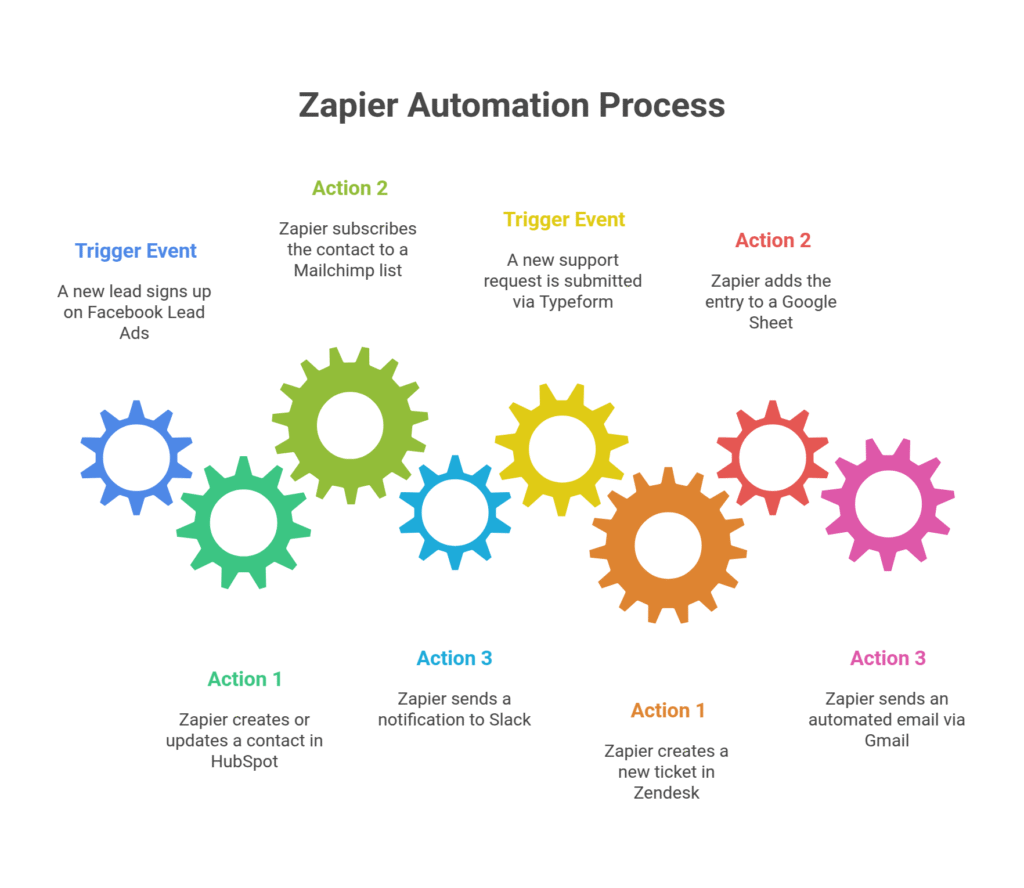
You run Facebook Lead Ads.
When someone signs up, you need their info in your CRM.
You also want to add them to your email list.
And maybe notify your sales team in Slack.
Manually?
Download the CSV from Facebook.
Import to CRM.
Export from CRM, clean it up, import to email software.
Go to Slack, write a message.
Repeat for every lead.
Painful, right?
With Zapier:
Trigger: New Lead on Facebook Lead Ads.
Action 1: Create/Update Contact in HubSpot (or Salesforce, Zoho, whatever).
Action 2: Subscribe Contact to Mailchimp (or ActiveCampaign, ConvertKit, etc.) list.
Action 3: Send Channel Message in Slack.
Set it up once. Takes maybe 15 minutes.
From then on?
Every time a lead comes in, Zapier does all three steps instantly.
You do nothing.
That’s the power.
Here’s another one:
You get a customer support request via a contact form on your website (like Typeform or Google Forms).
Trigger: New Entry on Typeform.
Action 1: Create new ticket in Zendesk (or Freshdesk, etc.).
Action 2: Add entry to a “Support Requests” Google Sheet.
Action 3: Send an automated “We received your request” email via Gmail.
Again, totally hands-off after setup.
Your support process is now faster, more organised, and less likely to miss tickets.
Using Zapier is surprisingly easy.
The interface is visual.
You select apps.
Choose triggers and actions from dropdown menus.
Map the data fields you want to transfer (like name, email, message body).
Test the Zap.
Turn it on.
That’s it.
The results?
Immediate time savings.
Faster response times.
Improved data consistency.
Less mental load from remembering to do repetitive tasks.
It feels like having a virtual assistant who works 24/7 for a fixed price.
For Automation and Integration, especially trigger-based, it’s a game changer.
Who Should Use Zapier?
Okay, so who is this for?
Pretty much anyone drowning in manual tasks.
Let’s break it down by profile:
Small Business Owners:
You wear a million hats.
Every minute counts.
Automating tasks frees you up to focus on growing the business.
Handling customer orders, managing leads, sending follow-ups – Zapier takes the rote work off your plate.
Marketers:
Lead generation.
Email marketing.
Social media posting.
Data tracking.
These involve tons of connecting dots between different platforms.
Zapier is a marketer’s best friend for Trigger-based Automation workflows like “New Lead -> CRM -> Email Sequence”.
Sales Teams:
Getting lead data into the CRM instantly.
Notifying the right salesperson.
Creating follow-up tasks.
Zapier speeds up the lead qualification and follow-up process dramatically.
Less manual data entry, more selling.
Freelancers / Solopreneurs:
You *are* the business.
You need to be efficient.
Automate client onboarding, invoice generation, social media scheduling, project management updates.
Zapier lets you act like a bigger operation than you are.
Agencies:
Managing multiple clients.
Using different tools for each client.
Reporting.
Zapier standardises and automates tasks across client accounts.
Saves agency time, improves service delivery.
Anyone in Administration or Operations:
Handling data entry.
Processing forms.
Managing calendars.
Setting up approvals.
These roles are often burdened by manual, repetitive tasks.
Zapier is built to make these jobs way easier and faster.
Tech-Adjacent Roles (without coding skills):
You understand how systems should work.
You see the need for automation.
But you can’t write custom scripts or API integrations.
Zapier provides the visual, no-code interface to build powerful Automation and Integration solutions yourself.
If you use more than two apps and find yourself manually moving information between them, Zapier is probably for you.
The potential for time saving and increased accuracy is massive, regardless of your industry or role.
How to Make Money Using Zapier
Making money with a tool like Zapier?
Absolutely.
It’s not a direct money-making app like a crypto exchange.
It’s an efficiency multiplier.
And efficiency translates directly to profit.
Here’s how:
- Offer Automation Services:
Many businesses know they need automation.
They just don’t have the time or expertise to set it up.
Learn Zapier inside and out.
Then offer your services to them.
You can specialise in specific niches (e.g., e-commerce automation, marketing workflow automation, HR process automation).
Charge by the hour or per Zap setup.
You’re selling back time and solving real pain points for businesses.
This is a legitimate consulting service built around a powerful tool.
It’s about implementing effective Trigger-based Automation for clients.
- Increase Your Own Business Efficiency:
This is the most common way.
By automating repetitive tasks, you free up your own time.
That time can be reinvested.
More sales calls.
Developing new products.
Content creation.
Strategic planning.
Tasks that actually grow your income.
If Zapier saves you 10 hours a week, and your time is worth $100/hour, that’s $1,000 “earned” or saved each week.
It lowers your operational costs.
It allows you to scale without hiring more staff as quickly.
These are direct impacts on your bottom line.
- Build and Sell Templates or Courses:
Once you become a Zapier expert, you can package your knowledge.
Create Zap templates for common workflows and sell them.
For example, a template for “Save all Gmail attachments to Google Drive” or “Post new WordPress posts to social media”.
You can also create online courses teaching people how to use Zapier for specific goals (e.g., “Automate Your E-commerce Business with Zapier”).
Share your expertise in Automation and Integration.
People pay good money to learn skills that save them time and money.
Real-world case study?
Okay, think about an online store owner.
Let’s call her Sarah.
Before Zapier, Sarah spent 2-3 hours every day processing orders.
Copying order details.
Adding customers to her email list.
Updating inventory in a spreadsheet.
Sending shipping notifications.
She implemented Zaps:
“New Shopify Order” -> “Add Customer to Mailchimp”.
“New Shopify Order” -> “Add Order Details to Google Sheet”.
“Shipping Label Created in Shippo” -> “Send Customer Shipping Notification via Gmail”.
These Zaps took maybe a day to set up initially.
Now, that daily 2-3 hours of manual work is GONE.
That’s 10-15 hours a week she gets back.
She used that time to develop new products, run more effective marketing campaigns, and provide better customer service.
Her sales increased significantly.
She didn’t just save time; she directly increased revenue by freeing herself up to focus on growth activities.
That’s how you make money with Zapier.
Limitations and Considerations
Alright, let’s be real.
Nothing is perfect.
Zapier is powerful.
But it has limitations.
And things you need to consider.
Cost Can Add Up:
The free plan is limiting.
As your automation needs grow, you’ll need a paid plan.
If you have high-volume triggers (like lots of leads or transactions), you can burn through tasks quickly.
Higher task limits mean higher monthly fees.
For very high-volume operations, the cost might become a significant factor.
You need to monitor your usage.
Complexity in Setup:
While the interface is user-friendly, building complex multi-step Zaps with filters, paths, and formatters can get tricky.
It requires logical thinking.
Understanding how data flows.
And careful testing.
It’s not “hard coding,” but it’s definitely problem-solving.
There can be a learning curve to master the advanced features.
Especially when dealing with data manipulation.
Dependency on App APIs:
Zapier relies on the APIs (Application Programming Interfaces) of the apps it connects to.
If an app’s API changes or goes down, your Zaps using that app can break.
This doesn’t happen often with major, stable apps.
But it’s a potential point of failure outside of Zapier’s direct control.
Zapier has monitoring and auto-replay features to help, but it’s still a dependency.
Not a Replacement for Custom Development (Sometimes):
For highly specific, deeply integrated functionalities or complex data transformations that go beyond Zapier’s built-in tools (like Formatter or Paths), you might still need custom code.
Zapier is great for integrating existing functionalities of apps.
It’s not designed to build entirely new features or manipulate data in extremely unique ways that aren’t exposed via app APIs.
Think of it as connecting existing pipes, not laying completely new infrastructure for entirely new types of fluids.
Potential for “Zap Overload”:
As you build more and more Zaps, managing them can become a task in itself.
Keeping track of what each Zap does.
Monitoring their performance.
Troubleshooting errors.
Having a clear naming convention and documentation plan is essential as your Trigger-based Automation setup grows.
Otherwise, it can get messy.
Overall, the benefits usually far outweigh the limitations for most users.
But it’s important to go in with eyes open.
Understand the costs.
Be prepared to invest time in setup and testing.
And recognise that it’s a tool for connection and automation, not a full-blown development platform.
Final Thoughts
Look, here’s the bottom line.
Manual work is a time sink.
It’s boring.
It’s prone to errors.
In today’s world, you can’t afford to waste time on that stuff.
Especially if you’re serious about growth.
Zapier is the leading tool for Automation and Integration.
Full stop.
Its strength lies in its massive app compatibility and its relatively easy-to-use interface for building Trigger-based Automation.
Does it require some setup?
Yes.
Is it free forever for heavy use?
No.
But the return on investment is often insane.
The time you get back.
The errors you avoid.
The speed you gain.
These aren’t small things.
They impact your productivity, your efficiency, and ultimately, your ability to make money and scale.
If you’re spending time every week on tasks that could be automated between your apps.
You’re leaving money and time on the table.
You’re falling behind.
My recommendation?
Start with the free plan.
Pick one or two annoying, repetitive tasks that happen between two apps you use daily.
Set up a simple Zap.
See the magic happen.
Once you see it work.
Once you feel that relief of not having to do that task manually ever again.
You’ll get it.
You’ll start seeing automation opportunities everywhere.
That’s when you consider a paid plan to build more complex workflows.
Zapier isn’t just a tool.
It’s a fundamental shift in how you approach work.
Stop being a robot.
Let Zapier be the robot.
Focus on being the human.
The strategist.
The creator.
The deal closer.
Give it a shot.
It might just change how you work forever.
Visit the official Zapier website
Frequently Asked Questions
1. What is Zapier used for?
Zapier connects different web applications.
It automates tasks between them using “Zaps”.
A Zap is a workflow triggered by an event in one app, leading to actions in other apps.
It’s used for Automation and Integration, especially Trigger-based Automation, across thousands of apps without needing code.
It saves time and reduces manual work.
2. Is Zapier free?
Zapier offers a free plan.
This plan includes limited Zaps (5) and tasks per month (100), and Zaps can only be single-step.
For more Zaps, tasks, multi-step workflows, and advanced features like Paths, you need to subscribe to a paid plan.
Pricing scales up with the number of tasks and features required.
3. How does Zapier compare to other AI tools?
Zapier isn’t an AI tool in the sense of generating content or analysing complex data using machine learning.
It’s an automation and integration platform that can *connect* to AI tools.
You can use Zapier to trigger an AI tool or use the output of an AI tool in a workflow.
Competitors in the automation space include Make (Integromat) and IFTTT, but Zapier generally has a wider app library and a more user-friendly interface than Make, while being much more powerful for business use than IFTTT.
4. Can beginners use Zapier?
Yes, absolutely.
Zapier is designed for non-developers.
The interface is visual and uses simple concepts like “If This, Then That” (Trigger/Action).
Building simple Zaps is very straightforward.
Mastering advanced features might take a little practice, but the basics are accessible to anyone comfortable using web applications.
5. Does the content created by Zapier meet quality and optimization standards?
Zapier doesn’t “create content” itself in the way a copywriting AI does.
It moves and formats existing data or triggers actions based on data.
For example, it can take text from a form submission and create an email or a social media post.
The quality and optimisation of that resulting email or post depend on the quality of the source data and how you configure the Zap’s actions and formatting steps.
Zapier ensures the *process* is reliable, but the *output quality* is based on the input and setup.
6. Can I make money with Zapier?
Yes, indirectly and directly.
Indirectly, by automating your own workflows to save time and increase efficiency, which boosts your profitability.
Directly, by offering automation consulting services to businesses that need help setting up Zaps, or by creating and selling Zap templates or courses on automation.
It’s a valuable skill set in the Automation and Integration field.