
MeaningCloud revolutionizes your Sentiment Analysis, turning raw data into actionable insights for improved customer support. Gain a competitive edge and boost your CX today!
Why MeaningCloud Is a Smart Choice for Sentiment Analysis
You’re staring at mountains of customer feedback.
Emails, chat logs, social media comments—it’s endless, right?
And somewhere in there, hidden in all that noise, are the golden nuggets.
The real feelings. The true pain points. The genuine drivers of satisfaction or frustration.
But how do you find them?
How do you make sense of millions of words, spoken or typed, without hiring a small army of analysts?
This isn’t just busywork. This is about understanding your customers at scale.
It’s about making smarter, faster decisions that actually impact your bottom line.
Welcome to the era of AI, where tools aren’t just fancy gadgets; they’re essential gears in your business machine.
And when it comes to understanding customer emotions, MeaningCloud is a tool you need to know about.
Table of Contents
- What is MeaningCloud?
- Key Features of MeaningCloud for Sentiment Analysis
- Benefits of Using MeaningCloud for Chatbots and Customer Support
- Pricing & Plans
- Hands-On Experience / Use Cases
- Who Should Use MeaningCloud?
- How to Make Money Using MeaningCloud
- Limitations and Considerations
- Final Thoughts
- Frequently Asked Questions
What is MeaningCloud?
Alright, so what’s the deal with MeaningCloud?
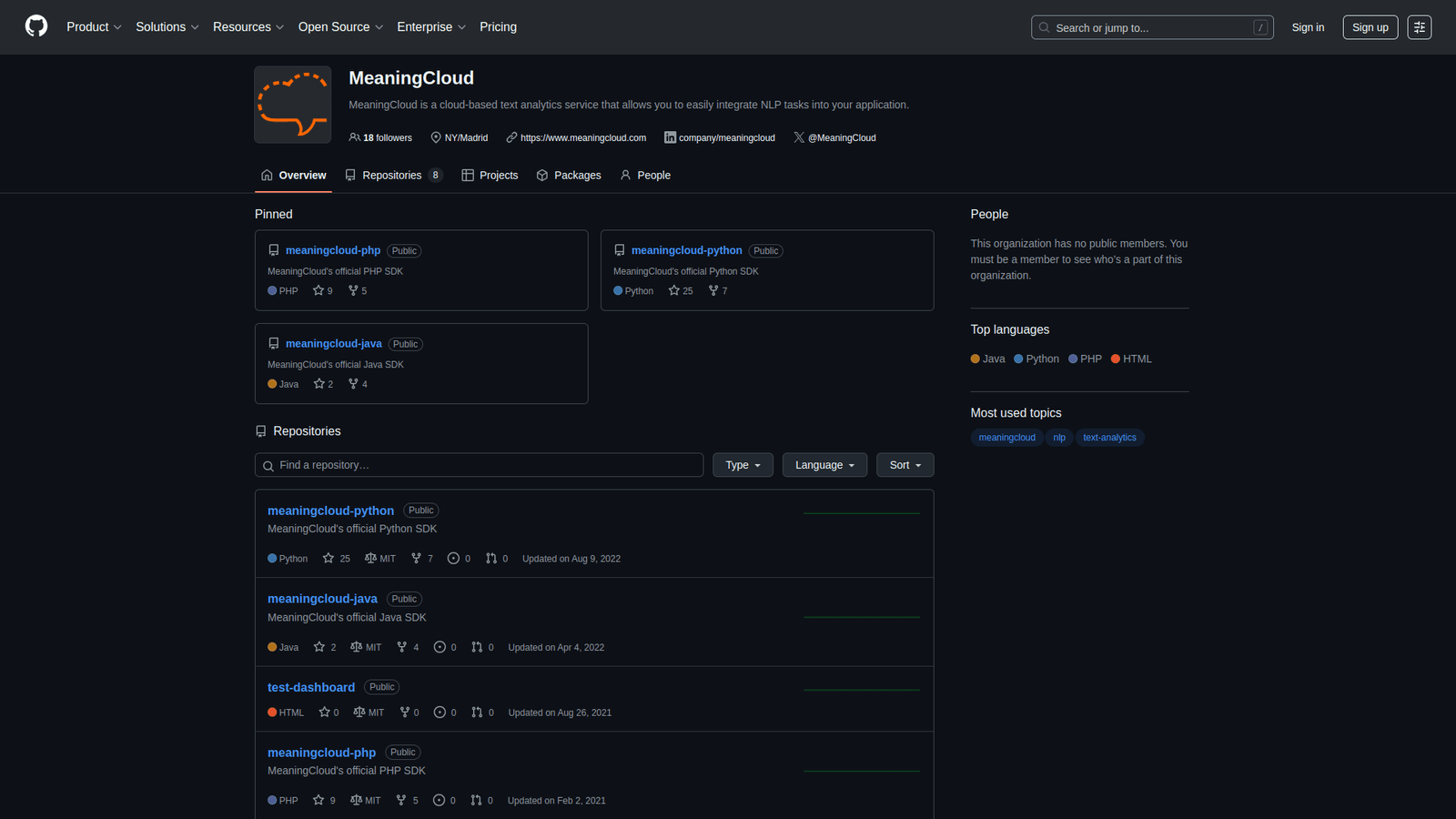
Think of it as your digital detective for text. It’s an AI-powered text analytics platform.
It doesn’t just read words; it understands them. It digs into unstructured text data and pulls out valuable insights.
MeaningCloud is built for businesses that need to process large volumes of text.
Whether it’s customer feedback, news articles, or internal documents, this tool can break it down.
Its core function is to extract meaning. It spots entities, concepts, topics, and, most critically for us, sentiments.
For anyone working in Chatbots and Customer Support, this is huge.
Imagine your chatbot handling a query. Is the customer happy, annoyed, or downright furious?
MeaningCloud can tell you.
This isn’t just for big tech companies. Small businesses, marketers, researchers, and creators—anyone dealing with text data—can use it.
It provides APIs, which means you can plug it directly into your existing systems.
This makes automation possible.
No more manual tagging or guessing games. MeaningCloud gives you data-driven understanding.
It’s about moving from guesswork to informed decisions.
It’s about turning raw text into actionable intelligence.
This tool lets you see patterns and trends that would otherwise be invisible.
That means better products, better services, and ultimately, happier customers.
It’s a smart move for anyone serious about customer experience.
And seriously, who isn’t serious about that?
It helps you get real with your data.
No more anecdotes, just facts.
MeaningCloud simplifies even complex data sets.
Key Features of MeaningCloud for Sentiment Analysis
So, you want to know what this thing actually *does* for Sentiment Analysis?
Let’s break down its core capabilities.
- Feature 1: Advanced Sentiment Analysis Model
MeaningCloud goes beyond simple positive, negative, neutral. It’s sophisticated.
It understands nuances.
It can detect sarcasm, irony, and even compound emotions.
This is crucial because customer feedback isn’t always black and white.
A customer might say, “Great service, if you like waiting an hour.” MeaningCloud picks up on the ‘sarcasm’ part.
It provides polarity (positive, negative, neutral) but also subjectivity and agreement.
This gives you a much richer picture of the customer’s emotional state.
It can also pinpoint the specific aspects of a product or service that generate those sentiments.
This is called aspect-based sentiment analysis.
Knowing that customers hate the “checkout process” but love the “product quality” is far more useful than just “negative feedback.”
It helps you prioritize your actions.
You can instantly see what needs fixing.
It’s about getting granular with your data.
No more general assumptions, just precise insights.
This precision lets you respond effectively.
- Feature 2: Multi-Language Support
Your customers aren’t just speaking English, are they?
The world is global.
MeaningCloud gets that.
It supports multiple languages for sentiment analysis.
This means you can analyze feedback from customers across different regions, without needing a translator for every single message.
Imagine the time and cost savings.
It ensures you don’t miss out on crucial feedback just because it’s not in your primary language.
This broadens your understanding of your global customer base.
It helps you tailor your support and products to diverse markets.
This feature alone can open up new opportunities.
It removes language barriers that often limit customer insight.
It gives you a complete picture, regardless of geography.
This is a major win for international businesses.
It helps you stay connected with everyone.
- Feature 3: Customization and Training
Every business speaks a slightly different language.
Your industry has its own jargon, its own specific terms that carry unique sentiment.
MeaningCloud allows you to train its models.
You can feed it your specific domain knowledge, your specific terms, and teach it how those terms should be interpreted in your context.
This significantly improves accuracy.
A “bug” in software is negative, but a “bug” in a cybersecurity context might be positive (finding a vulnerability).
MeaningCloud learns your business.
You can create custom dictionaries and rule sets.
This ensures the sentiment analysis is highly relevant to your specific needs.
It’s not a one-size-fits-all solution; it’s adaptable.
This customization ensures the insights are truly actionable for your unique operations.
It makes the tool work for *you*, not the other way around.
It’s about making the AI smarter for your specific use case.
This leads to much better results.
Benefits of Using MeaningCloud for Chatbots and Customer Support
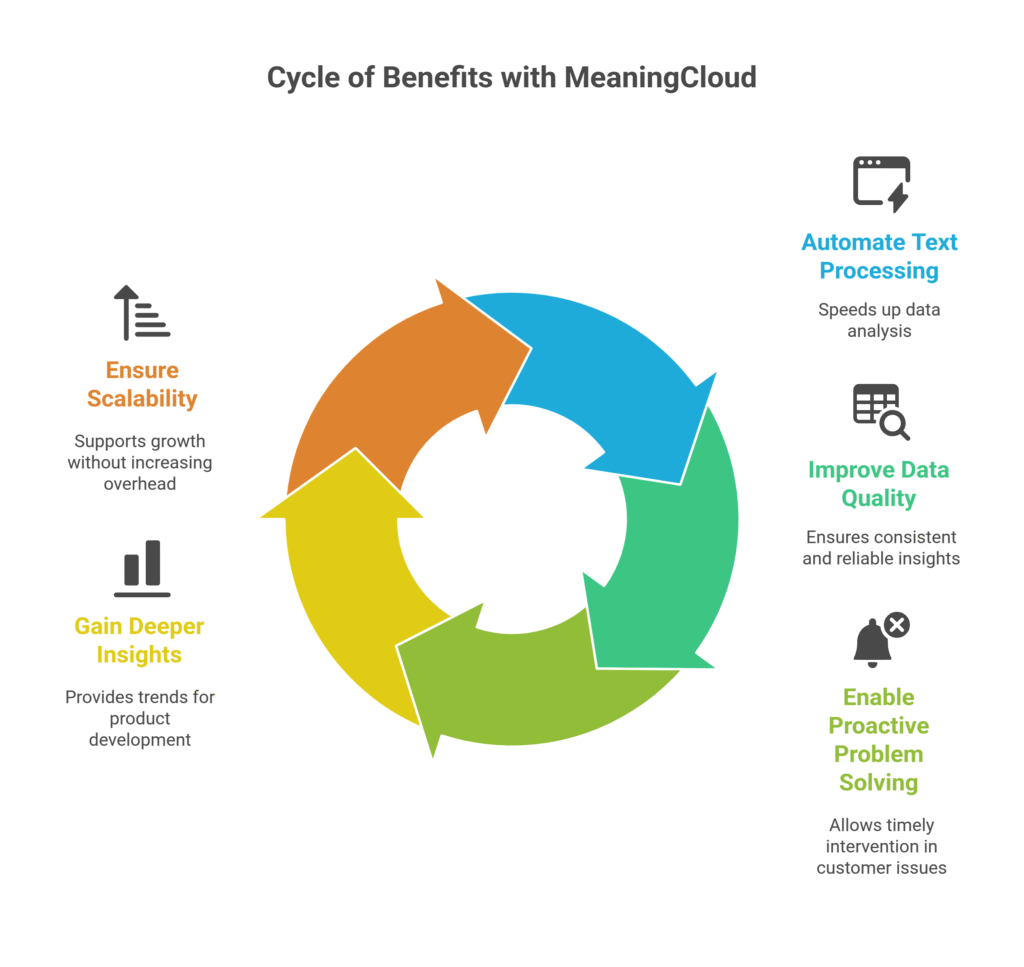
Okay, so you get the features. But what does this mean for *your* day-to-day in Chatbots and Customer Support?
The benefits are massive.
First, time savings.
Imagine manually reading through thousands of customer emails or chat transcripts every week.
Impossible, right?
MeaningCloud automates this. It processes text at lightning speed.
What used to take hours, days, or even weeks of human effort is done in minutes.
This frees up your team to do what humans do best: solve complex problems, build relationships, and innovate.
They’re not slogging through data; they’re acting on insights.
Second, quality improvement.
Human sentiment analysis is subjective. Two people might interpret the same message differently.
MeaningCloud provides consistency.
It applies the same logic, every time.
This means your data is more reliable, more accurate.
You get a true pulse of customer feeling.
This leads to higher quality decision-making.
You’re no longer guessing; you’re operating on facts.
Third, proactive problem solving.
With real-time sentiment analysis, your chatbots can adapt their responses.
If a customer’s sentiment turns negative during a chat, the bot can escalate the issue to a human agent immediately.
This prevents frustration from boiling over.
It helps you intervene *before* a small issue becomes a big one.
Imagine a customer starting a chat calmly, but getting more agitated as the bot fails to resolve their query.
MeaningCloud identifies that shift, flags it, and bam – a human steps in.
This doesn’t just improve customer satisfaction; it can save customers from churning.
It’s about being one step ahead.
Fourth, deeper insights for product development.
Beyond individual interactions, MeaningCloud lets you aggregate sentiment data.
You can see trends over time.
Are customers getting more frustrated with a specific feature after an update?
Are they consistently praising a new service?
These insights feed directly into your product development cycle.
You’re building what customers actually want, addressing their pain points directly.
It’s data-driven product iteration.
This means less wasted development time and more features that hit the mark.
Finally, scalability.
Your customer base grows, your feedback volume explodes.
MeaningCloud scales with you.
Whether you have 100 customer interactions or 100 million, the tool can handle it.
You don’t need to hire more people just to process data.
You can grow your operations without proportionally growing your overhead.
This is crucial for sustained growth and profitability.
It’s about building a robust, future-proof customer support system.
MeaningCloud turns your customer feedback into a strategic asset.
It makes your team smarter, faster, and more effective.
It removes the guesswork.
It’s a clear path to better customer experiences.
Pricing & Plans
Alright, let’s talk brass tacks: what does MeaningCloud cost?
You’re not just buying software; you’re buying insights, efficiency, and a clearer view of your customers.
MeaningCloud operates on a tiered pricing model, which is common for API-based services.
They offer a free plan. Yes, you heard that right. A free tier.
This free plan is a fantastic way to kick the tires. It gives you a limited number of “transactions” or API calls per month.
This is perfect for testing, for small projects, or for getting a feel for its capabilities without any financial commitment.
You can integrate it, run some sample data, and see the power for yourself.
This isn’t just a demo; it’s a usable version for small-scale needs.
For more serious usage, they offer various premium plans.
These plans are usually based on the volume of transactions you need.
The more text you process, the higher the tier you’ll need.
Typical plans include more API calls, dedicated support, and sometimes access to more advanced features or higher processing speeds.
They’re designed to scale with your business’s needs.
Is it expensive? Compared to what?
Compared to hiring an entire team to manually categorize sentiment, it’s a no-brainer.
The cost savings in human hours alone can easily justify the investment.
Compared to missed opportunities because you didn’t understand your customers, it’s cheap.
MeaningCloud’s pricing is competitive within the AI text analytics space.
Alternatives might include Google Cloud Natural Language, Amazon Comprehend, or IBM Watson NLU.
MeaningCloud often stands out for its balance of features, customization options, and a user-friendly API, especially for sentiment analysis.
Some alternatives might have a steeper learning curve or less intuitive documentation for specific tasks.
MeaningCloud focuses on making complex text analytics accessible.
What sets MeaningCloud apart is its strong emphasis on customization, which can lead to higher accuracy for specialized needs.
This means your investment yields more precise, actionable insights.
It’s not just about cost per transaction; it’s about the value you get from each transaction.
Before committing to a premium plan, start with the free tier.
Test it with your specific data. See how it performs.
Then, consider the scale of your operations and choose the plan that fits.
Think about the ROI: faster insights, better customer satisfaction, fewer customer churns.
The cost becomes an investment, not an expense.
It pays for itself, often very quickly.
It’s a smart investment in your customer understanding.
Hands-On Experience / Use Cases

Okay, let’s get real. How does MeaningCloud actually work in the trenches?
I’ve used tools like this, and the proof is always in the pudding.
Let’s sketch out a typical scenario in a customer support environment.
Imagine a mid-sized e-commerce company.
They get hundreds of customer emails and thousands of chat messages daily.
Their support team is overwhelmed, and they can’t keep up with categorizing feedback.
They decide to integrate MeaningCloud’s Sentiment Analysis API into their customer support platform.
Here’s what happened.
Every incoming email or chat message automatically gets routed through MeaningCloud.
MeaningCloud instantly processes the text.
It assigns a sentiment score: positive, negative, or neutral.
It also identifies specific entities or aspects being discussed.
For example, an email might say: “Your delivery service was terrible, but the product itself is amazing!”
MeaningCloud tags “delivery service” as negative sentiment and “product” as positive sentiment.
This isn’t just a simple green or red light. It’s granular.
Based on this sentiment, the support platform can automatically prioritize. Negative sentiment messages get routed to senior agents immediately.
Positive ones can be routed to a feedback loop for marketing or product teams.
Neutral ones might just need standard handling.
Usability? The API is well-documented. If you have a developer on your team, integration is straightforward.
There are also pre-built connectors for popular platforms sometimes, or you can build your own.
The real magic happens with the reporting.
The company starts seeing trends they never could before.
Every Tuesday, sentiment drops around noon. Why?
Turns out, that’s when a specific server update happens, causing minor disruptions.
They adjust the update schedule. Problem solved.
They notice a consistent dip in sentiment whenever customers mention “refund process.”
This flags a systemic issue with their refund policy or procedure.
They can then investigate and streamline it.
Before MeaningCloud, this would have required hours of manual review, compiling spreadsheets, and guessing.
Now, it’s a dashboard view. Instant clarity.
The customer support agents also benefit.
When an escalated chat comes in, the sentiment score and identified aspects are right there.
The agent knows immediately whether they’re dealing with an angry customer about shipping or a happy customer praising a new feature.
This allows them to tailor their approach, empathize better, and resolve issues faster.
Results? Improved average response times for critical issues.
A measurable increase in customer satisfaction scores.
And, fewer customer churns because problems are addressed proactively.
It’s not just about efficiency; it’s about making your customer support truly intelligent.
It gives you the data to make smart moves.
This changes the game.
Who Should Use MeaningCloud?
So, is MeaningCloud for everyone? Not necessarily. But if you fit certain profiles, it’s a massive win.
First off, anyone managing customer support teams.
If you’re overseeing a help desk, a call center, or a live chat operation, you need this.
It helps you understand the collective mood of your customer base and pinpoint friction points fast.
Next, product managers and development teams.
Customer feedback is gold for product iteration. MeaningCloud lets you filter through noise and identify what features customers love or hate.
It helps you build products people actually want.
Then there are marketing and brand managers.
Monitoring brand sentiment across social media, reviews, and news is non-negotiable.
MeaningCloud provides the tools to track brand perception, gauge campaign effectiveness, and manage your online reputation.
Small businesses with growing customer bases also stand to gain.
You might not have a huge budget for a massive analytics suite.
But MeaningCloud’s tiered pricing, starting with a free plan, makes advanced text analytics accessible.
It’s a way to punch above your weight.
Agencies that offer social media listening, customer experience consulting, or brand reputation management services.
MeaningCloud gives you the data backbone to provide real value to your clients.
You can offer data-driven insights instead of just gut feelings.
It’s a competitive advantage for your agency.
Researchers and analysts dealing with qualitative data. If you’re sifting through survey responses, open-ended questions, or interviews, MeaningCloud automates the heavy lifting of sentiment extraction.
It allows you to focus on interpreting the data, not just collecting it.
Finally, anyone building or improving chatbots.
For intelligent conversational AI, understanding user intent and sentiment is key.
MeaningCloud can be integrated to make your chatbots more empathetic and effective.
They can respond appropriately based on the user’s emotional state.
This enhances the user experience significantly.
It improves the entire interaction.
If you’re drowning in text data and need to make sense of it for better business decisions, MeaningCloud is your tool.
It cuts through the clutter.
It provides clarity.
It’s for anyone serious about understanding their audience at scale.
How to Make Money Using MeaningCloud

Okay, so you’ve got this powerful tool. How do you turn that into cold, hard cash?
It’s not just about saving money; it’s about creating new revenue streams or optimizing existing ones.
- Service 1: Offer Customer Feedback Analysis as a Service
Many businesses, especially small to medium-sized ones, are sitting on a goldmine of customer feedback but don’t have the tools or expertise to analyze it.
You can be that expert.
Use MeaningCloud to offer “Customer Feedback Analysis” services.
Collect their emails, chat logs, survey responses, and social media comments.
Run it through MeaningCloud to identify sentiment trends, common complaints, and recurring positive feedback.
Deliver actionable reports: “Your customers love your product quality, but 70% of negative sentiment is tied to slow shipping.”
This is invaluable. Charge a monthly retainer or per-project fee.
You’re not just providing data; you’re providing insights that lead to better products and services for them.
This service helps businesses improve their offerings.
- Service 2: Enhance Chatbot and AI Assistant Development
The demand for intelligent chatbots is exploding.
Many companies want one, but struggle to make it truly smart and empathetic.
This is where MeaningCloud comes in.
You can offer services to integrate MeaningCloud’s sentiment analysis capabilities into existing or new chatbot systems.
A chatbot that can detect user frustration and escalate to a human, or tailor its response based on mood, is a game-changer.
Position yourself as the specialist who builds “emotionally intelligent” chatbots.
You can charge for development, integration, and ongoing maintenance.
This adds a premium feature that clients are willing to pay for.
It elevates the performance of their AI.
- Service 3: Brand Reputation Monitoring & Crisis Management
Every brand lives and dies by its reputation.
Negative comments can spread like wildfire online.
Offer a “Brand Sentiment Monitoring” service using MeaningCloud.
Monitor social media, news outlets, review sites for mentions of a client’s brand, products, or key executives.
MeaningCloud can flag negative sentiment in real-time.
This allows for rapid response to potential PR crises.
You can provide daily or weekly reports on brand health, identify emerging issues, and advise on communication strategies.
This service provides peace of mind and proactive protection for your clients’ brands.
It’s a critical service in today’s always-on digital world.
Example: “How Sarah, a freelance marketing consultant, increased her monthly income by 30%.”
Sarah used to offer generic social media management.
She started integrating MeaningCloud to provide detailed sentiment reports for her clients’ social channels.
Instead of just saying “your engagement is up,” she could say, “Your engagement is up, and positive sentiment around Feature X increased by 15% this month, while negative sentiment around delivery times decreased by 5%.”
This granular insight helped her clients make specific operational changes.
She charged a premium for these data-driven insights.
Her clients saw real results, leading to longer contracts and higher fees for Sarah.
She turned a generic service into a high-value, specialized offering.
This isn’t just about saving time; it’s about adding a layer of intelligence to your services that others can’t easily replicate.
MeaningCloud equips you to be the expert.
Limitations and Considerations
No tool is perfect. And MeaningCloud, while powerful, has its quirks.
It’s important to set realistic expectations.
First, accuracy isn’t 100%. No AI, especially in natural language processing, is flawless.
Sarcasm, subtle humour, or context-specific slang can sometimes trip up even the best models.
While MeaningCloud excels at understanding nuances and offers customization, it won’t always be perfectly right.
You might need to periodically review a sample of the analyzed data to ensure its accuracy aligns with your expectations.
It’s a very good assistant, not a perfect oracle.
Second, garbage in, garbage out.
The quality of your input data matters a lot.
If your customer feedback is full of typos, shorthand, or extremely ambiguous language, MeaningCloud might struggle to extract precise sentiment.
Pre-processing your data (e.g., cleaning it up, standardizing formats) can significantly improve results.
This isn’t a MeaningCloud specific issue, but a general rule for any data analysis.
Third, there can be a learning curve for advanced customization.
While basic usage is straightforward, leveraging MeaningCloud’s full power—like training custom models or creating complex rule sets—requires some technical understanding.
If you’re not familiar with APIs or text analytics concepts, you might need a developer or data analyst to help you get the most out of it.
It’s not always a plug-and-play solution for complex, niche tasks.
Fourth, reliance on an external API.
You’re dependent on MeaningCloud’s servers and uptime.
While they have excellent reliability, any service interruption on their end could affect your automated workflows.
This is a consideration for any cloud-based tool.
Always have a contingency plan for critical systems.
Fifth, cost can add up for very high volumes.
While the free tier and initial paid plans are affordable, if you’re processing millions of texts daily, the costs can escalate.
It’s crucial to estimate your transaction volume carefully and monitor usage to manage your budget effectively.
The benefits usually outweigh the costs, but it’s a factor to track.
Finally, understanding the outputs requires interpretation.
MeaningCloud gives you scores and labels.
It’s up to you to interpret what those mean for your business and turn them into actionable insights.
The tool provides the data, but human intelligence is still needed to drive strategy.
Don’t expect it to tell you exactly what to do.
MeaningCloud is an accelerator, not a magic bullet.
It’s a powerful aid, but it still needs smart people at the helm.
Final Thoughts
Look, if you’re in Chatbots and Customer Support, or really, any field drowning in text data, ignoring AI tools like MeaningCloud is just leaving money on the table.
You’re making decisions based on guesses, not data.
MeaningCloud isn’t just another shiny object in the AI landscape.
It’s a practical, powerful solution for understanding the true voice of your customer.
It turns chaotic, unstructured text into organized, actionable insights.
The ability to accurately gauge sentiment, at scale, across languages, and with custom definitions, is a superpower.
It means your customer support is proactive, not reactive.
Your product development is informed by real user needs.
Your marketing messages hit harder because you know what resonates.
It saves time, improves decision-making, and ultimately leads to happier customers and a healthier bottom line.
Yes, there are limitations, like with any tool.
It needs good data, and for advanced use, some technical know-how helps.
But the upside far outweighs the hurdles.
My recommendation? Don’t just read about it.
Try it. Start with the free tier.
Plug in some of your own customer feedback and see what it uncovers.
You’ll probably find insights you never even knew were there.
MeaningCloud helps you work smarter, not harder.
It gives you a clear competitive edge in a crowded market.
It’s time to stop guessing and start knowing.
Visit the official MeaningCloud website
Frequently Asked Questions
1. What is MeaningCloud used for?
MeaningCloud is used for advanced text analytics, primarily for extracting meaning from unstructured text data. Its core uses include Sentiment Analysis, topic extraction, entity recognition, and text classification.
It helps businesses understand large volumes of text from customer feedback, social media, news, and more.
2. Is MeaningCloud free?
MeaningCloud offers a free tier that provides a limited number of transactions (API calls) per month. This allows users to test its features without cost. For higher volumes and additional features, premium paid plans are available.
3. How does MeaningCloud compare to other AI tools?
MeaningCloud is competitive with other AI text analytics tools like Google Cloud Natural Language and Amazon Comprehend. It often stands out for its strong customization options, including training custom models and dictionaries, which can lead to higher accuracy for specific industry needs.
4. Can beginners use MeaningCloud?
Yes, beginners can use MeaningCloud for basic text analysis tasks, especially through its web interface or basic API integrations. For advanced features, such as custom model training or complex integrations into Chatbots and Customer Support systems, some technical knowledge or a developer’s help may be beneficial.
5. Does the content created by MeaningCloud meet quality and optimization standards?
MeaningCloud doesn’t “create” content; it analyzes existing text. Its analysis helps improve the quality and optimization of content by providing insights into sentiment and key topics. These insights allow businesses to tailor their messaging, improve customer service responses, and optimize product features based on direct feedback.
6. Can I make money with MeaningCloud?
Yes, you can make money with MeaningCloud by offering services such as customer feedback analysis, brand sentiment monitoring, or by enhancing chatbot development with emotional intelligence capabilities. It allows you to provide data-driven insights and specialized services to clients, leading to new revenue streams.