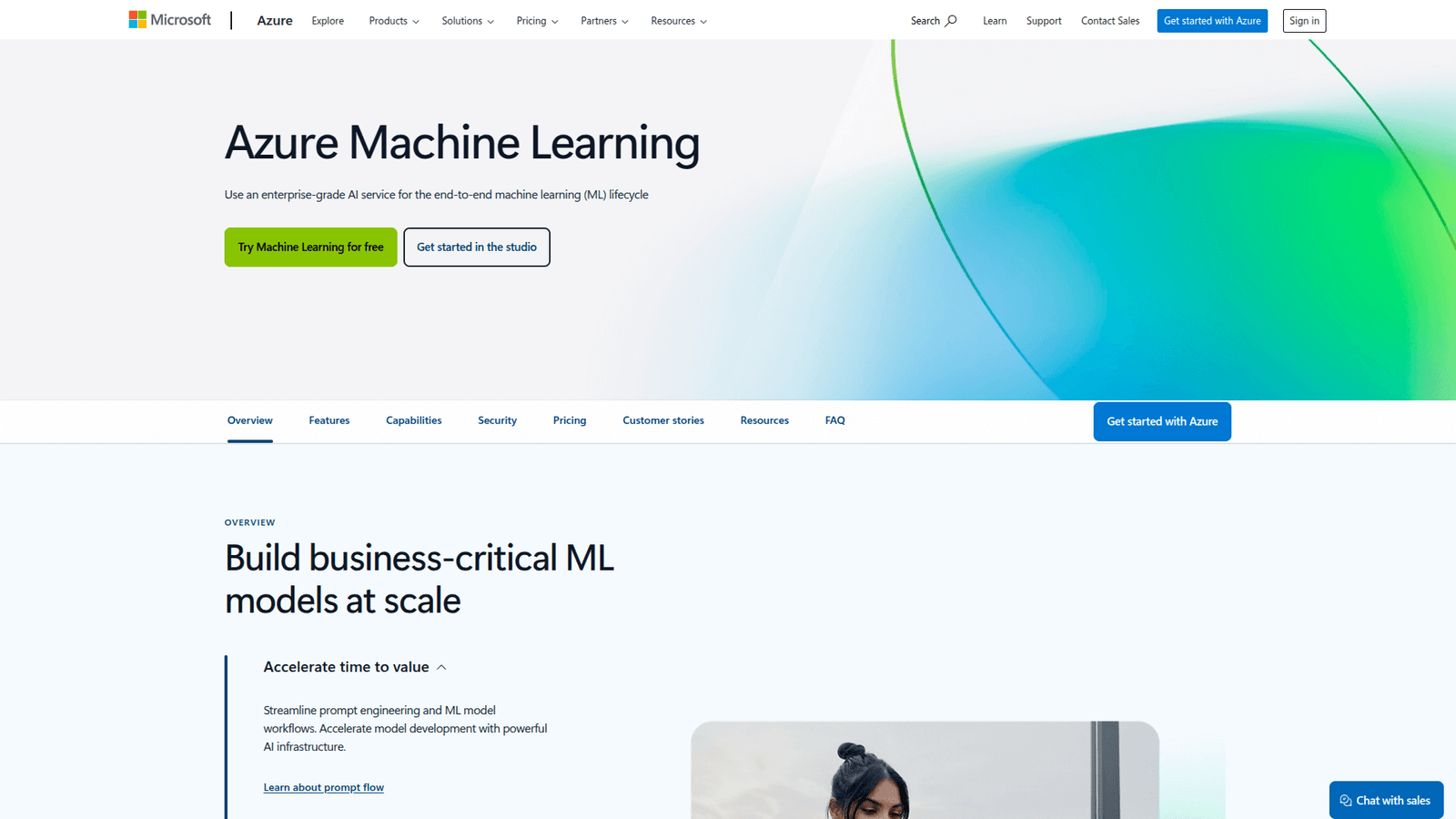

Microsoft Azure Machine Learning transforms Predictive Modeling and Analytics. Unlock powerful insights and drive business growth. Get started today and see the difference.
Why Microsoft Azure Machine Learning Is a Smart Choice for Predictive Modeling and Analytics
Let’s be real.
Data Analysis and Business Intelligence are exploding.
Everyone’s drowning in data, trying to make sense of it.
Trying to predict what’s coming next.
That’s where Predictive Modeling and Analytics come in.
It’s the difference between guessing and knowing.
And guess what’s making it easier?
AI tools. They’re not just hype anymore.
They’re essential.
One tool keeps popping up.
Especially for serious data folks.
Microsoft Azure Machine Learning.
Yeah, the Microsoft one.
It’s a game-changer.
If you’re in the Data Analysis and Business Intelligence space, you need to pay attention.
This isn’t just another shiny new thing.
It solves real problems.
Especially when you’re wrestling with complex Predictive Modeling and Analytics tasks.
Ready to see how?
Table of Contents
- What is Microsoft Azure Machine Learning?
- Key Features of Microsoft Azure Machine Learning for Predictive Modeling and Analytics
- Benefits of Using Microsoft Azure Machine Learning for Data Analysis and Business Intelligence
- Pricing & Plans
- Hands-On Experience / Use Cases
- Who Should Use Microsoft Azure Machine Learning?
- How to Make Money Using Microsoft Azure Machine Learning
- Limitations and Considerations
- Final Thoughts
- Frequently Asked Questions
What is Microsoft Azure Machine Learning?
Alright, let’s cut to the chase.
Microsoft Azure Machine Learning (Azure ML) is Microsoft’s cloud-based service for building, training, and deploying machine learning models.
Think of it as a powerhouse lab in the cloud.
You bring your data, and Azure ML gives you the tools to build predictive models.
It’s designed for data scientists, machine learning engineers, and analysts.
But it also helps people who aren’t hardcore coders.
It provides a range of tools, from drag-and-drop visual interfaces to notebooks for writing code.
The goal?
To make complex machine learning workflows accessible.
And to help you get results faster.
Specifically for Predictive Modeling and Analytics, it’s built to handle everything.
Data preparation, model selection, training, evaluation, and deployment.
It’s not just for massive corporations.
Small and medium businesses can use it too.
Anyone who needs to forecast trends, predict customer behaviour, or identify risks.
Without getting bogged down in infrastructure headaches.
It runs on Azure, Microsoft’s cloud.
This means scalability, security, and integration with other Microsoft services.
It’s a platform for operationalizing ML.
Turning experiments into real-world applications.
That’s the core idea.
Making ML work for your business.
Not just a science project.
It handles compute, storage, and networking.
So you can focus on the data and the models.
Less messing with servers.
More building cool stuff.
That’s Azure Machine Learning in a nutshell.
Key Features of Microsoft Azure Machine Learning for Predictive Modeling and Analytics
Okay, let’s talk specifics.
What does Azure Machine Learning actually do for Predictive Modeling and Analytics?
It’s got features that make the whole process less painful.
More effective.
- Automated ML (AutoML):
This is huge.
Building predictive models usually involves trying lots of different algorithms.
Tuning hyperparameters.
It takes ages.
AutoML automates this.
You point it at your data, tell it what you want to predict (like sales, churn, or failure rates).
And it tries a bunch of models for you.
It finds the best performing one.
This saves massive amounts of time.
Even if you’re an expert, it’s a great starting point.
If you’re not, it makes advanced modeling possible.
Less trial and error, more winning models.
- Designer (Visual Interface):
Not everyone wants to write code.
Azure Machine Learning has a drag-and-drop interface called the Designer.
You can build entire ML pipelines visually.
Drag datasets, connect modules for data preparation, model training, and scoring.
It’s intuitive.
Makes it easy to experiment with different steps.
See how data flows through your model.
Great for learning, prototyping, or if you just prefer a visual approach.
You can build complex predictive workflows without writing a single line of Python or R.
This opens up ML to a wider audience in Data Analysis and Business Intelligence.
Analysts who are comfortable with dashboards and visual tools will feel right at home.
- MLOps Capabilities:
Building a model is one thing.
Getting it into production and keeping it running is another.
Azure Machine Learning has strong MLOps features.
This includes model registry, versioning, deployment to various targets (cloud, edge), monitoring, and retraining pipelines.
Why does this matter for prediction?
Your data changes.
Your models need to be updated.
You need to monitor their performance in the real world.
Are they still making accurate predictions?
MLOps tools make this manageable.
You can automate the process of retraining and deploying new versions.
Ensure your predictive analytics stay relevant and accurate over time.
This means less manual work.
More reliable predictions.
Better business results.
- Responsible ML:
Building predictive models comes with responsibility.
Bias in data can lead to unfair predictions.
Azure Machine Learning includes tools for Responsible ML.
These help you understand your models.
Explain their predictions (interpretability).
Identify and mitigate bias.
Protect data privacy.
For critical Predictive Modeling and Analytics in areas like finance, healthcare, or hiring, this is non-negotiable.
You need to trust your model’s predictions.
And be able to explain them.
Responsible ML tools help build that trust.
They aren’t just ethical nice-to-haves.
They’re essential for deploying models that work well and avoid unintended consequences.
- Scalability and Integration:
It runs on Azure.
This means you can scale your computing resources up or down as needed.
Train massive models on huge datasets.
Or just run a few predictions.
You pay for what you use.
It integrates seamlessly with other Azure services.
Azure Data Lake Storage, Azure Synapse Analytics, Power BI.
This is key for Data Analysis and Business Intelligence.
Your data likely lives somewhere in the Microsoft ecosystem.
Connecting it to Azure Machine Learning is straightforward.
Building end-to-end pipelines from data source to predictive dashboard becomes much simpler.
No messy data transfers.
Everything just works together.
Benefits of Using Microsoft Azure Machine Learning for Data Analysis and Business Intelligence

So, why bother with Azure Machine Learning?
What’s the payoff, especially for Data Analysis and Business Intelligence pros focused on prediction?
Several big wins.
Speed. You build models faster. AutoML cuts down on experimentation time. The visual designer makes prototyping quick. MLOps speeds up deployment. Time saved is money earned.
Accessibility. You don’t need a PhD in AI. The tools lower the barrier to entry. More people on your team can get involved in building and understanding predictive insights.
Scalability. Whether you have a small dataset or petabytes, Azure Machine Learning can handle it. You’re not limited by the power of your desktop.
Integration. Works with your existing Microsoft data stack. Less friction getting data in and results out. Predictive insights flow directly into your reports and dashboards.
Reliability. Built on Azure’s global infrastructure. High availability and security. Your predictive models are running on a solid platform.
Better Predictions. AutoML helps you find the best model for your data. Responsible ML ensures you build trustworthy models. MLOps keeps them accurate over time. More accurate predictions lead to better business outcomes.
Think about a marketing team.
They need to predict which customers will respond to an offer.
Without Azure Machine Learning, this might be a manual process, maybe simple regressions.
Slow.
Maybe not very accurate.
With Azure ML, they can use AutoML to quickly build a sophisticated classification model.
Identify high-probability leads.
Scale the prediction to millions of customers.
Deploy the model easily to score new leads as they come in.
See how this impacts their ROI.
That’s the power.
It takes Predictive Modeling and Analytics from a niche, complex task to a core, accessible business function.
Less struggling with code and infrastructure.
More time spent on strategy and acting on the insights.
That’s a serious benefit.
Pricing & Plans
Okay, let’s talk money.
Is Azure Machine Learning going to cost you an arm and a leg?
Azure pricing can seem complex because it’s usage-based.
You pay for the compute, storage, and other services you consume.
There isn’t a simple “monthly fee” like some SaaS AI tools.
Microsoft offers a free tier or free trial.
This usually includes a certain amount of compute hours and storage credits.
Enough to experiment.
Build small models.
Learn the ropes.
This is great for individuals or small teams starting out.
For larger projects, it’s pay-as-you-go.
Costs depend on factors like:
The type and size of virtual machines used for training and deployment.
Amount of data stored.
Number of predictions made (if deploying models).
Features used (like AutoML can have separate costs).
Compared to building your own infrastructure, cloud ML platforms like Azure Machine Learning can be more cost-effective.
You avoid massive upfront hardware investment.
You only pay for the resources when you’re actually using them.
It’s definitely different from a tool with a fixed monthly subscription.
It requires more cost management awareness.
But for serious Predictive Modeling and Analytics, where computational needs can vary wildly, this flexibility is often better.
You can scale up for intensive training runs.
Scale down when just doing inference.
It stacks up well against other major cloud providers’ ML platforms (AWS SageMaker, Google AI Platform).
If you’re already in the Azure ecosystem, it’s often the most cost-effective choice due to integration and potential existing agreements.
The key is to start small with the free tier.
Understand your usage patterns.
Then estimate costs based on your specific needs.
It’s not the cheapest option for trivial tasks.
But for serious, scalable Data Analysis and Business Intelligence work, it’s competitive and powerful.
Hands-On Experience / Use Cases
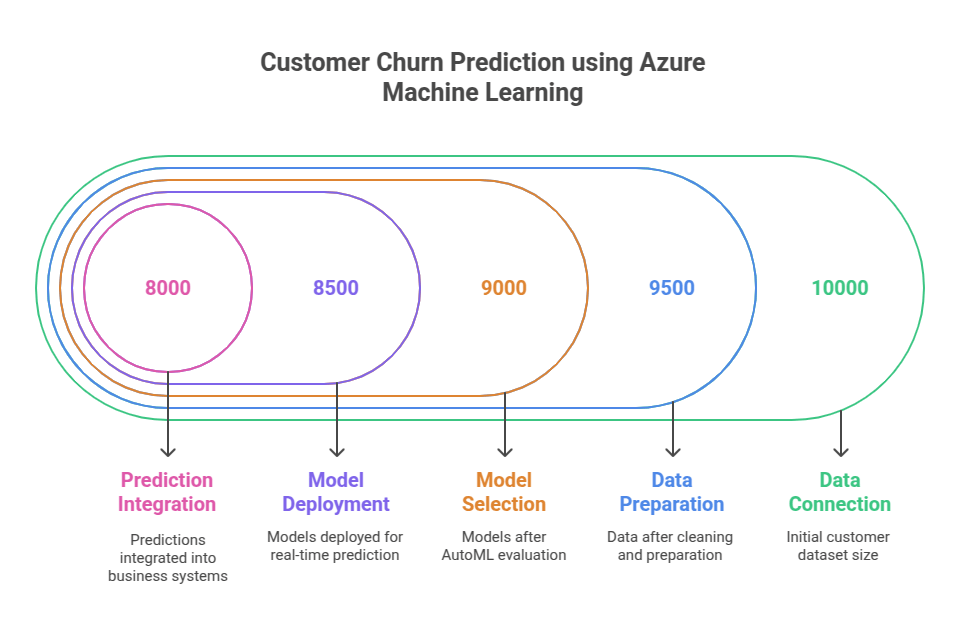
Let’s get a feel for what it’s like to use Azure Machine Learning for real prediction work.
Imagine you’re a business analyst at a retail company.
Your boss wants to know which customers are likely to churn in the next three months.
This is a classic Predictive Modeling and Analytics problem.
Using Azure ML, here’s a simplified flow:
1. Get the Data: Your customer data (transaction history, demographics, support interactions) is likely in Azure Synapse or Data Lake. Connect Azure Machine Learning directly to it. No need to download massive files.
2. Prepare the Data: Use the Designer or Python notebooks to clean and feature engineer the data. Calculate recency, frequency, monetary value (RFM). Create features like ‘number of support tickets last month’ or ‘days since last purchase’.
3. Choose the Approach: For churn prediction, you’re predicting a category (Churn or Not Churn). This is classification. You could pick a specific algorithm like Logistic Regression or a Gradient Boosting model. Or, use AutoML.
4. Run AutoML: You tell AutoML which column is your target variable (Churn) and which columns are features. You set a metric to optimise (like accuracy or AUC). Hit go. Azure Machine Learning spins up compute and tries dozens of model variations. It shows you the leaderboard of the best performing models.
5. Evaluate and Select: Review the results. Look at the metrics. Check the Responsible ML insights – are certain customer groups being disproportionately flagged? Select the best model based on performance and interpretability.
6. Deploy the Model: Once you’re happy, deploy the model as a web service or to a managed endpoint. This turns your trained model into an API.
7. Integrate and Predict: Now, you can send new customer data to this API. It returns a prediction – likelihood of churning. Integrate this into your CRM, marketing automation, or Power BI dashboards.
8. Monitor and Retrain: Set up monitoring to track the model’s performance over time. If accuracy drops, trigger an automated retraining job using the latest data.
This process, which could take weeks or months manually or with less integrated tools, can be significantly faster with Azure Machine Learning. Especially steps 4, 6, and 8.
Other use cases:
Sales Forecasting: Predicting future sales based on historical data, seasonality, promotions, etc.
Demand Forecasting: Predicting product demand for inventory management.
Fraud Detection: Identifying transactions likely to be fraudulent.
Credit Risk Assessment: Predicting the likelihood of a borrower defaulting.
Predictive Maintenance: Forecasting when equipment is likely to fail.
In each case, the Azure Machine Learning workflow – connect data, prepare, model (often with AutoML), evaluate, deploy, monitor – makes it efficient.
It bridges the gap between data scientists and the business analysts who need to use the predictions.
The visual tools and MLOps capabilities make it easier to get predictive insights out of the lab and into the business.
Who Should Use Microsoft Azure Machine Learning?
Okay, who is this tool actually for?
Is it only for the super-technical crowd?
Not necessarily.
Azure ML is built with different users in mind.
Data Scientists: If you’re coding in Python or R, Azure Machine Learning provides a managed environment. You get compute power, collaboration features, version control, and easy deployment targets. It removes the infrastructure headaches so you can focus on modeling.
ML Engineers: This platform is perfect for operationalizing ML. Setting up pipelines, deploying models at scale, monitoring performance, managing versions. The MLOps tools are built for this role.
Data Analysts: If you’re comfortable with data but not a coding expert, the Designer and AutoML features are invaluable. You can build powerful predictive models using a visual interface or by letting the platform find the best model for you. This expands your capabilities significantly.
Business Intelligence Professionals: Azure Machine Learning integrates tightly with Power BI. You can deploy models and consume predictions directly within your BI dashboards. This allows you to move beyond just reporting on the past to predicting the future.
Organisations of all sizes: From startups needing scalable, pay-as-you-go infrastructure to large enterprises already on Azure. Anyone serious about Predictive Modeling and Analytics as a core part of their business operations.
Students and Researchers: Microsoft often provides credits for academic use. It’s a great platform to learn and experiment with real-world ML workflows.
If your work involves making predictions based on data – whether it’s forecasting sales, identifying trends, understanding customer behaviour, or optimising operations – Azure ML is worth looking into.
It’s especially relevant if you’re already using other Microsoft Azure services for your data storage and processing. The synergy is a big plus.
It’s less for someone who just needs to do simple statistical analysis in Excel.
It’s for people and teams who are ready to take their Data Analysis and Business Intelligence to the next level with machine learning.
And who need a robust, scalable, and manageable platform to do it.
How to Make Money Using Microsoft Azure Machine Learning

Alright, let’s talk brass tacks.
How can you actually turn using Azure Machine Learning into income?
It’s not a direct content generation tool like some AI writers.
But the skills and capabilities it provides are highly valuable.
Especially in the Data Analysis and Business Intelligence market.
- Offer Predictive Analytics Consulting Services:
Businesses need predictions.
Many don’t have the in-house expertise or tools.
You can become that expert.
Use Azure Machine Learning to build custom predictive models for clients.
This could be churn prediction for e-commerce, sales forecasting for retailers, maintenance prediction for manufacturers.
You manage the data, build the model on Azure ML, deploy it, and provide the predictions or an API.
Charge for your time and expertise.
Azure Machine Learning makes you more efficient, so you can take on more clients or charge a competitive rate.
Your ability to quickly prototype with AutoML or deploy reliable models with MLOps is a selling point.
Clients get valuable insights without needing to invest in their own ML infrastructure or team initially.
- Build and Sell Predictive Solutions:
Identify a common business problem that can be solved with prediction.
For example, predicting optimal staffing levels for restaurants based on historical sales and weather data.
Build a robust model and deployment pipeline on Azure Machine Learning.
Package it as a service or a white-label solution.
Businesses subscribe to your service, feed it their data, and get predictions back.
Azure ML handles the heavy lifting of running the models for multiple clients.
This is productizing your Predictive Modeling and Analytics skills.
Requires more upfront work but can lead to recurring revenue.
Think about niche industries – agriculture (yield prediction), logistics (delivery time prediction), marketing (campaign performance prediction).
- Provide Training and Workshops:
As AI and ML become more important, there’s a huge skills gap.
People want to learn how to use tools like Azure Machine Learning.
If you master the platform, particularly its user-friendly aspects like the Designer and AutoML, you can teach others.
Offer workshops for analysts who want to get into ML.
Create online courses on specific topics, like “Churn Prediction with Azure ML” or “Using Azure Machine Learning Designer for Forecasting.”
Share your knowledge and earn from it.
Position yourself as an expert in using Azure ML for business problems.
This also builds your authority for consulting or selling solutions.
- Enhance Existing BI/Analytics Services:
If you already offer Data Analysis and Business Intelligence services (dashboarding, reporting, ETL).
Add a predictive layer using Azure Machine Learning.
Instead of just showing past sales, predict future sales.
Instead of just reporting on customer segments, predict which segments are most likely to buy next.
This adds significant value to your existing offerings.
Allows you to charge more and differentiate yourself from competitors who only provide historical analysis.
Leverage the seamless integration with Power BI for this.
Here’s a quick thought: Imagine a freelancer specializing in e-commerce analytics. They learn Azure ML. Now, instead of just providing sales reports, they build a customer lifetime value prediction model using the client’s Shopify data connected via Azure. They can then predict which marketing campaigns will yield the highest ROI. They charge a retainer for ongoing prediction services and model maintenance. This is a premium service they couldn’t offer before. That’s the kind of value Azure Machine Learning enables.
It’s about using the tool to provide high-value, data-driven insights and capabilities that businesses need.
Limitations and Considerations
No tool is perfect.
Azure ML is powerful, but it has things to keep in mind.
Learning Curve: While features like AutoML and the Designer lower the barrier, it’s still a complex platform built for machine learning. There’s a learning curve, especially if you’re new to cloud services or ML concepts.
Cost Management: The pay-as-you-go pricing requires careful monitoring. It’s easy to accidentally run up costs if you’re not careful with managing compute resources. Understanding the pricing model is crucial.
Complexity for Simple Tasks: If you only need to run a simple linear regression on a small dataset, Azure Machine Learning might be overkill. It’s designed for more robust, scalable ML workflows. Using it for very basic tasks is like using a sledgehammer to crack a nut.
Vendor Lock-in: It’s a Microsoft ecosystem tool. While it supports open-source frameworks (like scikit-learn, TensorFlow, PyTorch), the platform itself is proprietary. Migrating away from Azure ML to another cloud provider’s ML platform would require effort.
Requires Clean Data: Like any ML tool, Azure Machine Learning relies on good data. It has data prep tools, but if your source data is a complete mess, the tool won’t magically fix it. Data cleaning is still a significant part of the process.
AutoML is Not a Silver Bullet: AutoML is fantastic for finding a good baseline model quickly. But for highly complex problems or when you need maximum model control or explainability, a custom-built model might still be necessary. AutoML is a powerful starting point, not always the final answer.
Documentation Can Be Dense: Microsoft documentation is comprehensive, but sometimes navigating it to find exactly what you need can be challenging.
For anyone starting out, the complexity can be a bit daunting compared to simpler SaaS AI tools.
You need to understand compute targets, datasets, pipelines, endpoints – the specific terminology of the platform.
But these aren’t reasons to avoid it.
They’re just realities of using a professional-grade platform for serious Predictive Modeling and Analytics.
Be prepared to invest time in learning the platform and managing costs.
If you do, the power you unlock is immense.
Final Thoughts
Look, the world of Data Analysis and Business Intelligence is changing fast.
Predictive insights are no longer optional; they’re essential for staying competitive.
Microsoft Azure Machine Learning is a serious tool for serious prediction work.
It bridges the gap between raw data and actionable forecasts.
It empowers both expert data scientists and data-savvy business users.
Features like AutoML slash the time needed for model experimentation.
The visual Designer makes building workflows accessible.
The MLOps tools ensure your predictions are reliable and up-to-date in production.
Yes, there’s a learning curve.
Yes, you need to manage costs.
But if you’re serious about leveraging data to predict the future – whether for your own business or for clients – Azure ML offers a comprehensive, scalable, and integrated platform to do it right.
It integrates seamlessly if you’re already in the Azure ecosystem.
It provides the tools needed to build, deploy, and manage Predictive Modeling and Analytics solutions at scale.
My take?
If you’re moving beyond basic reporting and need to operationalize machine learning for prediction, Azure Machine Learning is a smart choice.
It provides the foundation to turn data into foresight.
Ready to give it a shot?
Visit the official Microsoft Azure Machine Learning website
Frequently Asked Questions
1. What is Microsoft Azure Machine Learning used for?
It’s used for building, training, and deploying machine learning models.
Specifically for Predictive Modeling and Analytics, it helps forecast trends, predict outcomes (like customer churn or sales), detect anomalies (like fraud), and automate decisions based on data.
It supports the entire machine learning lifecycle from data prep to model deployment.
2. Is Microsoft Azure Machine Learning free?
Microsoft Azure offers a free account or free trial with limited resources.
This allows you to experiment and learn.
Beyond the free tier, it operates on a pay-as-you-go model based on your consumption of compute, storage, and other services.
3. How does Microsoft Azure Machine Learning compare to other AI tools?
It’s a comprehensive cloud platform for machine learning, competing with services like AWS SageMaker and Google AI Platform.
It’s more feature-rich and complex than simple SaaS AI tools for content or image generation.
Its strength for Data Analysis and Business Intelligence lies in its full ML lifecycle support, scalability, and integration within the Microsoft ecosystem.
4. Can beginners use Microsoft Azure Machine Learning?
Yes, beginners with a data background can use it.
The visual Designer and AutoML features significantly lower the barrier to entry for those less familiar with coding.
However, a basic understanding of data concepts and machine learning principles is helpful.
5. Does the content created by Microsoft Azure Machine Learning meet quality and optimization standards?
Azure ML doesn’t “create content” in the sense of writing text or generating images directly.
It builds predictive models.
The quality of the predictions depends on the quality of your data and the appropriateness of the model.
The platform provides tools to help you build high-quality, responsible models.
6. Can I make money with Microsoft Azure Machine Learning?
Absolutely.
You can offer predictive analytics consulting, build and sell predictive solutions, provide training on the platform, or enhance your existing Data Analysis and Business Intelligence services by adding prediction capabilities.
The skills are in high demand.