
CRM AI tools are revolutionising customer support. Discover 7 powerful CRM AI tools that make support teams happier, boost efficiency, and improve customer satisfaction. Unlock the secrets to happier teams and loyal customers.
Unlocking Happier Teams: 7 Powerful CRM AI Tools That Make Support Teams Happier
As a business owner, I’m always looking for ways to get more out of my team. Efficiency isn’t just a buzzword; it’s the bedrock of growth. We all know the struggles support teams face: endless tickets, repetitive queries, and the constant pressure to deliver exceptional service. It’s enough to make even the most dedicated team members feel overwhelmed. But what if I told you there’s a game-changer?
A way to lighten the load, empower your agents, and ultimately, make your support teams happier? That’s right, we’re talking about CRM AI tools. These aren’t just fancy gadgets; they’re strategic assets that can revolutionise how you approach customer support, turning frustrated agents into productive powerhouses. And let’s be honest, a happy team means happy customers, and happy customers mean more money in your pocket.
I’ve seen firsthand how the right technology can make all the difference. When your support team is bogged down by manual tasks, their energy drains faster than a leaky bucket. They spend less time solving complex issues and more time on the mundane. This not only affects their morale but also impacts your bottom line. But with the advent of sophisticated CRM AI tools, we’re entering a new era of customer support – one where automation and intelligence work hand-in-hand to create a seamless experience for both your team and your customers.
The goal isn’t to replace humans; it’s to augment them, freeing them up to focus on high-value interactions that build lasting relationships. This isn’t about cutting corners; it’s about building a smarter, more efficient, and ultimately, a more profitable support operation. So, let’s cut through the noise and explore the powerful CRM AI tools that are making waves and, more importantly, making support teams genuinely happier.
Table of Contents
- What Are the Best CRM Integrated AI Support Tools?
- Top CRM Integrated AI Support Tools (Detailed Reviews)
- Feature Comparison
- Pricing Breakdown
- Real-World Use Cases
- Who Should Use Each Tool?
- How to Choose the Right Tool
- Making Money with These Tools
- Common Limitations
- Final Verdict and Recommendations
- Frequently Asked Questions
What Are the Best CRM Integrated AI Support Tools?
Look, the customer support game has changed. It’s no longer just about answering questions; it’s about anticipating needs, personalising interactions, and resolving issues with lightning speed. And that’s precisely where CRM AI tools step in. These aren’t just chatbots; they’re intelligent systems designed to integrate seamlessly with your existing Customer Relationship Management (CRM) platforms, supercharging your support capabilities.
We’re talking about AI that learns from every interaction, automates repetitive tasks, and provides your agents with the insights they need to deliver exceptional service. Think about it: no more sifting through endless knowledge bases; instead, your agents get real-time suggestions and solutions right at their fingertips. This significantly reduces handle times and boosts agent confidence, leading directly to a happier team.
The “best” CRM integrated AI support tools aren’t one-size-fits-all. They vary depending on your business size, industry, and specific support challenges. However, what they all share is the core ability to leverage artificial intelligence to make your support operations more efficient and effective. They can handle initial customer queries, route complex cases to the right agent, provide instant answers to frequently asked questions, and even analyse customer sentiment to prioritise urgent issues.
This level of automation means your agents can focus on the more intricate, human-centric aspects of support, which is often where true customer loyalty is built. When agents feel empowered and less burdened by routine tasks, their job satisfaction soars. These powerful CRM AI tools are not just about saving money; they’re about creating a more positive work environment and, ultimately, a better experience for everyone involved. We’re talking about a significant upgrade to your entire support ecosystem.
For those interested in improving their customer service through automated means, exploring different Chatbots and Customer Support solutions is a valuable step. The integration of AI into CRM platforms represents a significant leap forward in how businesses manage and interact with their customer base, promising not just efficiency but also a noticeable improvement in overall customer satisfaction.
The real power of CRM AI tools comes from their ability to integrate deeply with your existing customer data. This means the AI isn’t operating in a vacuum; it understands the customer’s history, their preferences, and their previous interactions with your company. This context allows for highly personalised responses and proactive support, which is a massive win for both customers and agents. Imagine a scenario where an AI can suggest a solution based on a customer’s purchase history even before the agent fully understands the problem. That’s not just efficiency; that’s predictive support, and it’s a game-changer.
These CRM AI tools are designed to work tirelessly, around the clock, ensuring that your customers always have a point of contact, even when your human agents are offline. This continuous availability, coupled with intelligent routing and instant information retrieval, helps to reduce customer frustration and prevents tickets from piling up, which directly contributes to a less stressful environment for your support team. When the workload is manageable and tools are efficient, your support team naturally becomes happier, more productive, and more engaged. Therefore, the strategic deployment of such CRM AI tools is not just an operational decision but a cultural one, fostering a better work-life balance for your agents while simultaneously enhancing customer relationships.
Top CRM Integrated AI Support Tools (Detailed Reviews)
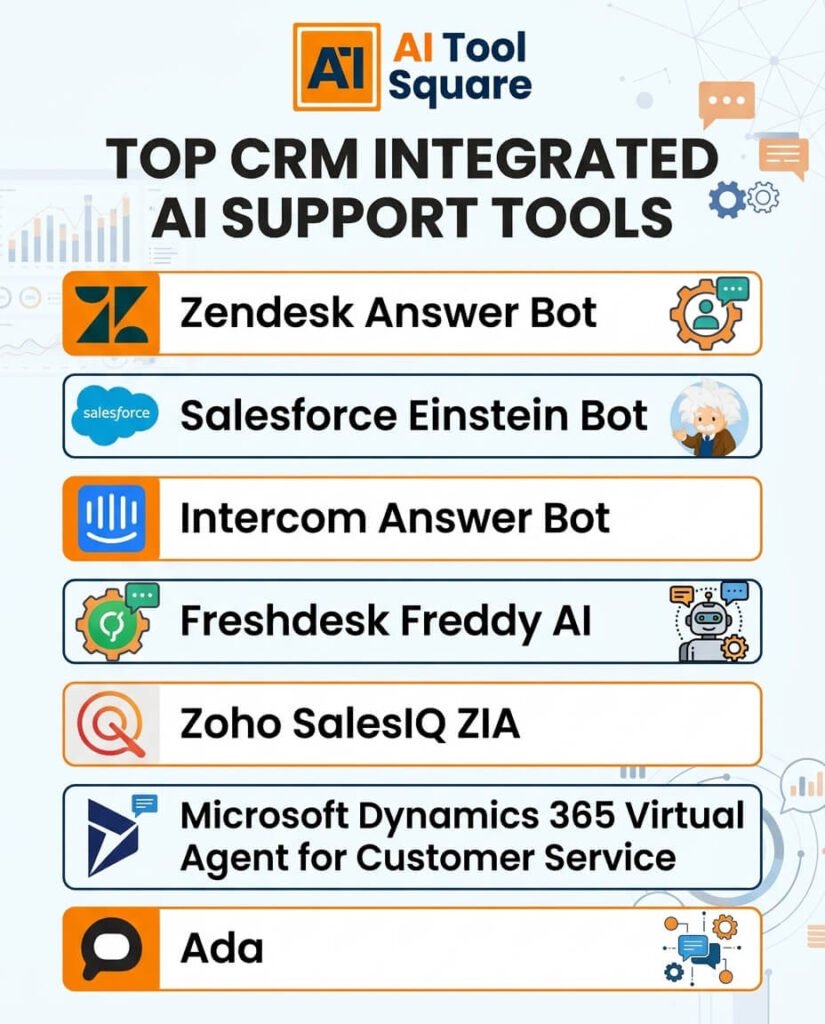
Zendesk Answer Bot – CRM AI Tools Review
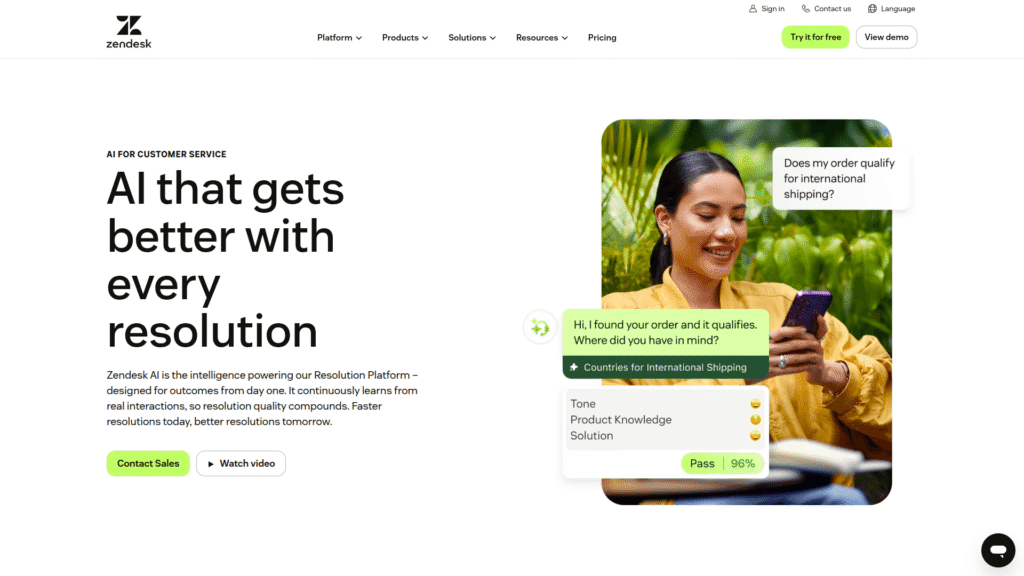
Zendesk Answer Bot is a key player in the CRM AI tools arena, leveraging artificial intelligence to automatically answer common customer questions. It integrates directly with your Zendesk knowledge base, pulling relevant articles and information to resolve customer inquiries instantly. This offloads a significant portion of repetitive questions from your support agents, freeing them to focus on more complex, high-value interactions. The AI learns over time, improving its accuracy with each customer interaction, ensuring that the answers provided are always up-to-date and relevant. It’s particularly effective for businesses with extensive knowledge bases and a high volume of recurring questions.
Features:
- Automated answer delivery from knowledge base.
- Machine learning for continuous improvement.
- Seamless integration with Zendesk Support Suite.
- Can suggest articles to agents for faster resolution.
- Supports multiple languages.
Pricing:
Answer Bot is typically included in higher-tier Zendesk plans (Suite Growth, Suite Professional, Suite Enterprise). Specific pricing depends on the overall Zendesk package you choose. There isn’t a standalone price for Answer Bot itself.
Pros:
- Significantly reduces ticket volume for simple queries.
- Improves customer satisfaction with instant answers.
- Easy to set up and integrate with existing Zendesk infrastructure.
- Agents can focus on complex issues.
Cons:
- Only as good as your knowledge base content.
- May struggle with highly nuanced or unique questions.
- Primarily for Zendesk users, limiting its standalone use.
Visit official Zendesk website
Salesforce Einstein Bot – CRM AI Tools Review
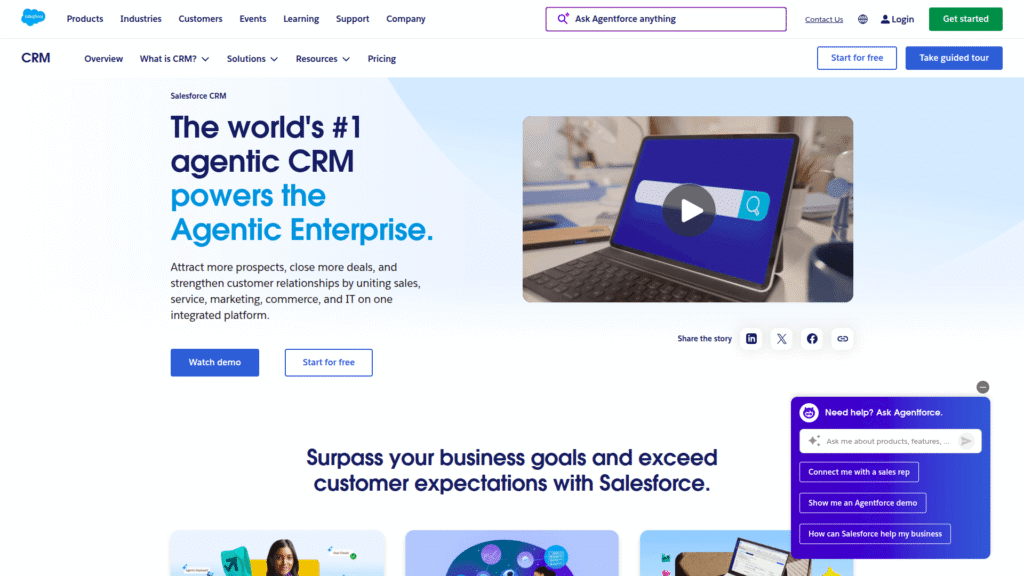
Salesforce Einstein Bot stands out as a powerful example of advanced CRM AI tools, deeply embedded within the Salesforce ecosystem. It allows businesses to build intelligent chatbots that can handle a wide range of customer interactions, from answering FAQs to guiding users through processes and even escalating to human agents when necessary. What makes Einstein Bot particularly strong is its ability to access and leverage all your Salesforce data, enabling highly personalised and contextual conversations. This means the bot isn’t just responding; it’s understanding the customer’s journey and history, providing a truly intelligent experience. For companies heavily invested in Salesforce, this is an indispensable tool.
Features:
- Customizable bot builder with drag-and-drop interface.
- Integration with Salesforce Service Cloud and Sales Cloud.
- Natural Language Processing (NLP) for understanding customer intent.
- Omni-channel support (web, SMS, messaging apps).
- Agent handover capabilities.
Pricing:
Einstein Bot is an add-on feature for Salesforce Service Cloud and Sales Cloud. Pricing is typically based on usage (e.g., per bot conversation) and the specific Salesforce edition. Contact Salesforce directly for detailed pricing.
Pros:
- Deep integration with Salesforce data for personalised interactions.
- Highly customisable to fit specific business needs.
- Robust NLP capabilities for accurate understanding.
- Enhances self-service options significantly.
Cons:
- Can be complex to set up for non-technical users.
- Pricing can add up for high-volume usage.
- Best suited for existing Salesforce users.
Visit official Salesforce website
Intercom Answer Bot – CRM AI Tools Review
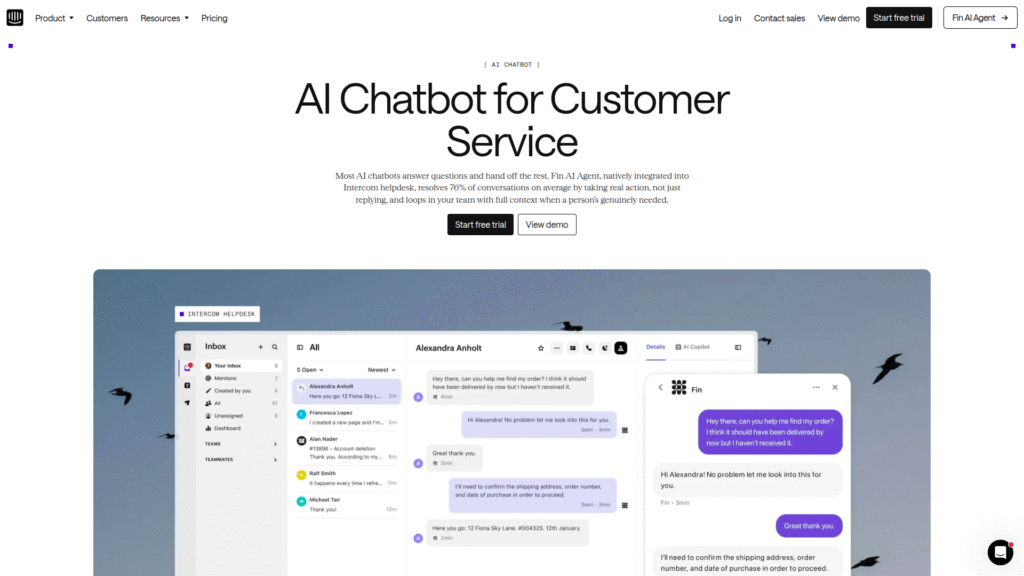
Intercom Answer Bot is another excellent example of CRM AI tools designed to automate customer support and boost team efficiency. It’s built to instantly answer common questions using your help centre articles and past conversations, providing a fast and consistent experience for customers. The bot is proactive, meaning it can jump in and offer solutions even before a customer explicitly asks, reducing friction and improving satisfaction. Intercom’s strength lies in its conversational approach, aiming to mimic human interaction as closely as possible, making the self-service experience feel more natural. This tool is a strong fit for businesses that prioritise a conversational user experience and have a well-structured knowledge base.
Features:
- Automated answers using help centre and past chats.
- Proactive messaging to offer help.
- Integration with Intercom’s messaging platform.
- Customizable responses and workflows.
- Escalation to human agents.
Pricing:
Intercom offers various plans (Essential, Pro, Premium). Answer Bot features are typically included in the higher-tier plans or as an add-on. Pricing is based on the number of active users and features chosen. Check Intercom’s website for specific plan details.
Pros:
- Excellent for deflecting common questions.
- Proactive support enhances customer experience.
- Intuitive conversational interface.
- Easy integration within the Intercom ecosystem.
Cons:
- Relies heavily on well-maintained help centre content.
- May require some fine-tuning for optimal performance.
- Best leveraged within the Intercom platform.
Visit official Intercom website
Freshdesk Freddy AI – CRM AI Tools Review
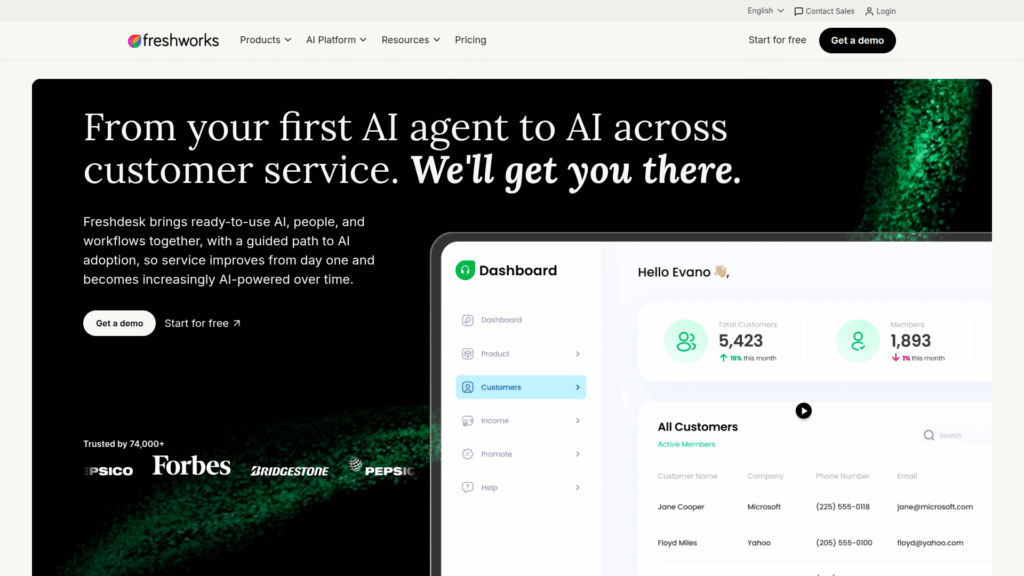
Freshdesk Freddy AI represents a comprehensive suite of CRM AI tools aimed at intelligent automation across various customer service touchpoints. Freddy AI powers chatbots, email bots, and voice bots, providing seamless self-service options and assisting agents with smart suggestions. It can understand customer intent, analyse sentiment, and even predict customer needs, making support more proactive and personalised. For agents, Freddy AI offers features like ticket classification, agent assist, and summarisation, drastically reducing manual effort and improving response times. This makes it a compelling choice for businesses looking for an all-encompassing AI solution within their Freshdesk environment. These CRM AI tools extend beyond simple automation, delving into predictive analysis.
Features:
- AI-powered chatbots and voice bots.
- Email bot for automated responses.
- Sentiment analysis and intent detection.
- Agent assist for contextual suggestions.
- Ticket classification and routing.
Pricing:
Freddy AI features are typically included in Freshdesk’s higher-tier plans (Pro, Enterprise) or offered as an add-on. Pricing is based on the number of agents and specific features required. Refer to Freshdesk’s pricing page for detailed information.
Pros:
- Comprehensive AI capabilities across multiple channels.
- Strong agent assist features for improved efficiency.
- Scalable for businesses of all sizes.
- Enhances both self-service and agent-led support.
Cons:
- Can have a learning curve to fully utilise all features.
- Optimal performance requires quality training data.
- Some advanced features might require higher-tier plans.
Visit official Freshdesk website
Zoho SalesIQ ZIA – CRM AI Tools Review
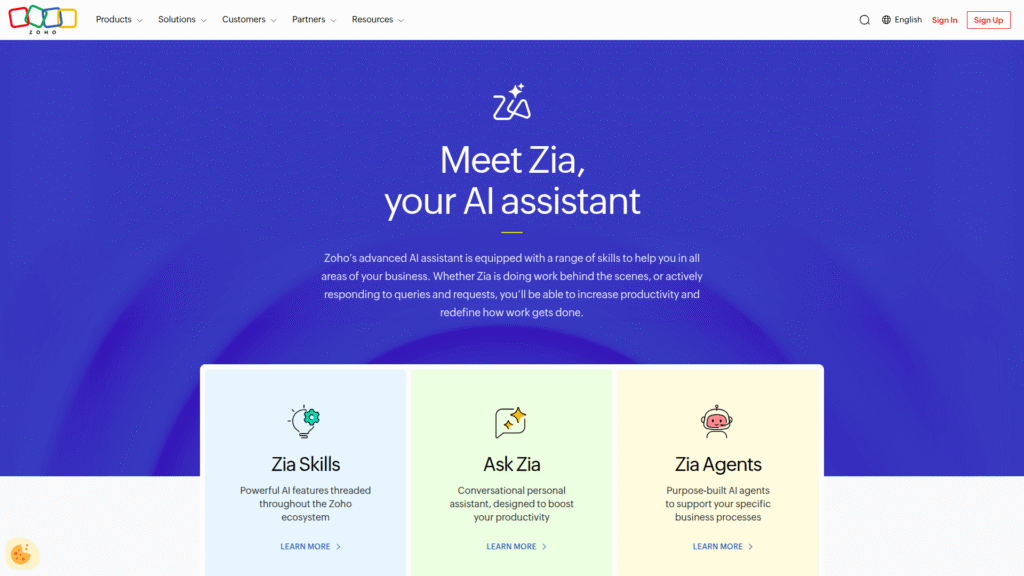
Zoho SalesIQ ZIA is a powerful addition to the CRM AI tools landscape, specifically designed to enhance website engagement and customer support through AI-driven live chat and analytics. ZIA, Zoho’s AI assistant, can automate conversations, qualify leads, and provide instant answers to website visitors, ensuring a smooth and efficient customer journey. For support teams, ZIA offers valuable insights into visitor behaviour, helping agents understand context before initiating a chat. It can also route chats intelligently and provide agents with relevant information during conversations, making every interaction more effective. This tool is ideal for businesses looking to convert website visitors into customers while simultaneously providing excellent support.
Features:
- AI-powered chatbot for website engagement.
- Lead scoring and qualification.
- Visitor tracking and analytics.
- Intelligent chat routing.
- Integration with Zoho CRM and other Zoho applications.
Pricing:
Zoho SalesIQ offers various plans, including a free tier with basic features. ZIA’s advanced AI capabilities are typically available in the paid plans (Basic, Professional, Enterprise). Pricing is usually based on the number of operators and features. Check Zoho SalesIQ’s website for current pricing.
Pros:
- Excellent for website engagement and lead generation.
- Seamless integration with the Zoho ecosystem.
- Provides valuable visitor insights to agents.
- Automates repetitive inquiries efficiently.
Cons:
- Primarily focused on live chat and website interactions.
- Requires integration with other Zoho products for full CRM benefits.
- Initial setup might require some configuration.
Microsoft Dynamics 365 Virtual Agent for Customer Service – CRM AI Tools Review
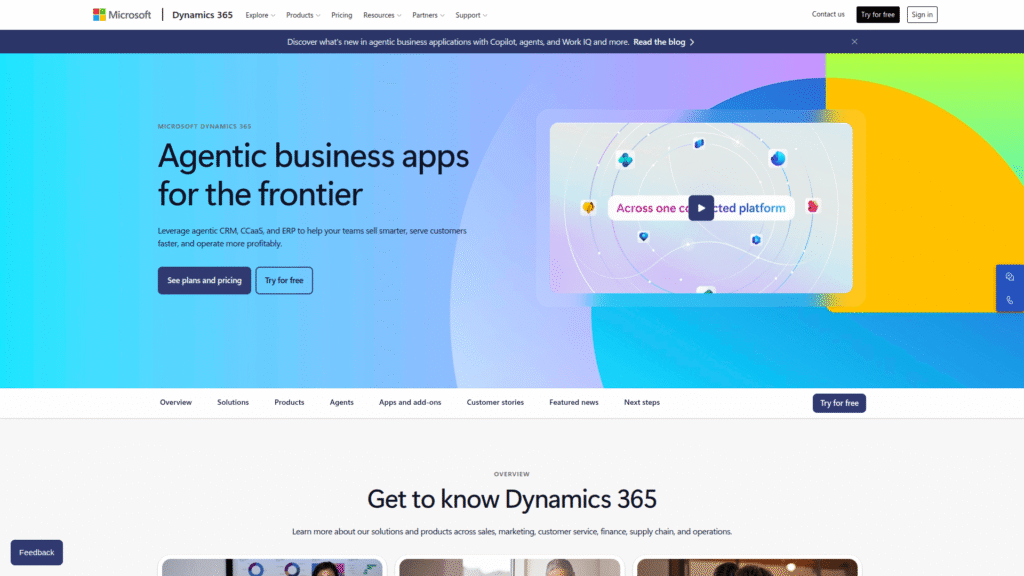
Microsoft Dynamics 365 Virtual Agent for Customer Service is a robust offering in the CRM AI tools category, allowing businesses to create intelligent virtual agents that can resolve customer issues efficiently. Leveraging Microsoft’s powerful AI capabilities, this tool enables the creation of custom chatbots that integrate deeply with Dynamics 365 data and other Microsoft services. It’s designed to understand natural language, engage in multi-turn conversations, and seamlessly escalate to human agents when complex issues arise. The focus here is on providing a consistent, personalised, and scalable customer experience, reducing agent workload and improving response times. These CRM AI tools are engineered for enterprise-level demands.
Features:
- No-code bot building platform.
- Natural language understanding (NLU).
- Integration with Dynamics 365 and Microsoft Power Platform.
- Pre-built topics and templates.
- Analytics and reporting for bot performance.
Pricing:
Virtual Agent for Customer Service is typically a subscription-based service with pricing often tied to usage (e.g., per session) or part of a broader Dynamics 365 license. Specific pricing can vary and is best obtained by contacting Microsoft sales directly.
Pros:
- Powerful NLU capabilities for effective conversations.
- Seamless integration with the Microsoft ecosystem.
- No-code platform makes bot creation accessible.
- Scalable for large enterprises with complex needs.
Cons:
- Can be a significant investment for smaller businesses.
- Requires a commitment to the Microsoft platform.
- Optimal performance needs careful topic design.
Visit official Microsoft website
Ada – CRM AI Tools Review
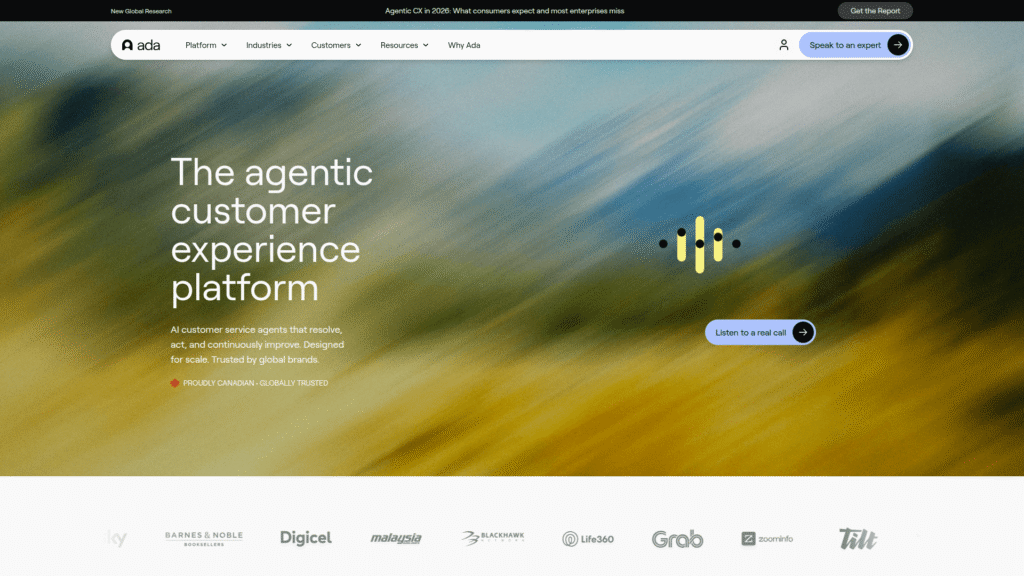
Ada is a leading AI chatbot platform that excels in providing automated customer service and is easily integrated with various CRM systems, positioning it as a top-tier choice among CRM AI tools. Ada focuses on delivering personalised, automated experiences across multiple channels, from websites to messaging apps. Its strength lies in its ability to learn from customer interactions and provide immediate, accurate answers, significantly reducing the need for human intervention for common queries. Ada empowers support teams by deflecting a high volume of tickets, allowing agents to dedicate their time to more complex and strategic issues. This platform is built for businesses that demand high automation and a superior self-service experience.
Features:
- AI-powered chatbot for 24/7 customer service.
- Personalised conversations based on customer data.
- Multi-channel deployment (web, mobile, social, messaging).
- Seamless handover to human agents.
- Advanced analytics and performance tracking.
Pricing:
Ada’s pricing is typically enterprise-level and tailored to specific business needs, often based on conversation volume and features required. They offer custom quotes upon request. A free trial may be available. Contact Ada directly for detailed pricing information.
Pros:
- Exceptional automation capabilities for high deflection rates.
- Highly personalised customer experiences.
- Integrates with a wide range of CRMs and business tools.
- User-friendly interface for bot building.
Cons:
- Can be a significant investment, especially for smaller businesses.
- Requires ongoing optimisation and training for best results.
- May have a learning curve for advanced customisations.
Feature Comparison
When you’re looking at CRM AI tools, it’s not just about what they *can* do, but what they *excel* at. Each tool has its own flavour, its own set of superpowers. For instance, Zendesk Answer Bot and Intercom Answer Bot are absolute champions at deflecting common questions by leveraging your knowledge base. They’re quick, efficient, and great for reducing the sheer volume of simple tickets your human agents have to tackle.
This means fewer repetitive tasks and more focus on complex problems, leading to a much happier support team. Salesforce Einstein Bot and Microsoft Dynamics 365 Virtual Agent, on the other hand, shine with their deep integration into their respective CRM ecosystems. They pull in vast amounts of customer data, allowing for incredibly personalised and contextual interactions, which is crucial for complex sales or service scenarios. These CRM AI tools truly understand your customer’s journey.
Then you have Freshdesk Freddy AI and Zoho SalesIQ ZIA, which bring a broader spectrum of AI capabilities to the table. Freddy AI isn’t just about bots; it’s about AI across email, voice, and agent assist, offering a comprehensive suite for enhancing various aspects of customer support. ZIA, while focused on live chat, is a master at engaging website visitors, qualifying leads, and providing instant, intelligent responses to boost conversion rates. Ada, as a dedicated AI chatbot platform, focuses on delivering highly personalised, automated conversations across multiple channels.
Its strength lies in its ability to learn and adapt, making it exceptional for businesses that prioritise a sophisticated self-service experience. The key takeaway here is that while all these are CRM AI tools, their primary focus areas differ significantly. Some are built for rapid deflection, others for deep personalisation, and some for broad-spectrum automation. Choosing the right tool involves identifying your specific pain points and matching them with the tool’s core strengths, ensuring you get the most bang for your buck.
Consider the learning curve and ease of implementation. Tools like Zendesk Answer Bot and Intercom Answer Bot, especially if you’re already using their platforms, offer a relatively straightforward setup. You’re essentially activating and optimising an existing feature. Salesforce Einstein Bot and Microsoft Dynamics 365 Virtual Agent, while incredibly powerful, can require a bit more technical expertise or dedicated resources for full customisation and integration, particularly for complex workflows. Freshdesk Freddy AI and Zoho SalesIQ ZIA strike a good balance, offering advanced features without an overly steep learning curve, especially for those already familiar with the Freshworks or Zoho ecosystems.
Ada, as a dedicated bot platform, provides an intuitive builder but also allows for deep customisation, meaning you can keep it simple or go all-in with advanced logic. The common thread among these powerful CRM AI tools is their capacity to learn and improve over time. The more data they process, the smarter they become, which is a massive long-term advantage. This continuous improvement ensures that your investment in these CRM AI tools pays dividends by making your support operations more efficient and your team happier, year after year. For organisations aiming to integrate intelligent automation into their customer relationship management, understanding the nuances of CRM Integrated AI Support becomes crucial for making informed decisions and achieving operational excellence.
Pricing Breakdown
Let’s talk brass tacks: pricing. Because let’s be honest, even the most powerful CRM AI tools are only useful if they fit your budget. The thing with these AI solutions is that they often aren’t standalone products; they’re frequently add-ons or integrated features within larger CRM suites. This means understanding the overall cost can sometimes feel like solving a riddle.
For instance, Zendesk Answer Bot and Intercom Answer Bot are usually part of their respective higher-tier plans. You’re not buying “Answer Bot” as a separate entity; you’re investing in a more comprehensive support package that includes this AI capability. This can be beneficial if you’re already using or planning to adopt these platforms entirely, as you get a bundled solution. However, it also means the entry cost might seem higher if you only need the AI component.
Salesforce Einstein Bot and Microsoft Dynamics 365 Virtual Agent for Customer Service generally operate on an add-on or usage-based model. This means you might pay per bot conversation or as an additional subscription on top of your existing Salesforce Service Cloud or Dynamics 365 license. For larger enterprises with significant interaction volumes, these costs can scale, so it’s crucial to project your usage carefully. Smaller businesses might find this model less predictable.
Freshdesk Freddy AI and Zoho SalesIQ ZIA often incorporate their AI features into their professional or enterprise-level plans. Zoho SalesIQ even has a free tier for basic live chat, with ZIA’s advanced features unlocking in paid subscriptions. This can offer more flexibility, allowing you to start small and scale up your AI capabilities as your business grows and your needs evolve. These CRM AI tools are designed to grow with you, ensuring you’re not overpaying for features you don’t yet need.
Ada, being a dedicated AI chatbot platform, typically offers enterprise-level pricing that is highly customised. This usually involves a discussion with their sales team to get a quote based on your specific requirements, such as conversation volume, number of integrations, and advanced features. This model is often best suited for larger organisations with unique and complex automation needs that require a bespoke solution. My advice? Always get a detailed quote. Don’t assume. Many providers offer free trials or demos, which are invaluable for understanding the true value and potential return on investment before committing.
Remember, these CRM AI tools are an investment, not an expense. They’re designed to save your team time, improve customer satisfaction, and ultimately, drive revenue, so the cost needs to be weighed against those substantial benefits. A slightly higher upfront cost for a tool that genuinely transforms your support operations can be a far better investment than a cheaper tool that only offers marginal improvements. Look beyond the sticker price and consider the long-term gains in efficiency and customer loyalty.
Real-World Use Cases
Alright, enough with the theory. Let’s talk about how these CRM AI tools are actually making a difference on the ground. Imagine a busy e-commerce store during a sales event. Customer inquiries flood in: “Where’s my order?” “What’s your return policy?” “Can I change my delivery address?” Without AI, your support team would be swamped, leading to long wait times and frustrated customers. But with Zendesk Answer Bot or Intercom Answer Bot, the vast majority of these repetitive questions are handled instantly.
The AI pulls information directly from your knowledge base, providing immediate, accurate answers, allowing your human agents to focus on the truly unique or complex issues, like a customer with a damaged product or a critical delivery problem. This isn’t just about efficiency; it’s about maintaining a high level of customer satisfaction even under immense pressure, and it makes your support team feel effective, not overwhelmed. These CRM AI tools are your first line of defense.
Consider a software-as-a-service (SaaS) company with a complex product. Users frequently have questions about specific features, troubleshooting steps, or integration guides. Here, Salesforce Einstein Bot or Microsoft Dynamics 365 Virtual Agent can shine. These bots, deeply integrated with the CRM, can access customer account details, past interactions, and product usage data. A customer might ask about a specific error message, and the bot, knowing their subscription level and recent activity, can guide them through the precise troubleshooting steps, or even suggest relevant help articles or video tutorials.
If the issue is highly technical, the bot can seamlessly hand over to an agent, providing the agent with a complete transcript and all relevant customer context. This means the customer doesn’t have to repeat themselves, and the agent can jump straight into solving the problem, dramatically improving resolution times and reducing agent frustration. These advanced CRM AI tools turn potential customer headaches into smooth, efficient resolutions.
Finally, think about a growing business needing to qualify leads and provide instant support on its website. Zoho SalesIQ ZIA can engage visitors proactively, asking qualifying questions, guiding them to relevant product pages, or answering initial queries about services. This helps in filtering serious prospects and providing them with immediate assistance, leading to higher conversion rates. Freshdesk Freddy AI can extend this by handling inquiries across various channels, like email bots responding to common questions or agent assist features providing real-time suggestions to human agents.
And Ada, with its focus on highly personalised automated experiences, can be used by financial institutions to answer complex queries about account balances, transaction history, or loan applications, all while adhering to strict security protocols. These are just a few examples, but they illustrate a clear pattern: CRM AI tools aren’t just for answering questions; they’re for streamlining operations, personalising interactions, and ultimately, making both customers and support teams significantly happier and more productive. The real-world application of these CRM AI tools proves their worth.
Who Should Use Each Tool?
Picking the right CRM AI tools isn’t a dart throw; it’s a strategic decision based on your specific business context. If you’re a business heavily invested in the Zendesk ecosystem, particularly with a well-maintained knowledge base and a high volume of repetitive queries, then Zendesk Answer Bot is a no-brainer. It will integrate seamlessly, start deflecting tickets almost immediately, and give your agents a much-needed breather.
Similarly, for companies deeply embedded in Salesforce or Microsoft Dynamics 365, Einstein Bot and Virtual Agent for Customer Service are the obvious choices. They leverage your existing data infrastructure to provide highly contextual and personalised support, which is invaluable for complex sales cycles or intricate customer service scenarios. These CRM AI tools are designed to augment your existing platforms, not replace them.
If your priority is a conversational user experience and you’re already using Intercom for messaging, then Intercom Answer Bot is an excellent fit. It excels at engaging customers naturally and providing proactive support, enhancing the overall customer journey. For businesses looking for a comprehensive AI suite that covers chatbots, email bots, and agent assist, especially if you’re a Freshdesk user, Freddy AI offers a powerful, all-encompassing solution. It’s great for organisations that want to automate across multiple channels and empower their agents with intelligent insights.
Zoho SalesIQ ZIA, on the other hand, is perfect for businesses focused on website engagement, lead qualification, and providing instant, intelligent support to online visitors. If your website is a key part of your sales and support funnel, ZIA will be a game-changer. These CRM AI tools are tailored for specific operational needs.
Finally, for larger enterprises or businesses with highly unique and complex automation requirements that demand deep customisation and integration across a broad tech stack, Ada is likely your best bet. While it might be a bigger investment, its flexibility and advanced AI capabilities allow for the creation of truly bespoke automated experiences.
The critical thing here is to assess your current tech stack, your customer interaction channels, your budget, and most importantly, your specific support challenges. Are you drowning in simple queries? Do your agents spend too much time searching for information? Is personalisation key to your customer experience? Answering these questions will guide you towards the CRM AI tools that will deliver the most impact and, crucially, make your support team genuinely happier by giving them the tools they need to succeed.
How to Choose the Right Tool
Choosing the right CRM AI tools is a critical decision, and it’s not something you should rush. Think of it like hiring a new team member – you need to ensure they’re a perfect fit for your existing setup and your future ambitions. First off, evaluate your current CRM. Are you deeply embedded in Salesforce, Zendesk, Freshdesk, or Zoho?
Sticking with an AI tool that seamlessly integrates with your existing CRM can save you a world of pain and accelerate your time to value. This isn’t about brand loyalty; it’s about operational efficiency. A native integration means less configuration, fewer headaches, and a smoother flow of data, which is paramount for effective AI. These CRM AI tools perform best when they can “talk” to your existing systems without friction.
Next, consider your most pressing support challenges. Are you overwhelmed by repetitive questions? Then a knowledge base-driven bot like Zendesk Answer Bot or Intercom Answer Bot might be your hero. Do you need to personalise interactions based on deep customer history? Salesforce Einstein Bot or Microsoft Dynamics 365 Virtual Agent will likely be more suitable. If you’re looking to boost website engagement and lead qualification, Zoho SalesIQ ZIA should be high on your list.
For a broad spectrum of AI automation across various channels, Freshdesk Freddy AI could be the answer. Defining your primary pain points will narrow down your options significantly, preventing you from getting lost in a sea of features you don’t actually need. The more specific you are about your problems, the easier it is to identify the right CRM AI tools to solve them.
Don’t forget scalability and support. As your business grows, your AI tool needs to grow with it. Can the solution handle increased volumes of inquiries? Does the vendor offer robust support and regular updates? Test-driving the CRM AI tools through free trials or demos is non-negotiable. Get your support team involved in the evaluation process. They’re the ones who will be using these tools daily, so their feedback is invaluable.
A tool might look great on paper, but if it complicates their workflow or frustrates them, it won’t be adopted effectively. Finally, consider the total cost of ownership, not just the sticker price. Factor in implementation costs, ongoing maintenance, and the resources needed for training and optimisation. By taking a methodical approach, you’ll select CRM AI tools that truly empower your support team, make your customers happier, and ultimately drive your business forward. These CRM AI tools are an investment in your team’s happiness and your company’s future.
Making Money with These Tools
Let’s cut to the chase: we’re in business to make money, right? And CRM AI tools aren’t just about saving your support team from burnout; they’re powerful revenue generators. How? It’s simple: happier customers and more efficient operations directly translate to a healthier bottom line. When your support team uses AI to resolve common issues instantly, customers get faster answers.
Faster answers mean less frustration, higher satisfaction, and ultimately, increased customer loyalty. Loyal customers are repeat customers, and they’re more likely to refer your business to others. This creates a powerful flywheel effect: excellent support, driven by CRM AI tools, leads to happier customers, which leads to more sales, and so on. It’s a direct link from operational efficiency to revenue growth.
Beyond retention, these CRM AI tools can actively drive new sales. Take Zoho SalesIQ ZIA, for example. It can proactively engage website visitors, qualify leads, and guide them through the sales funnel. By answering product questions in real-time or offering targeted recommendations, the AI can nudge potential customers towards a purchase, essentially acting as an always-on sales assistant. Similarly, if your support agents are freed from repetitive tasks, they can dedicate more time to upselling and cross-selling opportunities with existing customers.
Imagine an agent, armed with AI-powered insights from their CRM, identifying a perfect opportunity to offer an upgrade or a complementary product. These aren’t just support interactions; they’re sales opportunities that are often missed when agents are overwhelmed. The strategic deployment of CRM AI tools is not merely a cost-cutting measure; it’s a growth strategy.
Consider the data. CRM AI tools provide invaluable insights into customer behaviour, common pain points, and product preferences. This data can be leveraged by your marketing and product teams to refine offerings, improve messaging, and identify new market opportunities. Understanding what your customers are asking and how they’re interacting with your AI can reveal untapped revenue streams or areas for product improvement that directly impact sales.
Furthermore, the efficiency gains mean you can scale your customer support without necessarily scaling your headcount at the same rate. This reduces operational costs, allowing you to reallocate resources to growth initiatives. Investing in CRM AI tools isn’t just about making your team happier; it’s about building a more resilient, customer-centric, and profitable business. These CRM AI tools are not just expenses; they are investments that pay dividends in customer loyalty and increased revenue.
Common Limitations
Alright, let’s be realistic. While CRM AI tools are game-changers, they aren’t magic wands that solve every single problem without a hitch. Every tool has its limitations, and understanding these is crucial for setting realistic expectations and implementing them effectively. One of the biggest limitations across the board is the reliance on quality data and a well-maintained knowledge base.
If your help articles are outdated, incomplete, or poorly written, even the most sophisticated AI bot will struggle to provide accurate answers. “Garbage in, garbage out” applies here more than ever. The AI learns from what you feed it, so investing time in content creation and regular updates is non-negotiable. These CRM AI tools are only as smart as the information they’re given.
Another common hurdle is handling highly nuanced or emotional customer interactions. While AI can detect sentiment to some degree, it still lacks the empathy and complex understanding that a human agent possesses. A customer experiencing a deeply frustrating issue or expressing strong emotions will almost always benefit from a human touch. Relying solely on a bot in such situations can actually worsen the customer experience. The goal of CRM AI tools isn’t to replace humans entirely, but to free them up for these more delicate and high-value interactions. This highlights the importance of seamless agent handover capabilities, ensuring customers can easily escalate to a human when needed.
Finally, the initial setup and ongoing optimisation can be more involved than some businesses anticipate. While many tools boast “no-code” builders, crafting effective conversation flows, training the AI, and integrating it deeply with your CRM still requires time, effort, and often, a dedicated resource. It’s not a set-it-and-forget-it solution. The AI needs continuous monitoring, analysis of its performance, and regular fine-tuning to improve its accuracy and effectiveness.
Over-reliance on automation without adequate human oversight can lead to frustrating customer loops or incorrect information being disseminated. It’s about finding the right balance between automation and human intervention. Despite these limitations, the strategic implementation of CRM AI tools offers a net positive, making support teams happier by taking away the mundane, but it requires a commitment to ongoing effort to truly maximise their potential.
Final Verdict and Recommendations
So, what’s the final word on CRM AI tools? Simply put, they are no longer a luxury; they are a necessity for any business serious about customer satisfaction, operational efficiency, and, let’s be honest, profitability. The landscape of customer support has fundamentally shifted, and businesses that fail to embrace intelligent automation will quickly find themselves falling behind.
These tools aren’t just about cutting costs; they’re about empowering your support team, allowing them to focus on meaningful interactions that build lasting customer relationships. When your agents are happy, less stressed, and feel like they’re making a real impact, that energy translates directly to a superior customer experience. The right CRM AI tools are truly transformative for a support team’s morale and effectiveness.
My recommendation? Start by clearly defining your biggest pain points in customer support. Are you overwhelmed by repetitive questions? Does your team spend too much time on manual tasks? Is personalisation lacking in your customer interactions? Once you have a clear understanding of your challenges, then look for the CRM AI tools that directly address those needs.
If you’re already deeply invested in a particular CRM, lean towards the AI solutions that offer native and deep integration. This will streamline implementation and maximise the value you get from your existing tech stack. Don’t be afraid to try out free trials or demos, and crucially, involve your support team in the evaluation process. Their insights are invaluable, as they are the ones who will be interacting with these tools daily.
For smaller businesses just starting out or those with a high volume of basic queries, solutions like Zendesk Answer Bot or Intercom Answer Bot can offer immediate relief. For growing businesses looking for more comprehensive automation and deeper integration, Freshdesk Freddy AI or Zoho SalesIQ ZIA present excellent scalable options. Enterprises with complex needs and a heavy reliance on Salesforce or Microsoft Dynamics 365 will find Einstein Bot and Virtual Agent for Customer Service indispensable.
And for those demanding highly customised, multi-channel automation, Ada stands as a powerful choice. Ultimately, the best CRM AI tools are the ones that fit your unique context, empower your team, and ultimately, make your customers happier, leading to increased loyalty and, yes, more money in your pocket. The investment in these CRM AI tools isn’t just about technology; it’s an investment in the future of your customer relationships and your business’s sustained growth. These CRM AI tools represent a smart, strategic move for any forward-thinking organisation.
Frequently Asked Questions
What are CRM AI Tools?
CRM AI tools are artificial intelligence-powered applications that integrate with Customer Relationship Management systems to automate, optimise, and enhance various aspects of customer support and engagement. They leverage machine learning, natural language processing, and other AI technologies to handle routine queries, provide personalised interactions, and offer insights to human agents, ultimately making support teams happier.
How do CRM AI Tools make support teams happier?
CRM AI tools make support teams happier by automating repetitive and mundane tasks, such as answering frequently asked questions, thereby reducing agents’ workload and allowing them to focus on more complex and challenging issues. This reduction in cognitive load and increase in meaningful work leads to higher job satisfaction and less burnout.
Can CRM AI Tools replace human agents entirely?
No, CRM AI tools are designed to augment and empower human agents, not replace them entirely. While AI can handle a significant portion of routine inquiries and provide instant answers, human agents are still crucial for complex problem-solving, empathetic interactions, and building long-term customer relationships. The best approach is a hybrid model where AI and humans collaborate seamlessly.
What are the key benefits of using CRM AI Tools?
The key benefits of using CRM AI tools include improved efficiency, faster response times, 24/7 customer support availability, increased customer satisfaction, reduced operational costs, and enhanced agent productivity. They also provide valuable insights into customer behaviour and common issues, which can inform business strategies.
Are CRM AI Tools difficult to implement?
The difficulty of implementing CRM AI tools varies depending on the specific tool and your existing infrastructure. Many modern CRM AI tools offer user-friendly interfaces and “no-code” builders for easier setup. However, deep customisation, integration with complex systems, and ongoing training for optimal performance can require dedicated resources and technical expertise.
How do CRM AI Tools handle personalised customer interactions?
CRM AI tools handle personalised customer interactions by integrating with your CRM data. This allows the AI to access customer history, preferences, past purchases, and previous interactions. By leveraging this context, the AI can provide highly relevant and tailored responses, making the customer experience feel more individualised and less generic.
What should I consider when choosing CRM AI Tools for my business?
When choosing CRM AI tools, consider your existing CRM platform, your primary support challenges, budget, scalability needs, and the importance of specific features like natural language processing, multi-channel support, and agent assist. It’s also crucial to involve your support team in the evaluation process and consider the vendor’s support and ongoing development.