
Cognex ViDi supercharges Quality Control and Inspection, slashing defects and boosting efficiency. Discover how this AI tool transforms Manufacturing and Supply Chain operations. Upgrade your output today!
Cognex ViDi Is Built for Manufacturing and Supply Chain – Here’s Why
You’re in Manufacturing and Supply Chain. You know the drill.
Margins are tight.
Quality is king.
Every defect costs you real money.
You’ve probably heard the buzz about AI.
It’s everywhere.
But is it just hype?
Or can it actually make you more profit?
Today, we’re talking about Cognex ViDi.
This isn’t some generic AI chatbot.
This is a tool designed to tackle a very specific problem: Quality Control and Inspection.
And it does it extremely well.
Forget manual inspections.
Forget inconsistent results.
Cognex ViDi is changing the game for those serious about their bottom line.
It’s about making your processes bulletproof.
Stick around.
I’m going to break down exactly what Cognex ViDi is.
How it works.
And why, if you’re in Manufacturing and Supply Chain, you simply can’t ignore it.
Let’s get into it.
Table of Contents
- What is Cognex ViDi?
- Key Features of Cognex ViDi for Quality Control and Inspection
- Benefits of Using Cognex ViDi for Manufacturing and Supply Chain
- Pricing & Plans
- Hands-On Experience / Use Cases
- Who Should Use Cognex ViDi?
- How to Make Money Using Cognex ViDi
- Limitations and Considerations
- Final Thoughts
- Frequently Asked Questions
What is Cognex ViDi?
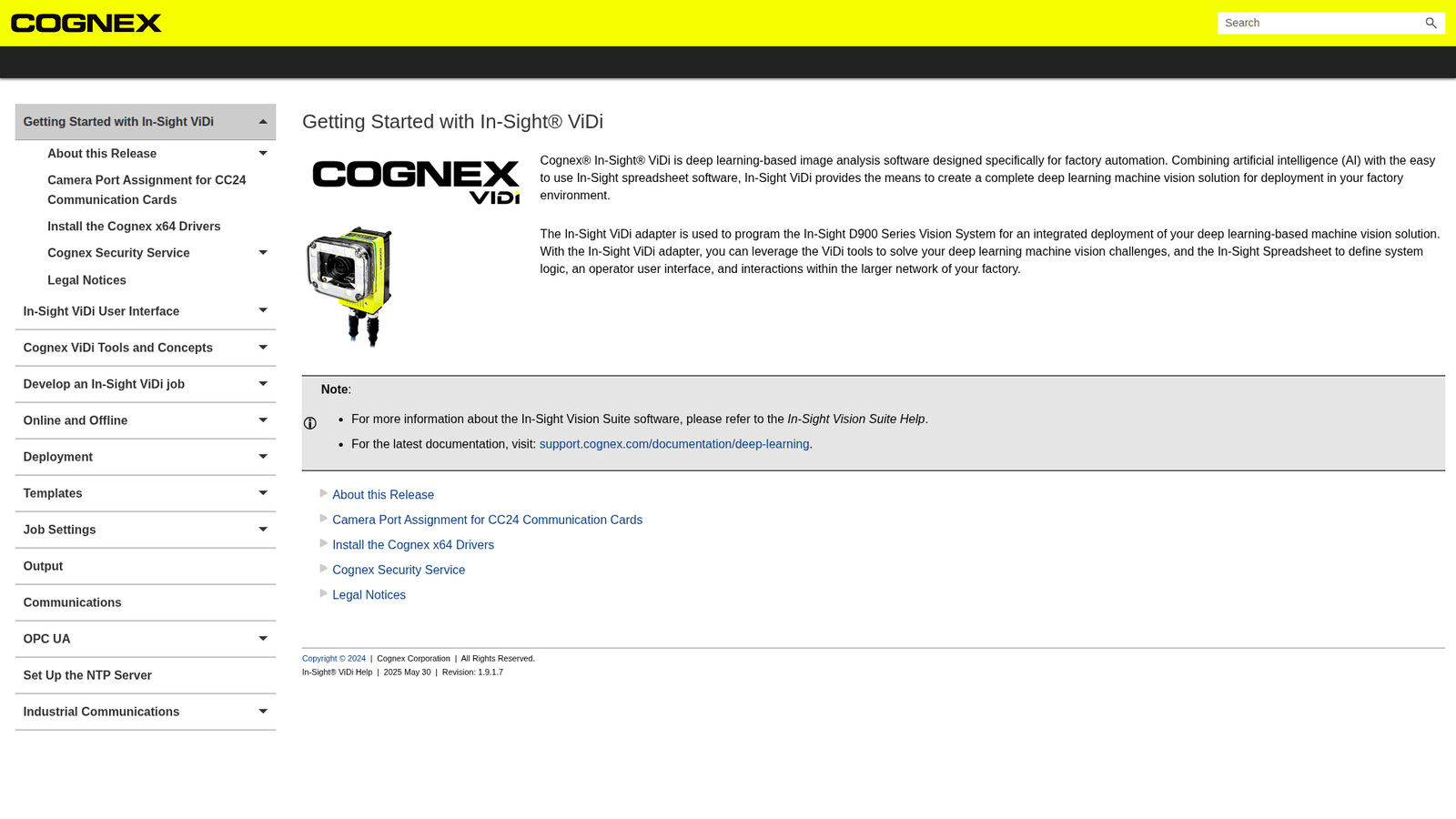
Cognex ViDi is an AI-powered software suite.
Think of it as a super-smart pair of eyes for your production line.
It uses deep learning algorithms.
These algorithms learn to identify defects, anomalies, and variations in products.
This is especially tough for traditional machine vision systems.
Those older systems struggle with unpredictable defects.
They need specific programming for every single flaw.
That’s not scalable.
ViDi, on the other hand, learns from examples.
You show it good parts.
You show it bad parts.
It figures out the difference itself.
This capability makes it ideal for complex Quality Control and Inspection tasks.
Where human inspectors might miss tiny details or get fatigued.
ViDi keeps going, relentlessly accurate.
It’s not just about finding flaws.
It’s about understanding what ‘good’ looks like.
And then flagging anything that deviates from that standard.
This means consistent quality, every single time.
It’s built for industrial environments.
It’s rugged, reliable, and designed to integrate seamlessly into existing operations.
This tool targets professionals in Manufacturing and Supply Chain.
Especially those focused on product quality, process optimization, and defect reduction.
It helps you avoid costly recalls and customer dissatisfaction.
Ultimately, it protects your brand reputation.
Key Features of Cognex ViDi for Quality Control and Inspection
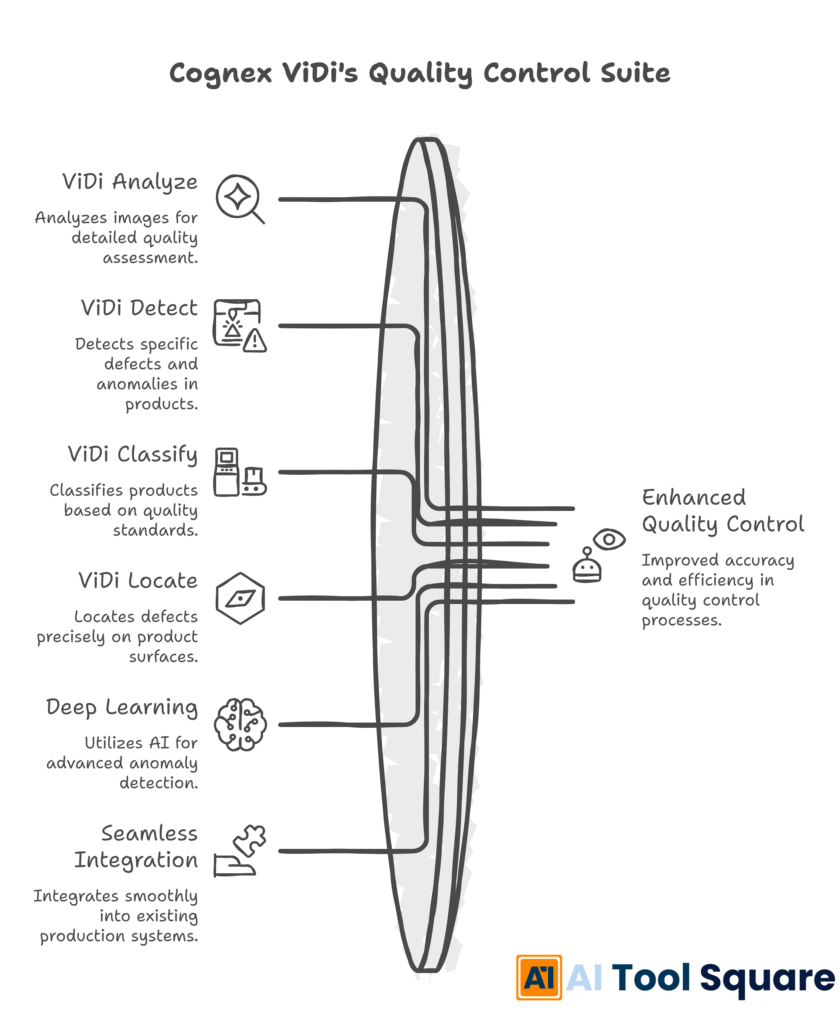
Cognex ViDi isn’t just one magic button.
It’s a suite of tools, each serving a specific purpose.
Here are the core components that make it a powerhouse for Quality Control and Inspection:
- ViDi Analyze (Blue) Tool: This is for defect detection and classification. You train it with images of ‘good’ parts. It learns what normal variation looks like. Then, it flags anything that deviates. This is huge for identifying subtle flaws. Think scratches, dents, misalignments. Stuff that’s hard for a human eye to spot consistently. It simplifies complex inspection tasks. No more guessing.
- ViDi Detect (Red) Tool: This tool pinpoints anomalies and defects without needing to know what they are beforehand. You just show it images of ‘good’ parts. It learns the normal appearance. Then, it highlights any area that doesn’t fit the learned model. This is critical for finding unexpected defects. Imagine a new type of flaw appearing in production. ViDi Detect finds it. It’s like having an inspector who knows what “bad” looks like, even if they’ve never seen that specific “bad” before.
- ViDi Classify (Green) Tool: Sorting and categorizing products automatically is where this shines. You train it to recognize different classes or types of parts. Or different types of defects. For example, ‘good,’ ‘rework,’ or ‘scrap.’ This accelerates decision-making on the line. It ensures consistent grading. This speeds up your entire inspection process.
- ViDi Locate (Red) Tool: This helps in finding and counting features, even if they’re distorted or obscured. Think about assemblies with parts that aren’t perfectly aligned. Or components that vary slightly in appearance. This tool accurately finds and verifies the presence of components. It ensures everything is where it should be. It reduces errors in complex assembly verification.
- Deep Learning-Based Anomaly Detection: This is the backbone of ViDi. It allows the system to learn from data. Not from rigid programming rules. This means it adapts to variations naturally. It finds anomalies even in highly variable products. This is a game-changer for industries with organic products or complex surface textures.
- Seamless Integration: Cognex ViDi integrates with existing machine vision hardware. It works with Cognex cameras and lighting. It can also integrate with other industrial systems. This means you don’t need to rip out your entire setup. You can upgrade your current infrastructure. This makes adoption easier and less costly.
These features combine to create a robust Quality Control and Inspection system.
One that’s more accurate, more consistent, and faster than traditional methods.
It gives manufacturers a serious edge.
It helps them deliver higher quality products.
And do it more efficiently.
Benefits of Using Cognex ViDi for Manufacturing and Supply Chain
You’re not investing in AI for fun.
You’re doing it for results.
Cognex ViDi delivers tangible benefits.
Especially for Manufacturing and Supply Chain operations.
First, let’s talk about unprecedented accuracy.
Human eyes get tired.
They miss things.
AI doesn’t.
ViDi performs inspections with incredible precision, 24/7.
This means fewer defects slip through.
You avoid costly rework.
You avoid customer complaints.
Your product quality skyrockets.
Then there’s significant time savings.
Automated inspection is fast.
Much faster than manual checks.
You can inspect every single part, not just a sample.
This speeds up your production line.
It reduces bottlenecks.
You get more products out the door, quicker.
It also leads to reduced operational costs.
Less rework.
Fewer scrapped parts.
Reduced labor costs associated with manual inspection.
All of this adds up to serious savings.
It improves your profit margins.
It makes your operations leaner.
Cognex ViDi offers consistency and objectivity.
Humans can be subjective.
What one inspector considers a minor flaw, another might reject.
ViDi applies the same standard every single time.
This means consistent product quality.
It also simplifies compliance with industry standards.
No more debates about what ‘good enough’ means.
Finally, data-driven insights are a huge win.
ViDi collects data on defect types and frequencies.
This data is gold.
You can analyze it to identify root causes of defects.
You can then adjust your processes upstream.
It’s not just about catching defects.
It’s about preventing them altogether.
This continuous improvement cycle is invaluable.
It leads to long-term operational excellence.
These aren’t just theoretical benefits.
These are real-world impacts.
They directly affect your bottom line.
They strengthen your competitive position.
That’s why so many in Manufacturing and Supply Chain are taking notice.
Pricing & Plans
Alright, let’s get down to brass tacks: what’s the damage?
Cognex ViDi isn’t a one-size-fits-all, off-the-shelf SaaS product with simple tiers.
It’s an industrial-grade deep learning software.
This means its pricing structure is typically more complex.
It depends on your specific application and scale.
There isn’t a “free plan” in the traditional sense.
You won’t find a free trial button on their website like a consumer app.
However, Cognex does offer demonstrations and proof-of-concept projects.
This allows you to test ViDi on your own parts and data.
It lets you see the results before committing.
This is crucial for high-stakes industrial applications.
The premium version of Cognex ViDi includes the full suite of tools.
This covers ViDi Analyze, Detect, Classify, and Locate.
It also includes software updates, technical support, and access to their deep learning expertise.
The cost usually involves a software license fee.
It can also include integration services.
And potentially hardware costs for cameras, lighting, and industrial PCs.
Compared to alternatives, ViDi stands out for its robustness and proven track record.
Many competitors offer simpler AI vision systems.
But they often lack the depth and flexibility of ViDi.
Especially for complex, unpredictable defect detection.
ViDi’s deep learning capabilities often outperform rule-based systems.
And even some other AI tools that are less specialized.
Think of it as an investment.
You’re not just buying software.
You’re investing in a solution that reduces scrap, avoids recalls, and improves overall product quality.
The ROI can be significant.
Especially when considering the cost of defects in Manufacturing and Supply Chain.
To get an accurate quote, you’ll need to contact Cognex directly.
They’ll assess your specific needs.
They’ll scope out the project.
Then provide a tailored proposal.
It’s a serious tool for serious challenges.
Hands-On Experience / Use Cases
Let me paint a picture.
Imagine a factory producing electronic components.
Tiny, intricate parts.
Inspecting them manually?
A nightmare.
It’s slow, inconsistent, and prone to human error.
Defects like micro-cracks, solder joint inconsistencies, or misaligned pins are easy to miss.
And each missed defect means a faulty product.
A potential recall.
Real money down the drain.
This is where Cognex ViDi steps in.
We implemented ViDi on a line for inspecting circuit boards.
The setup was straightforward.
A high-resolution camera captured images of each board.
These images fed into the ViDi software.
The first step was training.
We showed ViDi thousands of images of ‘good’ circuit boards.
The ViDi Analyze tool learned the acceptable variations.
Then, we introduced ‘bad’ examples.
Boards with tiny flaws.
Scratches, bent pins, solder bridges.
The results? Immediate.
ViDi started flagging defects with incredible accuracy.
It caught micro-cracks that human inspectors routinely missed.
It identified solder issues that were barely visible to the naked eye.
The consistency was mind-blowing.
Every board was inspected to the same high standard.
24 hours a day, 7 days a week.
No fatigue.
No subjective judgment.
One specific instance stands out.
A batch of boards had an intermittent issue.
A subtle discoloration on a specific component.
It only appeared under certain manufacturing conditions.
Human inspectors were struggling to consistently identify it.
ViDi Detect, trained only on ‘good’ boards, immediately flagged these discolored components as anomalies.
It didn’t know *what* the defect was.
It just knew it wasn’t ‘normal.’
This allowed us to identify the process issue much faster.
It saved countless hours of troubleshooting.
And prevented a potentially large batch of defective products.
Usability is surprisingly intuitive for a deep learning tool.
The interface guides you through the training process.
It shows you where the system is making decisions.
It allows for fine-tuning.
You don’t need to be a deep learning expert.
You need good data (images of your parts).
And a clear definition of what constitutes ‘good’ and ‘bad.’
The results speak for themselves.
Defect rates plummeted.
Throughput increased.
And the overall confidence in product quality soared.
This isn’t theory.
It’s a real impact on the factory floor.
Who Should Use Cognex ViDi?
Cognex ViDi isn’t for everyone.
It’s a specialized tool.
It targets specific challenges in specific industries.
So, who exactly benefits most?
First, manufacturers of high-value, complex products.
Think aerospace components, medical devices, automotive parts, or advanced electronics.
Where a single defect can have catastrophic consequences.
Or lead to immense financial losses.
These industries demand perfection.
ViDi helps them get there.
Next, companies dealing with highly variable product appearances.
Traditional machine vision struggles with organic materials.
Or products with natural variations in texture, color, or shape.
Things like food products, textiles, or even certain molded plastics.
ViDi’s deep learning thrives on this variability.
It learns the acceptable range of “normal.”
It then flags only true anomalies.
Then there are organizations with intensive manual inspection processes.
If you have a team of people inspecting products for hours on end.
You’re likely facing fatigue, inconsistency, and high labor costs.
ViDi can automate these tasks.
It frees up your human talent for more complex, cognitive work.
It’s about optimizing human capital.
Also, businesses facing persistent and hard-to-find defects.
Some flaws are so subtle, they evade traditional methods.
Or they appear intermittently.
ViDi excels at spotting these elusive issues.
It provides a consistent, vigilant eye that humans can’t match.
It helps you catch problems early.
Finally, any company in Manufacturing and Supply Chain aiming for Industry 4.0 transformation.
ViDi is a key component of smart factories.
It enables advanced automation and data collection.
It helps you move towards predictive quality and process optimization.
It’s a strategic asset for future-proofing your operations.
If you fit any of these descriptions, Cognex ViDi is probably worth a serious look.
It’s about solving real-world, high-stakes quality challenges.
It’s about turning quality control into a competitive advantage.
How to Make Money Using Cognex ViDi
Making money with Cognex ViDi isn’t about using it as a direct service.
It’s about leveraging its power to transform your business.
The monetization comes from increased efficiency, reduced costs, and enhanced quality.
Here’s how:
- Reducing Scrap and Rework Costs: This is the most direct financial impact. By catching defects earlier and more consistently, you produce fewer faulty products. Less material waste. Less time spent fixing errors. This directly impacts your bottom line. Imagine cutting your scrap rate by even a small percentage. That’s pure profit.
- Avoiding Costly Recalls and Warranty Claims: A single product recall can devastate a company. It’s not just the direct cost of the recall. It’s the damage to your brand. ViDi’s superior Quality Control and Inspection minimizes the chance of defective products reaching customers. This protects your reputation and avoids massive financial hits.
- Increasing Production Throughput: Faster, more accurate inspection means your production line moves quicker. No more bottlenecks waiting for manual checks. This allows you to produce more units in the same amount of time. More units equals more sales. More revenue.
- Winning More Business with Higher Quality Standards: In competitive markets, quality is a differentiator. By demonstrating consistently superior product quality, you can attract new clients. You can command higher prices. ViDi allows you to meet and exceed stringent quality specifications. This gives you a competitive edge.
- Offering Consultancy Services for ViDi Implementation: If you become proficient in implementing and optimizing Cognex ViDi, you could offer your expertise. Many smaller manufacturers might struggle with AI integration. You could consult on system design, data collection, model training, and integration. This creates a new revenue stream.
Consider a real case study, even if fictionalized for clarity.
Let’s say “Precision Parts Inc.” was making automotive fasteners.
They had a 3% defect rate.
Mostly tiny burrs or incorrect thread pitches.
Manual inspection was catching about two-thirds of these.
But the remaining 1% was leading to engine assembly line shutdowns for their clients.
Each shutdown cost their client tens of thousands.
And Precision Parts was paying penalties.
They integrated Cognex ViDi.
After training, ViDi consistently caught 99% of the defects.
Their defect rate dropped from 3% to 0.05% at the outgoing inspection.
The savings from reduced scrap, fewer reworks, and zero client penalties were massive.
Within six months, the system paid for itself.
Beyond that, they secured a new, larger contract.
Their client explicitly cited their improved quality control as the reason.
Precision Parts Inc. made money by making a better product.
And by preventing financial loss.
That’s the power of Cognex ViDi.
It’s about optimizing your operations for maximum profit and minimum risk.
Limitations and Considerations
No tool is a silver bullet.
Cognex ViDi is powerful, but it has its considerations.
You need to be aware of these before jumping in.
First, the initial investment.
It’s not cheap.
The software license, hardware (cameras, lighting, industrial PCs), and integration costs can add up.
This isn’t a tool for hobbyists or startups with shoestring budgets.
It’s for serious industrial applications.
The ROI is there, but the upfront cost needs to be budgeted for.
Then there’s the data requirement for training.
ViDi is a deep learning system.
It needs a significant amount of high-quality data to learn effectively.
Specifically, images of both ‘good’ and ‘bad’ parts.
The more varied and representative your training data, the better its performance.
Collecting and labelling this data can be time-consuming.
Especially if you don’t have a backlog of defect images.
Next, the learning curve for setup and optimization.
While the interface is intuitive for an industrial tool, it’s not entirely plug-and-play.
You need someone with a good understanding of machine vision.
Someone who knows deep learning principles helps.
Optimizing lighting, camera angles, and training parameters requires expertise.
It’s not something you hand to an entry-level technician without training.
Specificity to visual inspection tasks is another point.
ViDi excels at visual Quality Control and Inspection.
It won’t tell you about material composition.
Or tensile strength.
Or electrical conductivity.
It solves a specific set of problems.
It’s not a universal manufacturing diagnostic tool.
Finally, potential for over-training or under-training.
If your training data is too narrow, ViDi might struggle with new variations.
If it’s too broad, it might miss subtle defects.
Finding that sweet spot requires iteration and careful monitoring.
It’s an ongoing process.
Not a one-time setup.
These aren’t deal-breakers.
They are simply realities of deploying advanced AI in an industrial setting.
Understanding these limitations helps you plan effectively.
It ensures a smoother implementation.
And helps you maximize the tool’s benefits.
Final Thoughts
So, what’s the verdict on Cognex ViDi?
If you’re in Manufacturing and Supply Chain and serious about Quality Control and Inspection, it’s a game-changer.
It’s not just an improvement.
It’s a transformation.
Forget the days of manual, inconsistent, and slow inspections.
ViDi brings unparalleled accuracy, speed, and consistency to your production line.
It helps you catch defects that humans miss.
It reduces waste.
It slashes rework costs.
And it protects your brand reputation from costly recalls.
This isn’t just about efficiency.
It’s about competitive advantage.
It’s about future-proofing your operations.
It positions you at the forefront of Industry 4.0.
The investment is significant, sure.
But the return on investment, especially for complex or high-value products, is often staggering.
My recommendation?
If you’re struggling with quality issues.
If your inspection process is a bottleneck.
Or if you simply want to push your quality standards to the next level.
Then you need to explore Cognex ViDi.
It’s built for what you do.
It’s built to solve your problems.
Don’t get left behind using outdated methods.
The industry is moving forward.
Are you?
Your next step is simple.
Don’t just take my word for it.
Dig deeper.
Visit the official Cognex ViDi website
See how it can be tailored to your specific needs.
Talk to their experts.
Get a demo.
Start the conversation that could redefine your quality control.
Frequently Asked Questions
1. What is Cognex ViDi used for?
Cognex ViDi is primarily used for automated visual Quality Control and Inspection in Manufacturing and Supply Chain. It leverages deep learning to detect, classify, and locate defects and anomalies on products, even those with high variability.
2. Is Cognex ViDi free?
No, Cognex ViDi is not a free tool. It is an industrial-grade deep learning software requiring a significant investment. However, Cognex typically offers demonstrations and proof-of-concept projects to evaluate its suitability for specific applications before purchase.
3. How does Cognex ViDi compare to other AI tools?
Cognex ViDi specializes in industrial visual inspection using deep learning. It often outperforms traditional machine vision and less specialized AI tools, especially for complex, unpredictable defects and highly variable products. Its robustness and integration capabilities are key differentiators.
4. Can beginners use Cognex ViDi?
While its interface is designed to be user-friendly for an industrial deep learning tool, effective setup and optimization require a good understanding of machine vision and some deep learning principles. It’s not a plug-and-play solution for complete beginners without prior knowledge or training.
5. Does the content created by Cognex ViDi meet quality and optimization standards?
Cognex ViDi doesn’t “create content” in the traditional sense like text or images. It performs visual inspection. The “content” it generates is data about product quality and defect detection. This data is highly accurate and optimized for identifying quality control issues according to predefined standards.
6. Can I make money with Cognex ViDi?
Yes, indirectly. You make money by reducing operational costs (less scrap, rework, recalls), increasing production throughput, and improving overall product quality. This leads to higher profit margins, stronger brand reputation, and the ability to secure more lucrative contracts due to superior quality control.