
modl:test revolutionises Game Testing and QA, slashing time and boosting quality for studios. Get your games flawless, faster, and hit market perfection. Try modl:test today!
modl:test Is Built for Gaming and Entertainment – Here’s Why
Alright, let’s talk about something that’s quietly changing the game for developers and publishers.
If you’re in Gaming and Entertainment, you know the grind.
Testing a game isn’t just a step; it’s a marathon. It’s the difference between a hit and a flop.
Bugs, glitches, performance issues – they can kill a game faster than a poorly balanced boss fight.
And with AI creeping into every corner of our lives, it’s no surprise it’s landed squarely in game development.
That’s where modl:test steps in. This isn’t just another shiny AI tool; it’s designed to fix real problems.
Specifically, it’s a beast when it comes to Game Testing and QA.
So, if you’re drowning in manual test cases or just want to make sure your next title isn’t riddled with embarrassing bugs, listen up.
This tool could be your secret weapon. Let’s dig in.
Table of Contents
- What is modl:test?
- Key Features of modl:test for Game Testing and QA
- Benefits of Using modl:test for Gaming and Entertainment
- Pricing & Plans
- Hands-On Experience / Use Cases
- Who Should Use modl:test?
- How to Make Money Using modl:test
- Limitations and Considerations
- Final Thoughts
- Frequently Asked Questions
What is modl:test?
Alright, let’s cut to the chase. What exactly is modl:test? Think of it as your AI co-pilot for game development, specifically engineered for the rigorous demands of Game Testing and QA. It’s an AI-powered platform designed to automate and streamline the often tedious and error-prone process of ensuring your game is ready for prime time.
At its core, modl:test is built to understand game logic, player behaviour, and potential failure points. It’s not just clicking random buttons; it learns your game, identifies patterns, and executes tests with a precision and speed that human testers simply can’t match consistently. This isn’t about replacing your QA team; it’s about giving them superpowers.
It targets game developers, QA managers, indie studios, and large publishers alike. Anyone who understands that a polished game experience is non-negotiable in today’s competitive market will get it. The tool helps you catch bugs early, validate features, and ensure cross-platform compatibility without burning through endless hours.
The traditional method of game testing is a beast. You’ve got testers grinding through builds, reporting bugs, reproducing them, verifying fixes. It’s vital, but it’s also a bottleneck. modl:test aims to blow open that bottleneck, letting your human experts focus on more complex, subjective testing scenarios – the stuff AI can’t quite crack yet.
Imagine feeding your game build into a system that then systematically explores every possible interaction, every quest line, every combat mechanic, looking for trouble spots. That’s the promise. It’s about getting from “it works on my machine” to “it works perfectly everywhere, for everyone,” much faster.
So, if you’re tired of crunch time being defined by bug hunts, modl:test offers a compelling alternative. It’s a strategic investment in quality and efficiency, freeing up your most valuable resource: your human talent.
Key Features of modl:test for Game Testing and QA
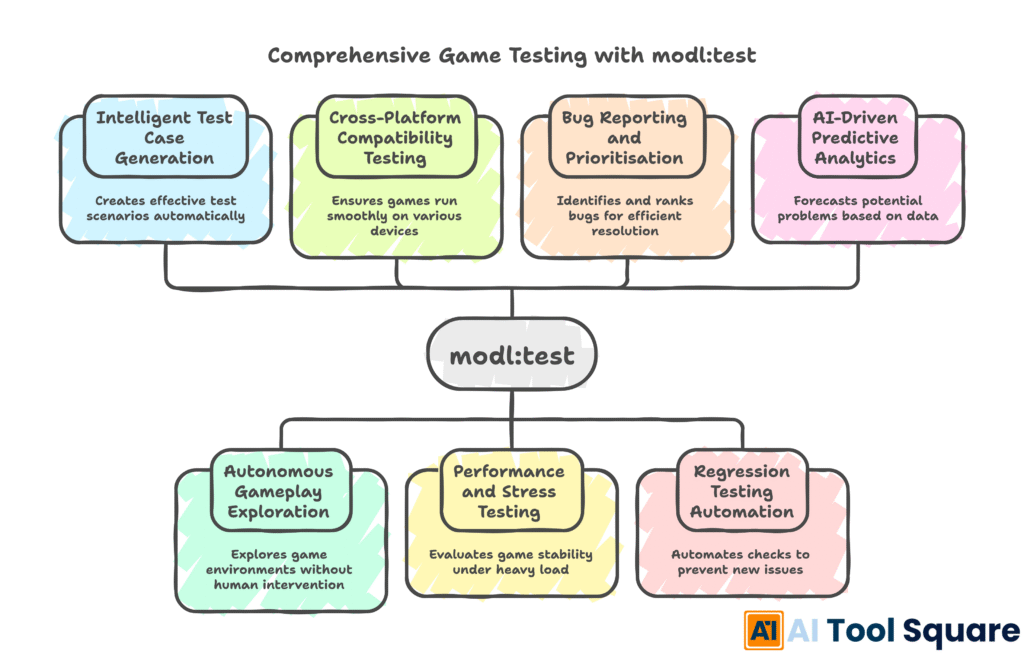
- Intelligent Test Case Generation: This isn’t just about running pre-defined scripts. modl:test uses AI to analyse your game’s mechanics, player inputs, and design documents to automatically generate a comprehensive suite of test cases. This means less time spent manually writing scenarios and more time validating unique, edge-case interactions that might otherwise be missed. Think about how many obscure bugs pop up because no one thought to combine actions A, B, and C in that specific order. modl:test hunts those down.
- Autonomous Gameplay Exploration: modl:test can actually ‘play’ your game. It navigates environments, interacts with NPCs, engages in combat, and completes objectives just like a player would – but with extreme consistency and repeatability. This allows it to uncover pathfinding issues, AI glitches, collision detection problems, and even balance issues across vast playable areas, often detecting problems before they become critical. It’s like having an army of tireless, perfectly identical playtesters.
- Cross-Platform Compatibility Testing: One of the biggest headaches in modern game development is ensuring your game runs flawlessly across multiple platforms, resolutions, and hardware configurations. modl:test automates this. It can spin up virtual environments replicating different devices and operating systems, then run the same exhaustive test suite on each, identifying platform-specific bugs, performance bottlenecks, and rendering discrepancies. This saves immense manual effort and ensures a consistent player experience no matter where your game is played.
- Performance and Stress Testing: Lag, frame drops, and crashes are instant game killers. modl:test monitors your game’s performance metrics (CPU usage, memory, GPU, network latency) while simulating various player loads and intense scenarios. It can simulate hundreds or even thousands of concurrent players in an MMO, or rapidly stress-test specific game mechanics, pinpointing performance bottlenecks and stability issues before your players ever see them. This proactive approach to performance tuning is invaluable.
- Bug Reporting and Prioritisation: When a bug is found, modl:test doesn’t just flag it. It generates detailed reports, often including exact steps to reproduce, screenshots, and even video recordings of the anomaly. More importantly, it can help prioritise these bugs based on their severity and impact on gameplay, ensuring your development team tackles the most critical issues first. This structured approach cuts down on communication overhead and accelerates the bug-fixing cycle.
- Regression Testing Automation: Every time you fix a bug or add a new feature, there’s a risk of breaking something that was previously working – known as a regression. modl:test excels at regression testing. After any code change, it can quickly re-run relevant test suites to confirm that old bugs haven’t resurfaced and existing features remain functional, giving your team confidence to iterate rapidly without fear of introducing new problems.
- AI-Driven Predictive Analytics: Beyond just finding bugs, modl:test can start to predict where bugs are likely to occur based on code changes, design patterns, and historical data. This allows for even more targeted testing and proactive development, focusing resources where they’re most needed to prevent issues before they even manifest. It’s like having a crystal ball for your game’s stability.
Benefits of Using modl:test for Gaming and Entertainment
Look, in the Gaming and Entertainment industry, time is money. And bugs cost a fortune. That’s where modl:test really shines.
First up, let’s talk about time savings. Manual Game Testing and QA is a slow, methodical process. You’ve got teams slogging through builds, repeating the same actions thousands of times. modl:test automates a huge chunk of this. It can run tests 24/7, without breaks, without getting tired, and without making mistakes due to fatigue. This means your game gets tested faster, leading to quicker release cycles and getting your product into players’ hands sooner. Every day saved is revenue earned sooner.
Then there’s the massive leap in quality improvement. Humans, bless their hearts, miss things. It’s just how it is. An AI system, especially one like modl:test, can perform tests with absolute precision and consistency. It catches edge cases, obscure bugs, and performance hiccups that might slip past even the most eagle-eyed human tester. This translates to a more stable, polished, and enjoyable game experience for your audience. Better quality means better reviews, stronger player retention, and ultimately, a more successful title.
Consider overcoming creative blocks and fostering innovation. When your QA team is bogged down by repetitive bug hunting, they don’t have time to think about the bigger picture. They can’t provide valuable feedback on gameplay feel, narrative coherence, or user experience enhancements. With modl:test handling the grunt work, your human testers are freed up. They can focus on qualitative testing, exploring creative interactions, and giving subjective feedback that AI can’t. This allows your team to truly innovate and refine the player experience, rather than just chasing bugs.
It also offers unparalleled scalability. Need to test a massive open-world game with thousands of potential interactions? Need to simulate a huge multiplayer server load? Scaling up a human QA team for these demands is incredibly expensive and logistical nightmare. modl:test can scale virtually. You can run more tests, cover more ground, and simulate more complex scenarios without hiring dozens of new staff members. This makes big projects manageable and allows smaller studios to punch above their weight.
Lastly, there’s the financial upside. Reduced development costs. By catching bugs earlier, you prevent them from becoming more expensive to fix later in the development cycle. Fewer post-launch patches. Less negative press due to a buggy release. All of these contribute to a healthier bottom line. modl:test isn’t just a tool; it’s a strategic asset that protects your investment and maximises your return.
Pricing & Plans
Alright, let’s talk brass tacks: what’s this going to cost you? While modl:test isn’t offering a free tier for casual use – because let’s be real, this is a serious tool for serious game development – they do operate on a tiered subscription model, structured to scale with your project’s needs. This isn’t a one-size-fits-all, low-cost solution; it’s an enterprise-grade platform designed for significant value.
Their plans typically start with a ‘Studio’ tier, aimed at smaller to mid-sized development teams. This package usually includes a certain number of concurrent test agents, access to core automation features, and a defined amount of test environment hours per month. It’s designed to give you significant automation capabilities without the overhead of the larger plans. You’re looking at a monthly fee here, usually in the mid-to-high three-figure range, depending on the specifics.
Next up is the ‘Enterprise’ tier, which targets larger studios and publishers with multiple projects or more complex testing requirements. This plan offers a substantially higher allocation of test agents, unlimited test environment hours, advanced analytics, custom integrations, and dedicated account management. You’ll also find priority support and potentially on-site training. For this level, pricing becomes custom, often involving annual contracts and a direct conversation with their sales team, likely pushing into the four or even five-figure range per month.
They sometimes offer project-based pricing or tailored solutions for very specific needs, like short-term intense load testing for a major launch. This flexibility is key, especially for studios with fluctuating development cycles. It’s important to remember that they are selling a solution that significantly reduces manual labour, accelerates time to market, and drastically improves game quality.
When you compare modl:test to alternatives – if you can even call them direct alternatives – you’re mostly looking at either bespoke internal automation systems (which are incredibly expensive to build and maintain) or just more human QA testers. Hiring more QA staff means salaries, benefits, office space, and managerial overhead. One human QA professional can easily cost tens of thousands a year. modl:test, while an investment, can replace or augment the work of several human testers, delivering a far higher ROI when you factor in speed, accuracy, and scalability. It’s about upfront investment for long-term savings and superior product quality.
Hands-On Experience / Use Cases
Okay, so let’s get real. How does modl:test actually work in the trenches? Imagine this scenario: I’m working with an indie studio, “Pixel Pioneers,” launching a new open-world RPG. We’ve got a small team, tight budget, and even tighter deadlines. The bane of our existence? Regression bugs. Every time we tweak a combat mechanic or add a new quest line, something breaks somewhere else. It’s a nightmare.
We integrated modl:test. The setup was surprisingly straightforward. We fed it our game build and its design documentation. What happened next was eye-opening. modl:test didn’t just run our existing test scripts; it started to intelligently explore the game world. It navigated complex dungeons, initiated combat sequences, interacted with NPCs, and tried every combination of inventory items you could think of.
One of the immediate results? It found a critical progression blocker in a side quest that our human testers had missed for weeks. This bug occurred only when a player picked up a specific item, then spoke to an NPC in a particular order, and then reloaded a save. A needle in a haystack for humans. For modl:test, it was just another data point to process. The report it generated included a video replay, precise timestamps, and the exact steps to reproduce – gold for our dev team.
Another use case involved performance testing. Our game had a notorious lag spike whenever more than 50 NPCs were on screen in a specific city district. Manually setting this up and monitoring performance was a slog. We set up modl:test to simulate 100 characters in that area, running various interactions. Within hours, it pinpointed a specific shader that was causing massive draw call inefficiencies. Our engineers had a clear target, fixing it in a fraction of the time it would’ve taken them to diagnose manually.
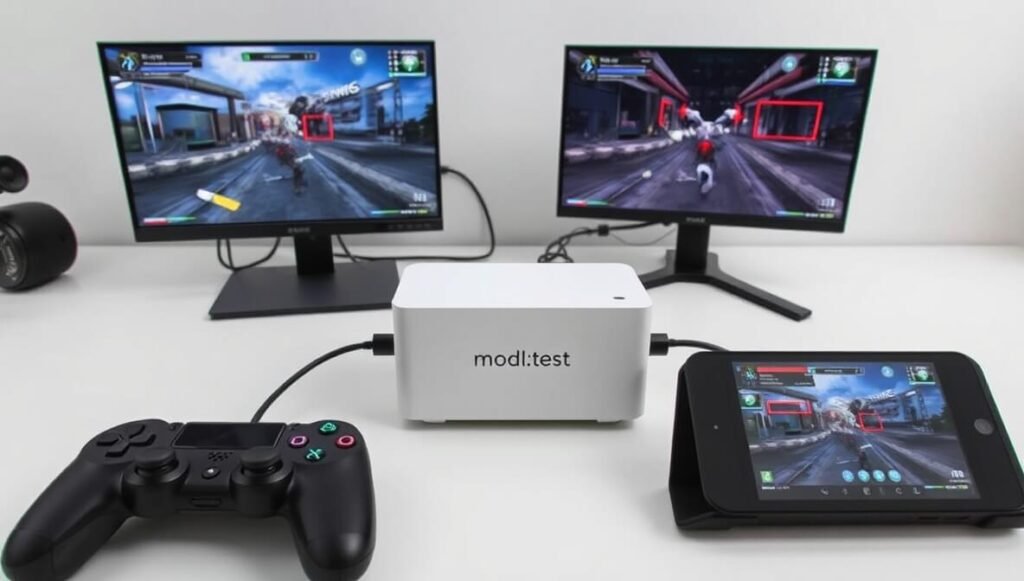
Then there’s cross-platform validation. We wanted to launch on PC, PlayStation, and Xbox simultaneously. Trying to manually test every aspect on each platform was impossible. modl:test spun up virtual instances of each console, running identical, comprehensive test suites. It flagged a subtle UI rendering bug unique to the Xbox version and a memory leak specific to older PC GPUs. Without modl:test, these would have likely been day-one patches, incurring negative reviews and frustrated players.
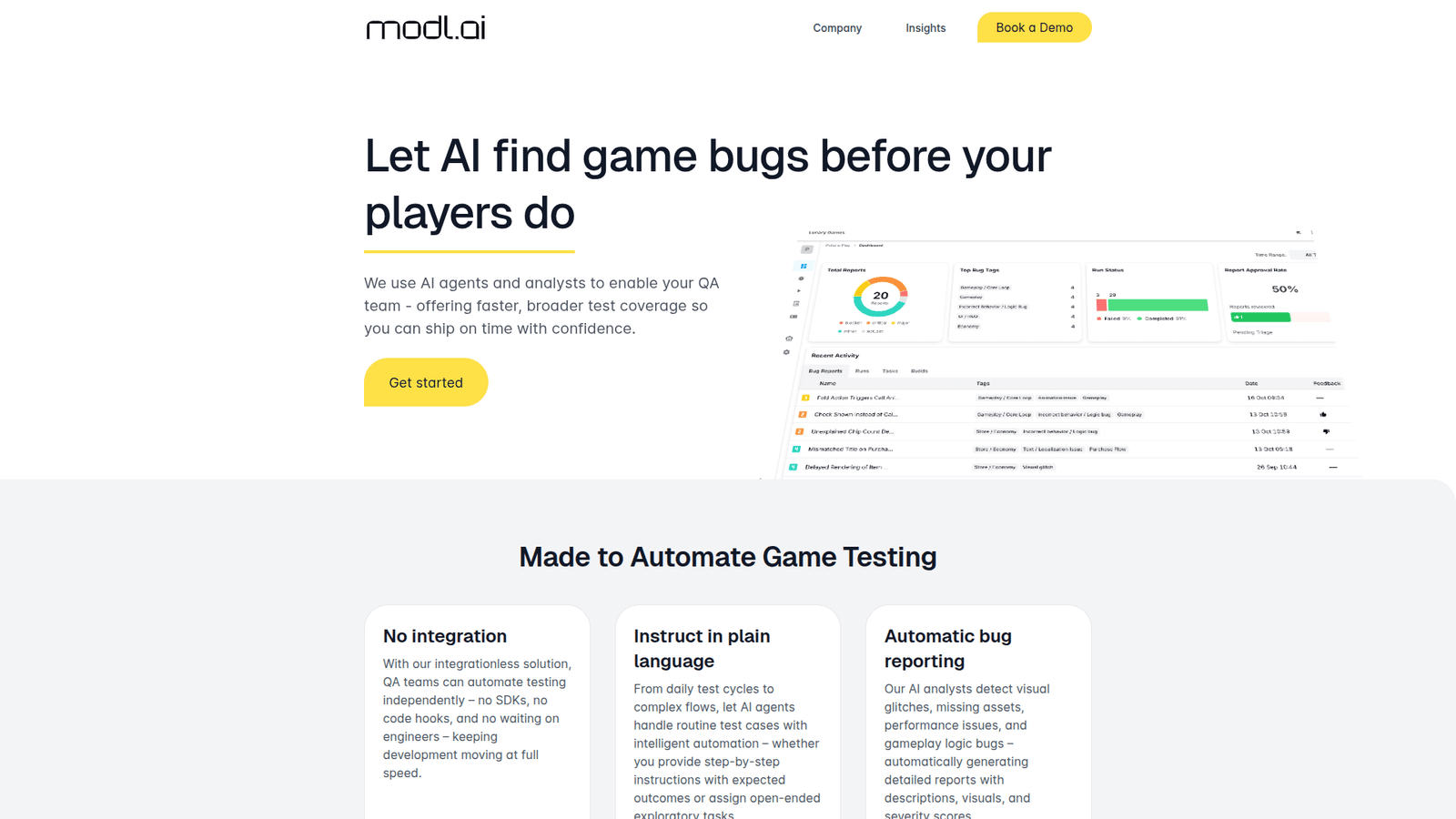
The usability of modl:test is impressive. Its dashboard provides clear visualisations of test coverage, bug trends, and performance metrics. It’s not just a black box; it gives you actionable insights. My team found themselves spending less time hunting bugs and more time analysing the root causes and implementing robust solutions. This shifted our focus from reactive fixing to proactive prevention. It basically supercharged our entire QA process, letting our human testers focus on the nuanced player experience, rather than the tedious grind. It’s a game-changer, plain and simple.
Who Should Use modl:test?

Alright, so who really stands to gain from throwing modl:test into their workflow? This isn’t a tool for everyone, but for specific players in the Gaming and Entertainment industry, it’s an absolute no-brainer.
First up: Game Development Studios (Indie to AAA). If you’re building games, you need this. Indie studios with limited resources can leverage modl:test to achieve a level of QA that would otherwise require a much larger, more expensive team. For larger AAA studios, it scales to handle the immense complexity of modern titles, catching bugs faster and more efficiently across vast open worlds, intricate systems, and multiple platforms. It’s about maintaining quality while accelerating your development pipeline.
Next, QA Managers and Teams. This isn’t about replacing your job; it’s about making your job exponentially easier and more impactful. Imagine having an AI assistant that handles all the repetitive, grunt-work testing, allowing your human experts to focus on qualitative feedback, user experience, and those really tricky, subjective bugs that only a human can spot. It frees up your team to be more strategic, more creative, and ultimately, more valuable.
Then there are Game Publishers. Your reputation hinges on the quality of the games you release. A buggy launch can tank sales and erode player trust. By mandating or recommending modl:test to your partnered developers, you ensure a higher standard of quality across your portfolio, protecting your brand and your investment. It’s a risk mitigation strategy wrapped in an efficiency tool.
Consider Outsourced QA Service Providers. If you’re in the business of offering Game Testing and QA as a service, modl:test gives you a serious competitive edge. You can offer faster turnaround times, more comprehensive test coverage, and ultimately, a higher quality service to your clients, potentially at a more attractive price point due to increased efficiency. It allows you to take on more projects and deliver better results.
Finally, anyone involved in Live Service Games and Ongoing Updates. For games that constantly receive new content, patches, and expansions, regression testing is a continuous, monumental task. modl:test makes this manageable, ensuring that every new update doesn’t inadvertently break existing features, keeping your live game stable and your player base happy.
Essentially, if you care about shipping a high-quality game on time and on budget, modl:test deserves a serious look.
How to Make Money Using modl:test
Alright, let’s get down to the real reason we’re all here: how do you actually line your pockets with modl:test? This isn’t just about saving money on your own projects; it’s about creating new revenue streams or significantly boosting existing ones.
- Service 1: Offer AI-Accelerated Game Testing as a Service: This is the most direct path. If you’ve got modl:test, you can become a third-party QA provider. Many indie studios, and even some mid-sized ones, can’t afford a full in-house QA team or the hefty price tag of enterprise testing solutions. You step in. Use modl:test to run comprehensive automated tests for them. You’re offering faster, more thorough, and more consistent testing than traditional manual teams alone. Charge them a project fee or a recurring monthly retainer. Your efficiency with modl:test allows you to take on more clients and deliver superior results, setting yourself apart from competitors who rely solely on manual processes.
- Service 2: Specialise in Niche Game Performance Audits: Every developer struggles with performance. Games lag, frames drop, memory leaks appear. With modl:test’s performance and stress testing capabilities, you can offer specialised audits. For example, “The Lag Slayer” or “The Frame Rate Doctor.” You use the tool to identify bottlenecks, analyse hardware compatibility, and provide detailed reports on where games are failing on various systems. You’re not just finding bugs; you’re providing actionable engineering insights. This is a premium service, and studios will pay handsomely to ensure their game runs smoothly across a wide range of player hardware, especially for competitive multiplayer titles where every millisecond counts.
- Service 3: Provide Pre-Launch Certification & Compliance Testing: Getting a game certified for console platforms (PlayStation, Xbox, Nintendo) is a meticulous process with strict technical requirements. Failing certification means delays, lost revenue, and massive headaches. modl:test can automate many of the technical compliance checks. You can offer a “Pre-Certification Health Check” service, running exhaustive tests against platform guidelines. You catch issues before they even reach the platform holders, significantly increasing the chances of a first-pass certification. This provides immense value to developers and publishers looking to avoid costly resubmissions.
Consider a real-world parallel. Take Sarah, an independent QA consultant. Before modl:test, she was limited to manual testing, taking on one or two projects at a time, charging a flat rate of perhaps £5,000 per project, which would take her a month. After integrating modl:test, she can now run automated tests for three clients simultaneously, drastically reducing her time commitment for each.
She’s still charging £5,000 per project, but now completing them in two weeks each, effectively doubling her monthly income to £10,000. Not only that, but the quality of her reports is superior, leading to glowing testimonials and more referrals. She’s working smarter, not harder, and making more money doing it. That’s the power of leveraging AI to scale your expertise in Game Testing and QA.
Limitations and Considerations
Alright, let’s be upfront. No tool is a magic bullet, and modl:test, for all its brilliance, has its boundaries. It’s crucial to understand these limitations so you can integrate it effectively and avoid unrealistic expectations.
First off, accuracy isn’t 100% human-level for subjective feedback. While modl:test excels at finding technical bugs – crashes, glitches, performance drops – it struggles with subjective aspects of gameplay. It can’t tell you if a level feels boring, if a boss fight is poorly balanced from a fun perspective, or if a narrative beat falls flat. It won’t tell you if the UI is intuitive for a human player or if the controls feel clunky. That’s still firmly in the human tester’s court. You’ll still need human players for that crucial qualitative feedback.
Then there’s the learning curve and setup investment. While the UI might be user-friendly, getting modl:test fully integrated and optimally configured for your specific game engine and unique game mechanics requires effort. You’ll need to feed it appropriate data, potentially define specific test parameters, and ensure it understands the ‘rules’ of your game world. This isn’t plug-and-play in five minutes. There’s an initial time investment to get it humming perfectly, which means a short-term hit on productivity before the long-term gains kick in.
Another point is the cost for smaller teams. As we discussed in pricing, modl:test isn’t cheap. For a truly tiny indie studio with a shoestring budget, the upfront investment might be too steep. The ROI becomes clear with scale and complexity, but if you’re a one-person dev team making a small mobile game, the cost might outweigh the benefits compared to traditional manual testing or more basic automation scripts.
Dependency on clean code and design is also a factor. modl:test is an AI, and it works best when the underlying game code is reasonably well-structured and follows logical patterns. If your game is a tangled mess of spaghetti code and inconsistent design, the AI might struggle to understand the intended behaviour, leading to less effective testing or an increase in false positives/negatives. It can highlight issues, but it can’t fix fundamentally flawed architecture.
Finally, false positives and noise are always a possibility with AI-driven systems. Sometimes the AI might flag something as a bug that isn’t, or miss a subtlety that a human would immediately recognise. While modl:test is highly sophisticated, it’s not infallible. Your human QA team will still need to review and triage its reports, distinguishing genuine issues from misunderstandings or minor anomalies. It augments, it doesn’t entirely replace. Keep these in mind to set proper expectations and integrate modl:test smartly into your existing Game Testing and QA workflow.
Final Thoughts
So, what’s the bottom line with modl:test? If you’re serious about shipping high-quality games in the modern Gaming and Entertainment industry, this tool isn’t just a nice-to-have; it’s rapidly becoming an essential piece of your toolkit.
We’re talking about a significant shift from reactive bug-fixing to proactive quality assurance. modl:test slashes the time spent on repetitive, manual Game Testing and QA, allowing your human talent to focus on what they do best: creative problem-solving, user experience, and those nuanced issues only a human can truly grasp.
The benefits are clear: faster development cycles, superior game quality, reduced post-launch headaches, and ultimately, happier players. This isn’t just about finding more bugs; it’s about building a more robust, efficient, and ultimately more profitable game development pipeline.
Yes, there’s an investment, both financially and in terms of integrating it into your workflow. But the return on that investment – in saved time, reduced costs, and enhanced reputation – is compelling.
My recommendation? If you’re a game studio of any size looking to scale your QA efforts, improve game stability, and accelerate your time to market, you need to seriously consider modl:test. It’s a strategic move that can define your competitive edge.
Don’t get left behind, drowning in a sea of bugs while your competitors are sailing smoothly to launch. Take the leap.
Visit the official modl:test website
Frequently Asked Questions
1. What is modl:test used for?
modl:test is an AI-powered tool specifically designed to automate and streamline Game Testing and QA processes. It generates test cases, autonomously explores game environments, performs cross-platform compatibility checks, and conducts performance tests to identify bugs and issues faster and more efficiently than manual methods.
2. Is modl:test free?
No, modl:test is not a free tool. It operates on a tiered subscription model, with plans tailored for various sizes of game development studios, from smaller indies to large enterprises. Pricing is generally an investment, reflecting its advanced AI capabilities and the significant value it provides in accelerating development and improving game quality.
3. How does modl:test compare to other AI tools?
modl:test stands out by being highly specialised for Game Testing and QA within the Gaming and Entertainment industry. Unlike general-purpose AI tools, modl:test understands game logic, player behaviour, and specific engine nuances. It offers features like autonomous gameplay exploration and intelligent test case generation that are uniquely tailored for game development, making it a more focused and effective solution compared to broader AI platforms.
4. Can beginners use modl:test?
While modl:test is a powerful, sophisticated tool, its core interface is designed for usability. However, effectively integrating and optimising it for complex game projects does require a foundational understanding of game development, QA principles, and some technical proficiency. There might be a learning curve for complete beginners, but the benefits often outweigh the initial effort.
5. Does the content created by modl:test meet quality and optimization standards?
modl:test doesn’t “create content” in the traditional sense like text or images. Instead, it generates detailed bug reports, performance metrics, and test coverage data. These outputs are highly structured, accurate, and optimised for developers and QA teams to quickly understand and address issues. Its quality standards are aimed at delivering precise, actionable insights for game improvement.
6. Can I make money with modl:test?
Absolutely. Beyond improving your own game development efficiency, modl:test can be leveraged to create new revenue streams. You can offer AI-accelerated game testing as a service to other studios, specialise in niche performance audits, or provide pre-launch certification and compliance testing. The tool’s efficiency allows you to take on more projects, deliver superior results, and command premium rates.