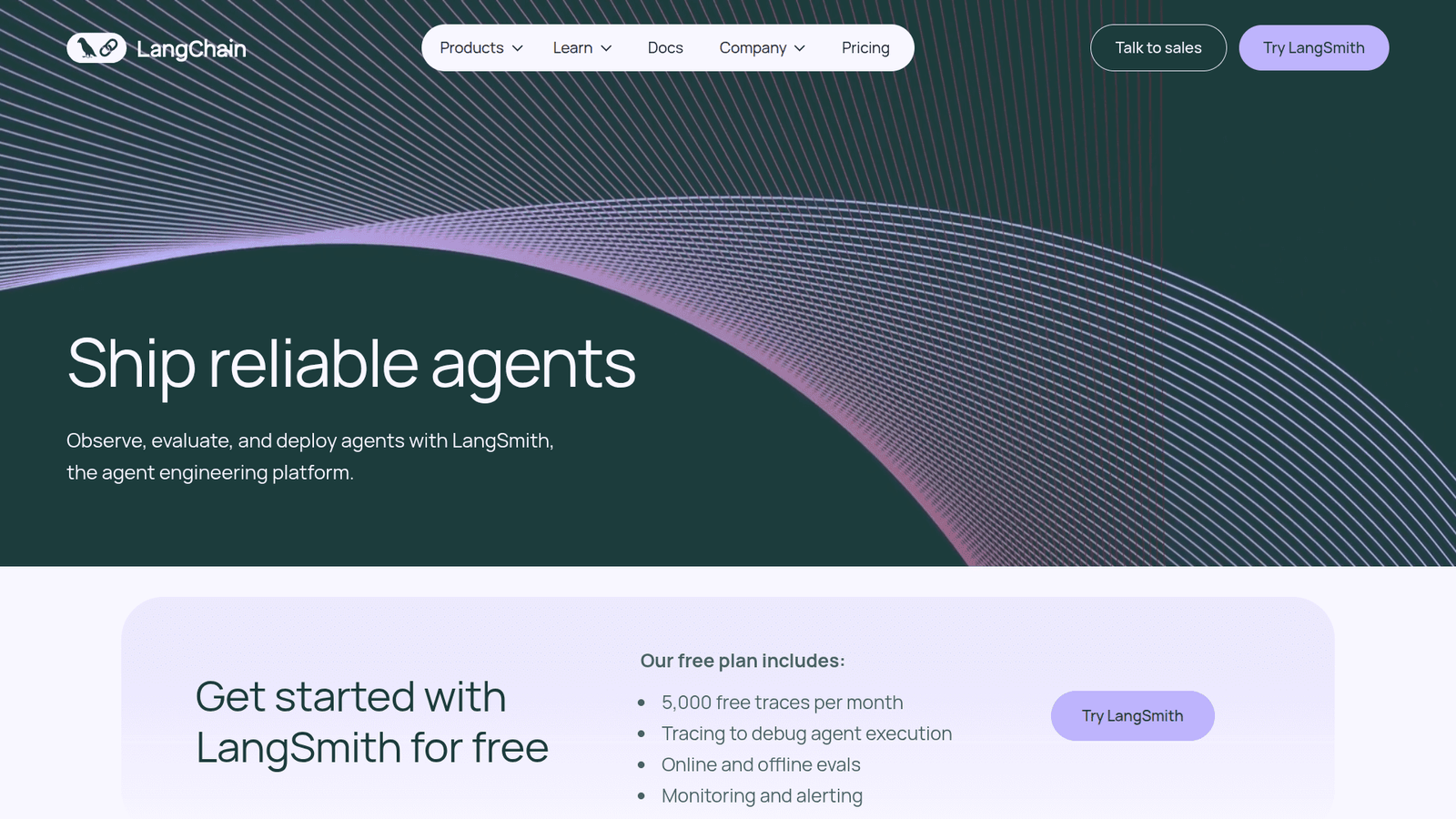

LangChain empowers swift AI Agent Development, cutting complexity and boosting efficiency. Build smarter agents, faster. Get started today!
The Real Impact of Using LangChain for Agent Development
Alright, let’s talk real talk about AI Agents.
The buzz is everywhere. Everyone’s trying to build them.
But here’s the kicker: it’s not always easy.
It can feel like you’re wrestling with a particularly stubborn octopus, each tentacle pulling in a different direction.
That’s where LangChain steps in.
It’s not just another tool; it’s the leverage you need.
I’ve seen the difference it makes in Agent Development.
It’s about making things simpler, faster, and more effective.
So, if you’re serious about building powerful AI agents without pulling your hair out, pay attention.
This isn’t theory. This is about practical application and getting results.
Let’s see what LangChain brings to the table for agent builders like us.
Table of Contents
- What is LangChain?
- Key Features of LangChain for Agent Development
- Benefits of Using LangChain for AI Agents
- Pricing & Plans
- Hands-On Experience / Use Cases
- Who Should Use LangChain?
- How to Make Money Using LangChain
- Limitations and Considerations
- Final Thoughts
- Frequently Asked Questions
What is LangChain?
LangChain is a Python and JavaScript framework designed to help you build applications powered by large language models (LLMs).
Think of it as your secret weapon for making LLMs do more than just answer questions.
It’s built for those who want to create complex AI agents, chatbots, and other sophisticated AI applications.
It bridges the gap between raw LLMs and practical, real-world solutions.
This tool helps you chain together different components, making your AI agents smarter and more capable.
Instead of hardcoding every decision, LangChain allows agents to reason and act.
It’s like giving your AI a brain and a set of tools to use.
For anyone in AI Agents, LangChain simplifies building agents that can interact with their environment, use external tools, and perform multi-step tasks.
It’s not just for expert AI engineers. Developers, data scientists, and even those with a solid grasp of programming can pick it up.
It helps abstract away much of the complexity, letting you focus on the agent’s logic.
The core idea is to make LLMs actionable.
It connects them to data sources, other APIs, and decision-making processes.
This means your agent can retrieve information, make calculations, or even send emails.
It’s about moving beyond simple prompts to creating agents that truly augment human capability.
This framework is rapidly evolving, with a strong community backing its development.
It offers a modular approach, so you can swap out components as needed.
This flexibility is key when you’re dealing with cutting-edge AI.
It lets you iterate quickly and experiment with different architectures.
LangChain is positioned to be a cornerstone for future AI agent projects.
It helps democratize access to advanced AI capabilities.
You don’t need a PhD to build something powerful with it.
Just a good idea and the willingness to get your hands dirty.
Key Features of LangChain for Agent Development
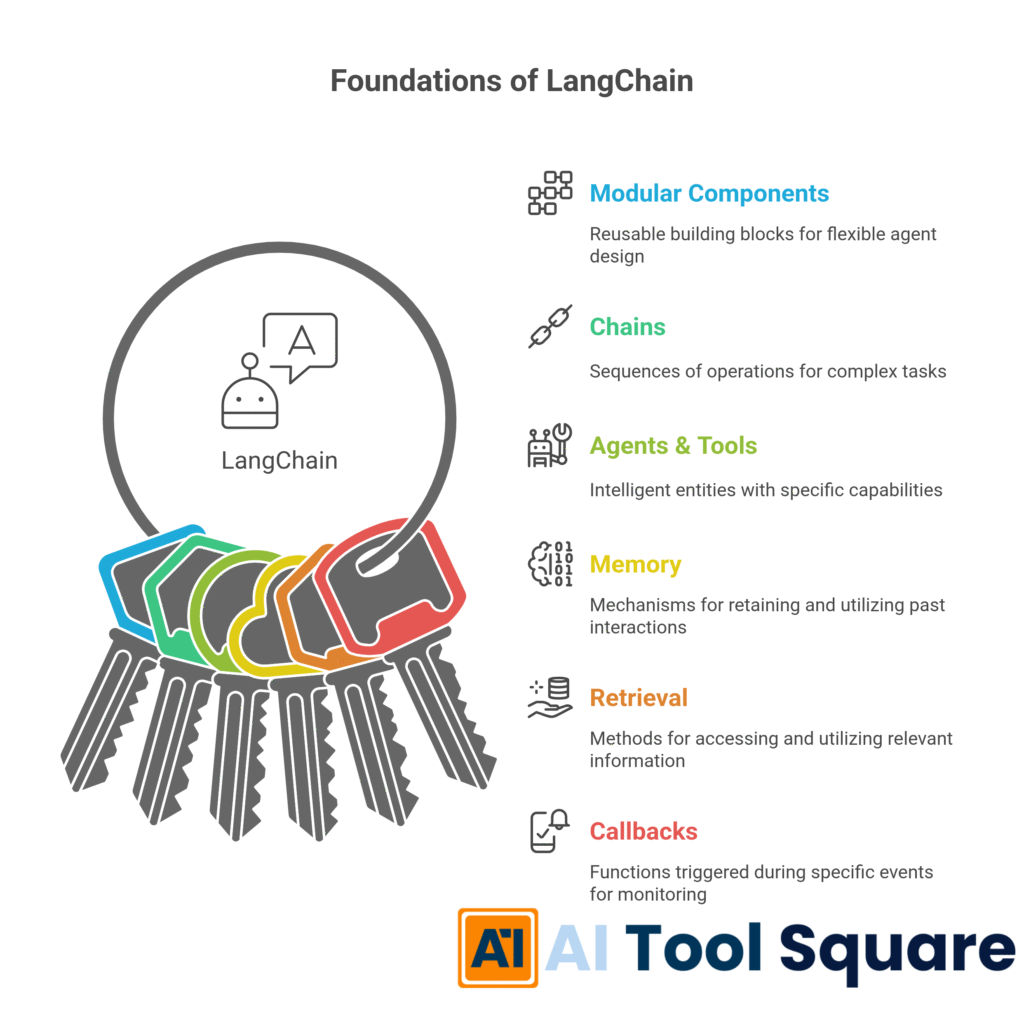
- Modular Components: LangChain provides a toolkit of modular components. This means you get building blocks for your agents. You can combine LLMs, prompt templates, parsers, and external tools. It’s like having a LEGO set for AI. This flexibility speeds up Agent Development significantly. You can swap out models or tools without rebuilding everything from scratch. This makes testing and iterating a breeze. It lets you focus on the agent’s logic, not the plumbing.
- Chains: The core of LangChain lies in its concept of “chains.” These allow you to sequence multiple calls to LLMs or other utilities. For example, an agent might first summarize a document, then extract key entities, and finally answer a question based on those entities. This sequential processing is crucial for complex tasks. It moves beyond single-shot prompts. Chains enable sophisticated reasoning capabilities. They let agents perform multi-step operations autonomously. This capability is what truly makes an AI agent an “agent.”
- Agents & Tools: LangChain lets you define “agents” that use LLMs to decide which “tools” to use. Tools can be anything: a calculator, a web search, an API call, or even another LLM. The agent figures out the best tool for the job. This is where the magic happens for real-world applications. It gives your AI agents the ability to interact with the outside world. They can fetch live data, perform calculations, or automate tasks. This feature alone drastically expands what your AI agents can achieve.
- Memory: Agents need memory to remember past interactions. LangChain offers various memory implementations. This includes simple conversational memory or more complex approaches. Memory helps agents maintain context. It allows for more natural and coherent conversations. Without memory, an agent would forget everything after each turn. This makes agents feel more intelligent and human-like. It’s essential for any persistent AI interaction.
- Retrieval: LangChain excels at connecting LLMs to external data. It allows agents to retrieve relevant information from databases, documents, or knowledge bases. This is vital for grounding LLMs in specific facts. It prevents agents from hallucinating or giving generic answers. You can build agents that answer questions based on your private data. This makes agents much more accurate and useful for specialized tasks.
- Callbacks: Callbacks let you hook into the different stages of your agent’s execution. You can log events, monitor performance, or even inject custom logic. This is incredibly useful for debugging and understanding agent behavior. It provides transparency into how your agent makes decisions. Callbacks are a powerful tool for fine-tuning and optimizing your AI agents.
Benefits of Using LangChain for AI Agents
Using LangChain for AI Agents isn’t just a nice-to-have; it’s a game-changer.
First off, it saves you a ton of time.
Instead of spending weeks trying to stitch together different LLM components, LangChain provides a structured framework.
This means faster prototyping and quicker deployment.
You’re not reinventing the wheel every time you start a new agent project.
Secondly, it drastically improves the quality of your AI agents.
By providing robust tools for chaining, memory, and external data retrieval, your agents become smarter and more reliable.
They can perform complex tasks with fewer errors and deliver more accurate responses.
This leads to better user experiences and more effective automation.
LangChain also helps overcome creative blocks in Agent Development.
When you have a clear framework, you can spend more time thinking about the agent’s logic and less time wrestling with technical details.
It opens up new possibilities for what your agents can do.
The modular nature means you can experiment with different approaches easily.
You can swap out an LLM for another, change a prompt, or add a new tool with minimal effort.
This iterative development cycle is critical for building cutting-edge AI agents.
It also fosters collaboration.
Because the structure is well-defined, teams can work on different parts of an agent project more effectively.
Everyone understands the components and how they fit together.
This streamlines the entire development process.
Another massive benefit is access to external data.
LLMs are powerful, but they’re limited by their training data.
LangChain lets your agents connect to real-time information, internal databases, and specialized knowledge bases.
This significantly enhances their utility and accuracy, especially for business-specific applications.
Finally, it reduces the learning curve for building complex AI agents.
While there’s still plenty to learn, LangChain abstracts away a lot of the low-level complexities.
This makes advanced AI agent development more accessible to a wider range of developers.
It’s about empowering more people to build smarter AI.
Pricing & Plans
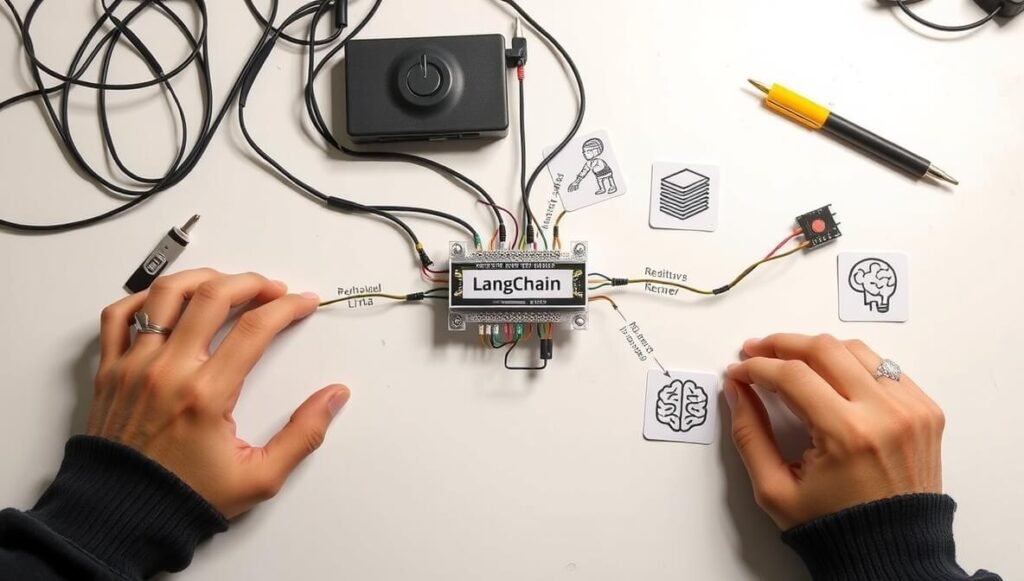
Alright, let’s talk money. Or, more accurately, how LangChain itself doesn’t cost you a dime to use.
This is one of its biggest upsides.
LangChain is an open-source framework. That means it’s free to download and use.
You can get started with it today without pulling out your wallet for the framework itself.
However, there’s a catch, as with anything worthwhile.
LangChain relies on Large Language Models (LLMs) and various external tools to function.
And those often come with their own costs.
For example, if you’re using OpenAI’s GPT models, you’ll be paying for API calls based on usage.
The same goes for other proprietary LLMs from providers like Anthropic or Google.
These costs are usually per token or per API request.
So, while LangChain itself is free, the horsepower it uses might not be.
You also might incur costs for other tools your agents interact with.
Think about services like vector databases (e.g., Pinecone, ChromaDB), cloud services for deployment, or specific APIs.
These are separate expenses you’d budget for, independent of LangChain.
There are ways to keep these costs down.
You can use open-source LLMs that can be self-hosted, reducing dependency on paid APIs.
This requires more technical expertise and computational resources on your end.
But it’s a viable option for those looking to minimize operational expenses.
Compared to alternatives, LangChain stands out because its core is free.
Some platforms offer similar agent-building capabilities but come with hefty subscription fees.
These often target businesses looking for fully managed solutions.
LangChain empowers developers to build these solutions themselves, often at a lower overall cost.
The true cost of using LangChain is your time and the cost of the underlying AI services and infrastructure.
It’s a DIY approach to advanced AI Agent Development.
This makes it incredibly accessible for individuals, startups, and small businesses.
You pay for what you use, rather than a fixed platform fee.
This flexibility is a major win for anyone scaling their AI agent projects.
Hands-On Experience / Use Cases
Alright, let’s get real about what it feels like to build with LangChain.
My first time diving into Agent Development with it felt a bit like getting a new power tool.
Initially, you’re cautious.
Then you realize how much faster and cleaner the job gets done.
One common use case I tackled was building a customer support agent.
Not just a simple chatbot, but one that could actually look up order details, check FAQs, and even escalate to a human if needed.
Using LangChain’s “Agents & Tools” feature, I configured it to access a mock API for order status.
It also had access to a vectorized knowledge base of support articles.
The LLM acted as the brain, deciding whether to search the FAQ, query the order API, or use a “human handoff” tool.
The setup process was surprisingly straightforward once I grasped the core concepts.
Defining the tools, providing clear descriptions so the LLM knew when to use them, and setting up the agent executor were key.
The results were impressive.
The agent could accurately answer questions like, “Where is my order for item X?” by calling the API.
It could also explain common issues by retrieving relevant sections from the knowledge base.
This isn’t just about answering questions. It’s about performing actions based on those questions.
Another scenario involved a content summarizer agent.
This agent would take a long article URL, fetch the content, summarize it into bullet points, and then extract key takeaways.
I used a chain that first used a web-scraping tool, then passed the text to an LLM for summarization.
Finally, a separate prompt template extracted the main points.
The usability here is that I didn’t have to code the intricate logic for parsing the LLM’s output and then feeding it back into another prompt.
LangChain handles that flow seamlessly.
It abstracts away the complexity of managing multiple API calls and parsing responses.
The iterative feedback loop was crucial.
If the agent made a wrong decision, I could adjust the tool descriptions or prompt instructions.
This fine-tuning process is where the real power of LangChain shines.
You’re not just throwing prompts at an LLM; you’re engineering its decision-making process.
It’s like coaching an intelligent apprentice.
You set the rules, provide the tools, and watch it learn to execute tasks autonomously.
This hands-on experience really drives home why LangChain is essential for serious AI agent builders.
It’s not perfect, but it dramatically lowers the barrier to entry for complex AI applications.
Who Should Use LangChain?
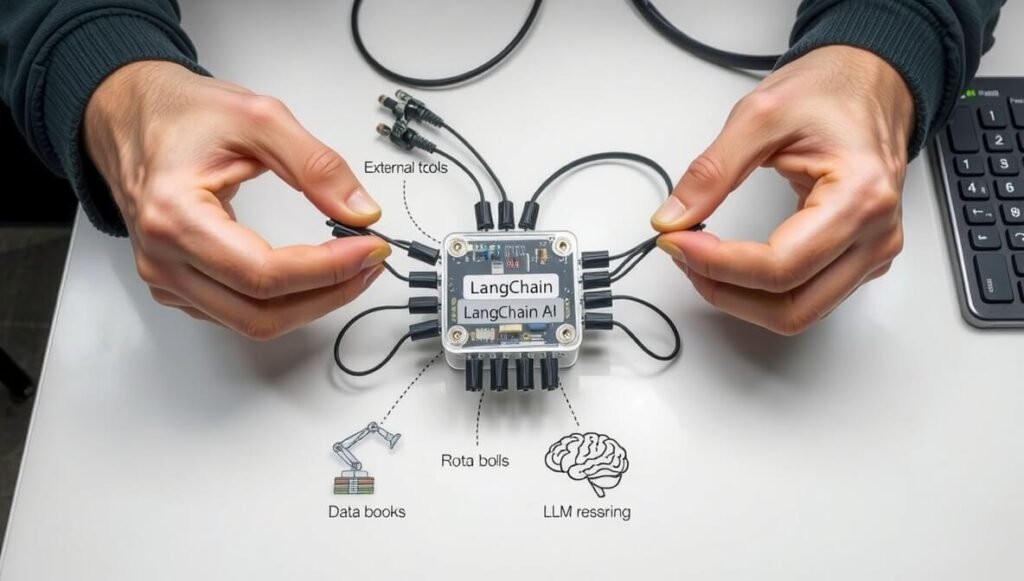
So, who exactly benefits from bringing LangChain into their toolkit?
Anyone serious about building advanced AI applications, particularly those focused on AI Agents.
Let’s break it down.
First, AI Developers and Engineers.
If you’re already coding in Python or JavaScript and working with LLMs, LangChain is a no-brainer.
It streamlines your workflow and provides a structured way to build complex, multi-step agents.
It cuts down on boilerplate code and helps you focus on agent logic.
Next up, Data Scientists.
You’re probably used to working with data, models, and pipelines.
LangChain lets you integrate LLMs into your data workflows more effectively.
Think about automated data analysis agents or tools that can generate reports based on your datasets.
For Startups and Small Businesses looking to leverage AI, LangChain is incredibly valuable.
It allows you to build custom AI solutions without needing an army of AI researchers.
You can create bespoke customer support agents, automated sales assistants, or internal knowledge retrieval systems.
All tailored to your specific needs, often at a lower cost than off-the-shelf solutions.
Researchers and Academics in the AI field will find LangChain useful too.
It provides a flexible framework for experimenting with new agent architectures, testing different LLM interactions, and pushing the boundaries of what AI agents can do.
It’s an excellent platform for prototyping and demonstrating novel AI concepts.
Even Content Creators and Marketers who are technically inclined can benefit.
Imagine an agent that can generate tailored marketing copy based on competitor analysis and target audience data.
Or an agent that summarizes industry trends and drafts social media posts.
If you’re willing to learn some code, LangChain can automate significant parts of your creative and analytical tasks.
Finally, anyone interested in the bleeding edge of AI Agents and wanting to actively participate in shaping that future.
LangChain is a community-driven project.
Getting involved means you’re at the forefront of this exciting field.
It’s about building the next generation of AI applications, not just using them.
If any of these descriptions sound like you, then LangChain deserves a serious look.
It’s the tool for moving beyond basic LLM prompts to genuinely intelligent agents.
How to Make Money Using LangChain
Alright, let’s get down to brass tacks: how do you actually make money with LangChain?
It’s not a direct monetization tool like an e-commerce platform.
Instead, it’s a powerful enabler.
It lets you build solutions that businesses and individuals will pay for.
Think of it as the engine for your money-making machine.
- Building Custom AI Agents for Businesses: This is a big one. Many businesses know they need AI but don’t have the in-house expertise. You can offer services to build custom AI Agents tailored to their specific needs. Imagine creating an agent that automates lead qualification for a sales team, or one that processes customer inquiries faster than any human possibly could. You can charge project-based fees or ongoing maintenance retainers. For example, a small e-commerce business might pay you to develop an agent that handles common customer service queries, reducing their overhead. This directly translates to cost savings for them, and profit for you.
- Developing Specialized AI Tools and SaaS Products: LangChain provides the backbone for creating your own AI-powered Software-as-a-Service (SaaS) products. You could build a niche content creation tool, a specialized research assistant, or a data analysis agent. If you find a specific problem in a market, LangChain helps you build the automated solution. Charge monthly subscriptions for access to your tool. Think about an agent that summarises daily news for a specific industry, or one that helps lawyers review documents faster. The opportunities are vast if you identify a real need.
- Offering Consulting and Training Services: As the demand for AI agents grows, so does the need for expertise. If you become proficient in LangChain, you can offer consulting services. Help companies understand how to integrate AI agents into their operations. You can also run workshops or online courses. Teach others how to use LangChain for Agent Development. This positions you as an expert and generates income through knowledge sharing. Businesses are willing to pay for clear guidance in a complex field.
Let’s consider a real-world scenario.
Sarah, a freelance developer, used LangChain to build an AI-powered research assistant for a marketing agency.
This agent could scour the web, analyze competitor campaigns, and generate insights.
It saved the agency hundreds of hours each month.
Sarah charged them a significant upfront development fee and now receives a monthly retainer for maintenance and further enhancements.
She essentially created a valuable asset that drives ongoing revenue.
This isn’t about selling a physical product.
It’s about selling solutions, efficiency, and intelligence.
LangChain allows you to tap into the massive and growing market for AI automation.
The key is to identify pain points and use LangChain to build smart agents that solve them.
It’s about turning your coding skills into a profitable venture.
Limitations and Considerations
Alright, no tool is a magic bullet, and LangChain is no exception.
While it’s incredibly powerful, you need to be aware of its limitations and certain considerations.
First up, the learning curve.
It’s not for absolute beginners.
You need a solid understanding of Python (or JavaScript), programming concepts, and at least a basic grasp of how LLMs work.
Diving in without this foundation can be frustrating.
It’s a framework, not a no-code solution.
Next, accuracy and reliability.
Your agent’s performance is heavily dependent on the underlying LLM and the quality of your prompts and tools.
LLMs can still hallucinate or make logical errors.
LangChain gives you the structure to build, but it doesn’t guarantee perfection from the LLM.
You still need to design robust error handling and validation.
Cost management is another significant consideration.
While LangChain itself is free, the API calls to powerful LLMs like GPT-4 can add up quickly.
Especially during development and extensive testing.
Monitoring token usage and optimizing your agent’s prompts are crucial to keeping expenses in check.
Consider fallback strategies or using cheaper models for certain tasks.
Then there’s the issue of prompt engineering.
You still need to be good at writing clear, effective prompts and tool descriptions.
A poorly defined tool or an ambiguous prompt can lead an agent astray.
This takes practice and iterative refinement.
It’s a skill you build alongside your LangChain proficiency.
The rapid pace of development can be both a blessing and a curse.
LangChain is constantly evolving, with new features and changes.
This means you need to stay updated, as examples or even entire API structures might change.
What worked last month might need slight adjustments this month.
This can introduce some instability if you’re not careful.
Finally, complexity can still creep in.
For very advanced agents with many tools and intricate decision flows, managing all the components can still get messy.
It’s a framework, not a magical simplification tool for all complexity.
Good software engineering practices remain vital.
You need to structure your code, document your agents, and plan your architecture carefully.
These points aren’t meant to deter you.
They’re just a dose of reality.
Knowing these limitations upfront helps you approach Agent Development with LangChain more effectively.
It lets you plan for challenges rather than being blindsided by them.
Final Thoughts
So, what’s the bottom line on LangChain for Agent Development?
It’s not just hype. It’s the real deal.
If you’re serious about building sophisticated AI agents that can do more than just chat, this framework is your essential tool.
It simplifies a complex process, letting you build agents that can reason, act, and interact with the real world.
You save time, improve quality, and unlock capabilities that would be incredibly difficult to achieve otherwise.
Yes, there’s a learning curve, and you need to manage costs for underlying LLMs.
But the benefits far outweigh these considerations for anyone committed to advanced AI applications.
My recommendation? Dive in.
Start small, build a simple agent, and then iterate.
The modularity of LangChain makes this process manageable and even enjoyable.
It’s the smartest way to handle Agent Development in 2024.
Don’t get left behind trying to stitch everything together manually.
LangChain gives you the leverage to build smarter, faster, and more effectively.
It’s about empowering you to create the next generation of AI solutions.
Visit the official LangChain website
Frequently Asked Questions
1. What is LangChain used for?
LangChain is primarily used for building applications powered by Large Language Models (LLMs), especially sophisticated AI Agents. It helps in chaining together different components like LLMs, external data sources, and tools to create intelligent, multi-step AI workflows.
2. Is LangChain free?
Yes, LangChain itself is an open-source framework and is free to use. However, you will incur costs for the underlying Large Language Models (e.g., OpenAI’s GPT models) and any external APIs or cloud services your agents use.
3. How does LangChain compare to other AI tools?
LangChain is unique as a framework for orchestrating LLMs and building agents, rather than an end-user AI tool. It provides the building blocks and structure for developers to create custom AI solutions, offering more flexibility and control compared to many off-the-shelf AI platforms.
4. Can beginners use LangChain?
While not for absolute beginners in programming, individuals with solid Python or JavaScript skills and a basic understanding of LLMs can learn LangChain. It abstracts away much complexity, making advanced AI Agent Development more accessible than building everything from scratch.
5. Does the content created by LangChain meet quality and optimization standards?
LangChain doesn’t “create content” directly; it’s a framework that orchestrates LLMs which generate content. The quality and optimization depend on the LLM used, the prompt engineering, and the agent’s design. With careful setup, LangChain can power agents that produce high-quality, optimized outputs.
6. Can I make money with LangChain?
Absolutely. You can monetize LangChain by offering services to build custom AI Agents for businesses, developing and selling your own AI-powered SaaS products, or providing consulting and training on LangChain and AI Agent Development. It’s a powerful tool for creating valuable, automated solutions.